
In a bold new chapter of energy innovation, Google has embarked on a strategic alliance to power its energy-hungry AI data centers with next-generation nuclear reactors.
On August 18, Google, nuclear innovator Kairos Power, and the Tennessee Valley Authority (TVA) announced the US’s first-ever Power Purchase Agreement (PPA) for electricity from a Generation IV small modular reactor (SMR).
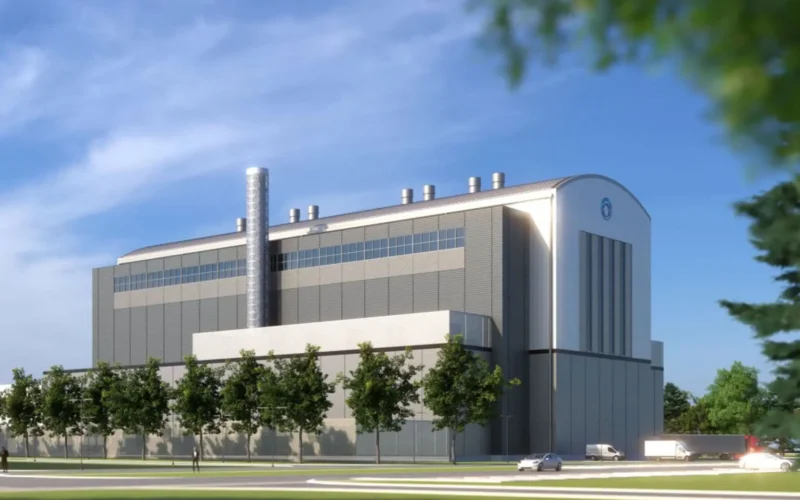
The agreement secures 50 megawatts from Kairos’s Hermes 2 reactor, scheduled to go online in 2030 in Oak Ridge, Tenn., for Google’s Tennessee and Alabama data centers.
This milestone is part of a broader October 2024 agreement between Google and Kairos to develop up to 500 MW of advanced nuclear capacity through multiple reactor deployments by 2035, creating a “fleet” of advanced nuclear plants to underpin Google’s commitment to 24/7 carbon-free energy.
The technology at work: Hermes 2 and KP-FHR
The Hermes 2 reactor utilizes fluoride salt-cooled, high-temperature reactor (KP-FHR) technology, with TRISO pebble fuel, an advanced design that enables efficient, high-temperature operation and passive safety.
Construction permits were granted by the US Nuclear Regulatory Commission in late 2024, marking the first permit issued for a non–light–water reactor in over 50 years.
The design allows low-pressure operation, simplifies reactor mechanics, and potentially reduces costs.
It taps into TRISO fuel’s inherent robustness, tiny, ceramic-coated fuel spheres that withstand high temperatures and radiation without melting, offering a significant leap in safety and reliability.
Why now? AI’s insatiable energy appetite
AI data centers with power-hungry GPUs and servers drive unprecedented electricity demand.
2030 US data centers may consume as much as 8% of the country’s total power, up from 3% in 2022.
Meanwhile, renewable sources like wind and solar, though expanding, can’t deliver the constant, high-density power required without large-scale storage or backup.
Nuclear offers 24/7 dispatchable power with zero carbon emissions, uniquely suited for reliable, emissions-conscious electrification.
Tech giants like Google view advanced nuclear as the “linchpin” of their clean energy strategies—supplementing renewables with firm, always-on generation.
Academic strategy analysis underscores that AI firms and energy planners face a timing mismatch: tech needs must align with energy infrastructure build timelines.
Partnerships like Google’s, which place demand-side certainty at the project’s heart, help bridge this delay gap.
Google isn’t alone. Microsoft plans to reopen Three Mile Island, with 835 MW capacity, to power its data centers under a 20-year deal.
Meta has inked nuclear power agreements and is considering gigawatt-scale new builds. Amazon acquired nuclear-powered data centers to tap into low-carbon power directly.
Financial markets are noting this “nuclear renaissance.” Morgan Stanley projects $2.2 trillion will be invested globally in nuclear by 2050, with tech-facilitated PPAs boosting visibility and investor confidence.
Why Oak Ridge matters
Oak Ridge, Tennessee, home to Kairos’s Hermes 2, is a storied cradle of nuclear science, from the Manhattan Project to decades of innovation.
Reviving the city as a modern hub, the project opens economic opportunities through workforce partnerships with local universities, creating high-paying roles for operators and engineers.
The three-party model, tech customer, utility, and reactor builder, aims to repeatedly scale up, “learning by doing” to lower cost and risk over time.
The US historically struggled with energy infrastructure: recent nuclear projects like Plant Vogtle faced staggering cost overruns, dampening investor appetite.
Advanced SMRs, with modular builds and hidden economies of scale, may avoid these pitfalls if lessons are applied.
Google’s move sets a precedent for energy procurement. If Hermes 2 proves viable, it could kick off further deployments, scaling to gigawatt-class fleets.
Learning from Gen IV tech can reshape regional markets for utilities like TVA.
It’s a powerful signal for the tech sector: reliance solely on renewables may not meet future digital demands. Nuclear offers a clean, dense, and reliable complement that supports AI’s expansion.
Meanwhile, public concerns about nuclear safety and waste persist. TRISO-based reactors mitigate many safety risks, but regulatory approval, waste disposal, and public trust remain challenges.
Still, the clock is ticking. AI-fueled demand is growing now. Tech’s nuclear turn may finally be the ignition lever on a stalled domestic nuclear renaissance.