Key ideas
- •India is adapting South Korean military technology to enhance its air defense systems.
- •The K30 Biho anti-aircraft platform is central to India's strategy against evolving drone threats.
- •Local manufacturing of components aims to increase self-reliance in India's defense capabilities.
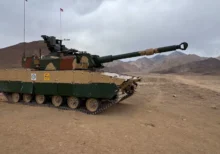
The engineers at Larsen & Toubro’s weapons factory in Hazira, Gujarat, have spent eight years learning to build a South Korean howitzer. They adapted it for the heat of the Thar Desert and the thin air of the high Himalayas, gradually replacing imported parts with locally made components. The second batch carries 60% Indian content. Now, both countries are planning to run the same playbook on the system that shoots down drones.
India’s Soviet-era air defense platforms are becoming obsolete against the threats that defined the 2025 border conflict with Pakistan. The Tunguska, a Russian short-range air defense system India has operated for years, was designed in the 1980s to target fast-flying Cold War aircraft. It was not built for the small, cheap, low-flying UAVs that overwhelmed Indian formations and forced a rethink of how the army protects its armored columns.
“As demonstrated by the conflict last year with Pakistan, India recognizes the need to develop a layered air-defense system,” said Nishant Rajeev, a senior analyst at the South Asia program at the S. Rajaratnam School of International Studies in Singapore. “India faces a multitude of threats from drones, cruise missiles, and fighter aircraft.”
Recent border clashes have led India to revisit a discussion it had put off years earlier about the K30 Biho, a tracked anti-aircraft platform used by South Korea since 1999 and upgraded several times. Talks about this platform fell apart in 2020 because of pressure from Russia. However, the rise of drone threats in 2025 has brought the topic back into focus.
K30 Biho
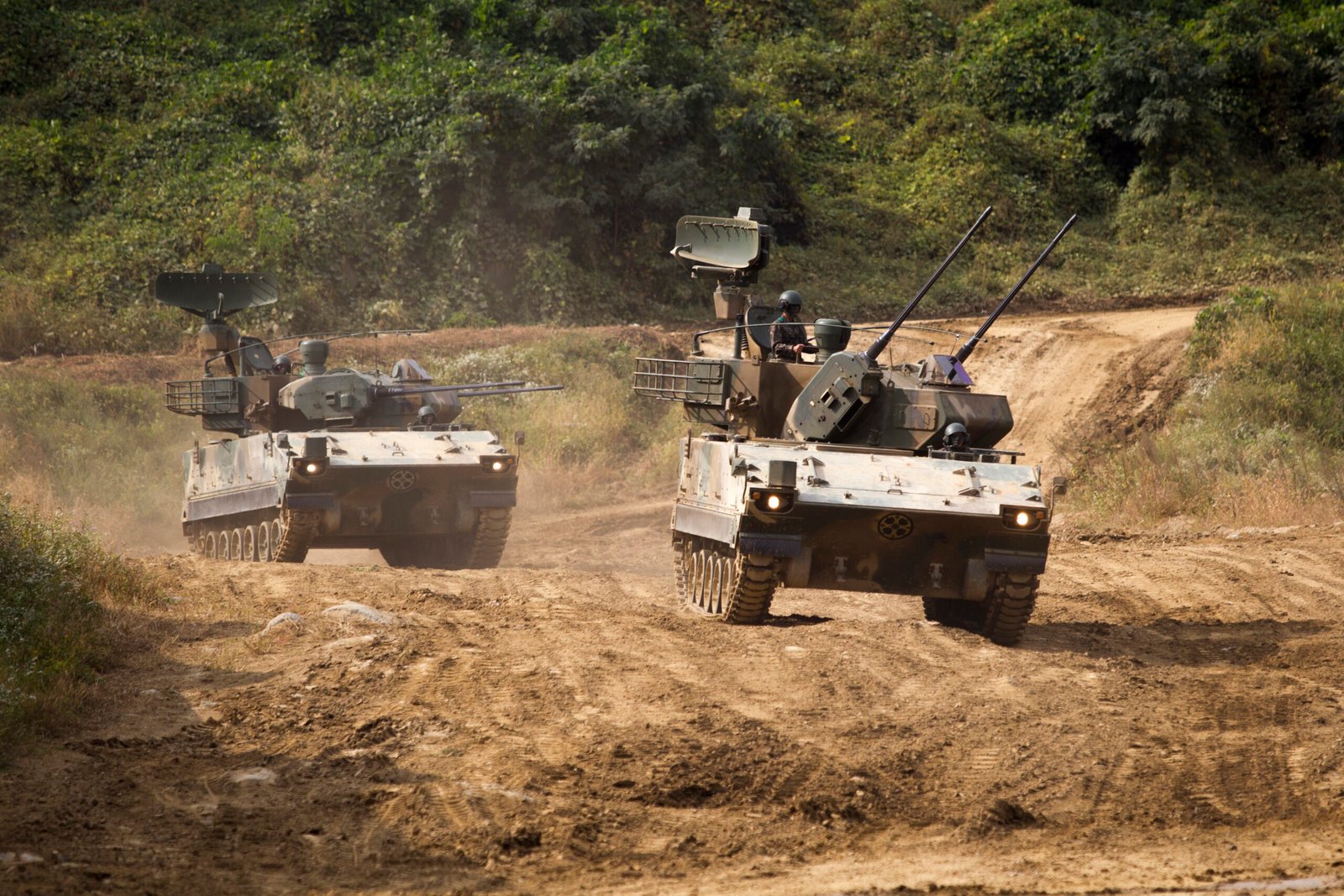
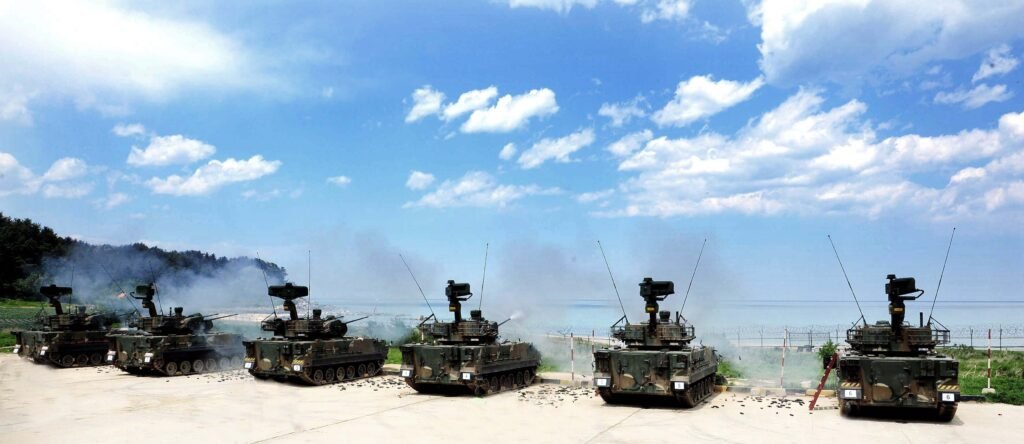
The K30 is based on the South Korean K200 infantry fighting vehicle. It weighs 25 tons, has a crew of four, and can travel up to 60 kilometers per hour on rough terrain. Its main weapons are two 30mm automatic cannons mounted side by side, each capable of firing 600 rounds per minute. Above the turret, there is a rotating radar mast that scans the sky in every direction.
The TPS-830K radar operates in the X-band, the same range used in airport weather systems. It is designed to track low-flying objects. The radar can detect and follow an object as small as a large bird from 17 kilometers away. It can also tell if the object is friendly or hostile using its identification system. The information is sent to the fire-control computer in real time.
The computer figures out where the target will be when the shells arrive and angles the guns to match. It can follow targets moving at speeds up to 500 meters per second. Once it locks on, the process runs automatically, but the commander can take manual control if needed.
The Biho works even when the radar is off. It has a backup infrared system and laser rangefinder for targeting in situations where radar could expose the vehicle’s location to enemy aircraft. The combined optical and thermal targeting system can operate over distances of more than 10 kilometers.
In 2013, South Korea upgraded its defense system by adding the Shingung surface-to-air missile. They installed two pods, each holding two missiles, on the sides of the turret. This change increased the cannons’ engagement range from three kilometers to seven kilometers. Now, this single platform can hit threats close up with cannon fire and at medium range with guided missiles. It can switch between these modes while keeping up with the tank columns it protects.
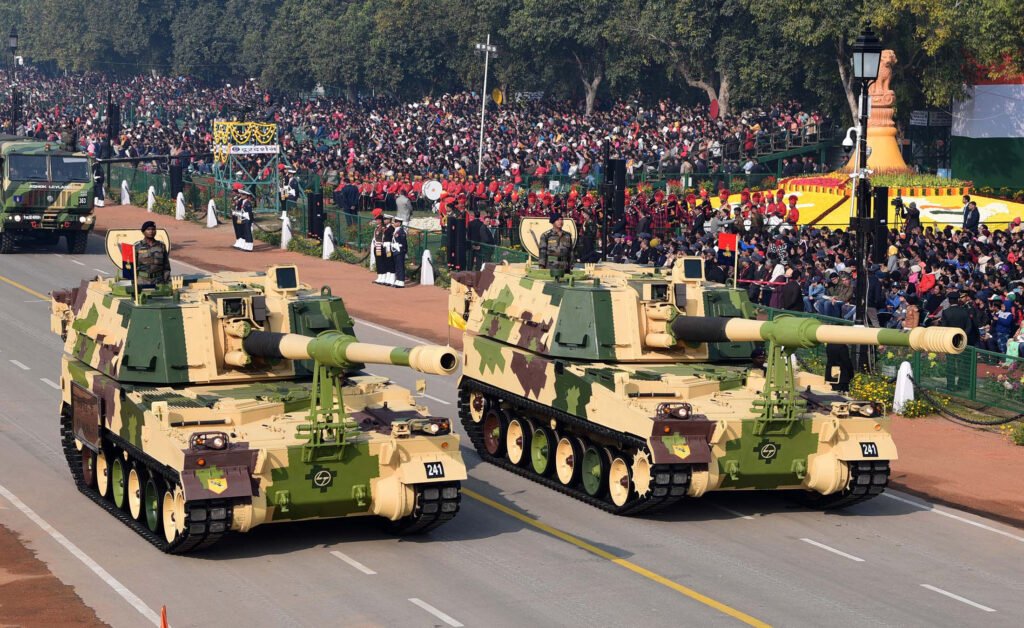
The K30 uses the same tracked chassis system as the K9 Vajra howitzers that India already has. It enables shared maintenance facilities, mechanics familiar with the systems, and spare parts to move through the same supply chain.
A proven model
India has been building the K9 Vajra, a 155mm self-propelled howitzer from South Korea, at L&T’s Armoured Systems Complex in Hazira since 2018. The first 10 units were brought in fully assembled from Korea. The next 90 units were made in India using kits shipped from Korea, with about 50% local content.
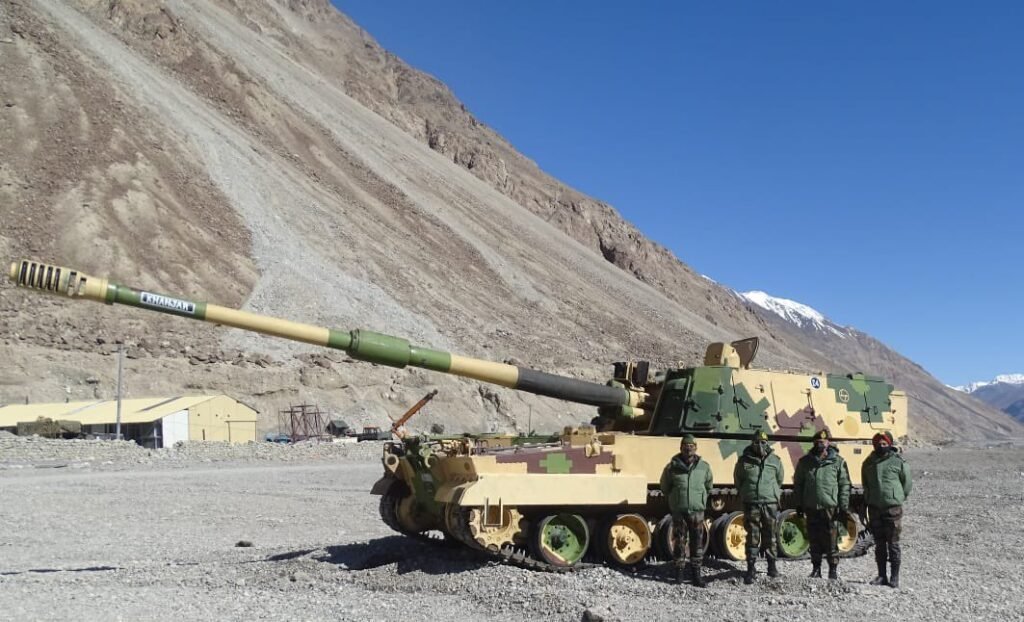
A second batch, as a part of a $253 million contract signed in April 2025, aims to achieve 60% local content. The second batch will include Indian-made parts, including local fire control systems, communications equipment, NBC protection systems, and environmental controls.
L&T did more than just put parts together. The company adapted the K9 Thunder for Indian conditions by redesigning components for hot deserts and cold, high-altitude conditions. It tested Indian-made components and trained engineers on the fire control and hydraulic systems. L&T also built the supply chain from scratch.
The successful use of the K9 Vajra-T demonstrates that South Korean military systems can be adapted to the Indian landscape and manufactured in India. Ankit Panda, a defense analyst at the Carnegie Endowment for International Peace, said, “This success makes the conversation with Biho possible. It also suggests that New Delhi now views Seoul as a reliable technology partner for air-defense guns and missile systems.”
What April’s summit decided
South Korean President Lee Jae Myung visited New Delhi on April 19, accompanied by 200 representatives from companies such as Samsung, Hyundai, LG, POSCO, and HD Hyundai. This visit was the first by a South Korean president to India in eight years.
At a press briefing on April 20, P. Kumaran, the Secretary (East) of India’s Ministry of External Affairs, discussed the third phase of defense cooperation with South Korea. He said, “South Korea provides K9 Vajra systems and anti-aircraft systems. We have already completed two phases of supplies. Now, we are moving to the third phase, which will involve more technology transfer. We are also exploring other types of anti-aircraft guns and missile systems.”
He explained the change in goals. “The first two phases of our cooperation focused on buying companies and increasing local production. In Phase III, we will take our partnership to the next level with advanced manufacturing and sharing technology.”
During a press conference with Prime Minister Modi, Lee said that South Korea fully supports India’s Atmanirbhar Bharat policy. He expressed a desire to help with the production and use of Indian defense equipment, including technology development. He also described the two countries as great partners in promoting growth and innovation.
One idea being considered is to produce 80% of the Biho in India. To reach this goal, India would need to manufacture not only the chassis but also the radar, fire-control computer, electro-optical systems, and, eventually, the missiles.
KIND-X
At the same summit, Korea and India launched KIND-X, the Korea-India Defence Accelerator, a program based on India’s INDUS-X platform with the United States. KIND-X connects defense companies, startups, incubators, investors, and universities from both countries. It focuses on unmanned systems, artificial intelligence, and advanced materials.
The K30 Biho deal involves a single platform, a single production line, and a single technology transfer. KIND-X will support what comes next. India’s iDEX program has developed a defense startup ecosystem over the past seven years. South Korea has similar strengths in robotics, semiconductor-based fire control, and precision manufacturing.
KIND-X aims to connect an Indian startup that makes drone-detection software with a Korean company that builds the radar hardware for it. The goal is to help both companies enter a future production program. India’s efforts to modernize its air defense system go beyond simply replacing old Soviet equipment. India wants to develop its capacity to manufacture, maintain, and eventually sell advanced defense systems without relying on suppliers that may not be available during a conflict.
The K9 Vajra program shows that success is possible when technology transfer is sincere, and the local partner is seen as an important part of the project rather than just an assembly-line worker. The Biho is a machine designed to shoot down aircraft. Through this program, India plans to build the ability to produce the Biho, and once this ability is established, it will not vanish after the contract ends.