Key ideas
- •South Korea's shipyards are struggling to find skilled welders as experienced workers retire, leading to a decline in new contracts.
- •A new humanoid robot is being developed to perform ship welding, but it won't be ready for real-world use until 2027.
- •Successful welding robots need to mimic the skilled judgement of human welders, which requires extensive training data from their work environments.
South Korea’s shipbuilders are refusing new orders not because of a lack of demand or facilities, but due to a shortage of skilled welders. In Ulsan, a city known for shipbuilding, the average worker age is now 48.3 years. Shipyards are turning down contracts because they can’t find enough new welders. Steel mills are also operating below capacity for the same reason.
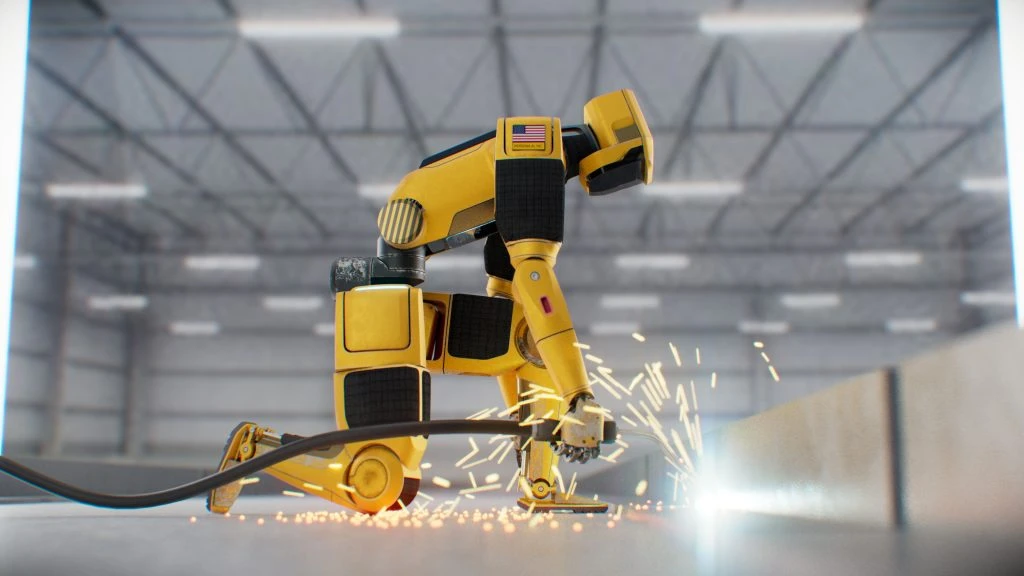
To solve this issue, the industry is developing a humanoid robot capable of performing the precise welding that experienced workers typically spend years learning. However, the robot isn’t ready yet. The prototype will be completed at the end of this year, and field testing will start in 2027. Shipbuilders are facing declines in orders in the meantime.
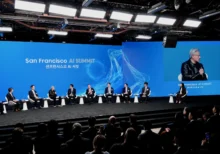
This gap between the issue and the solution was a key topic at the Seoul Forum 2026 last week, where experts discussed the future of robotics in Korea’s industry.
A structural problem
Korea’s shipbuilding industry faces a serious worker shortage, and it is not just temporary, like when a factory has fewer workers during hiring. Many experienced workers are retiring, and the younger generation is smaller and less interested in physically demanding, risky jobs. A recruitment campaign alone will not solve this problem.
At the Seoul Forum 2026 on May 27, Michael Patrick Perry, the Chief Commercial Officer of Persona AI, said that the winner in the Physical AI era will not be the company that builds the best robot, but the companies and countries that easily deploy humanoids and systems to the field for specific purposes will win. Perry’s message resonated with the Korean audience.
Korea has advanced technology and leads the world in robot use, with 1,012 industrial robots per 10,000 manufacturing workers. It is six times higher than the global average. Korean companies have been making and using industrial robots for many years. However, according to Perry, Korea still lacks data, including real-world evidence on how robots perform over long periods, across millions of welding tasks, and in environments outside test facilities.
China holds 78% of the humanoid robot market, but not because of better technology. Instead, Chinese manufacturers have long used robots in real industrial settings, and this experience helps them gather training data, making each new generation of robots significantly better than the last.
Why robots are finding it difficult to weld
Korea’s shipyard robotics program faces a difficult technical challenge. Welding a ship is very different from welding a car. In car manufacturing, welding is performed in controlled settings, using consistent materials and consistent patterns. Industrial robots have successfully managed this for forty years.
In contrast, shipyard welding varies in many important ways. The joints are larger and more diverse. The working positions can be difficult, such as overhead, vertical, or in tight spaces. The materials and thicknesses change from one section to another. Additionally, the quality standards, especially for military ships and LNG carriers, are very strict.
HD Hyundai Robotics Vice President Young-hoon Song stated that the aim is to create robots capable of observing and making decisions. It differs from traditional robots that perform only repetitive tasks. The main challenge is developing precise control technology that mimics skilled welders’ workflows, using AI-based welding systems that meet the strict requirements of shipbuilding.
However, robots struggle to replicate skilled welders’ workflows, as experienced welders do not follow a strict set of instructions. Instead, they read the metal, adjust their speed and angle based on what they see, notice early signs of a bad joint, and make corrections before a defect occurs. Such knowledge comes from years of hands-on experience on the shop floor. To get a robot to weld effectively, the shipbuilders need training data from the same workers in their usual environments and at large production levels.
A new program
In March 2026, HD Hyundai signed a joint development agreement with HD Korea Shipbuilding & Offshore Engineering, HD Hyundai Robotics, and the US-based company Persona AI to build a welding robot. The agreement marks the next step in a program that started with a memo of understanding in May 2025. They evaluated a prototype over the past year, which was successful.
Now, the partnership is moving on to the verification and commercialization stages. The goal is to finish the prototype by the end of 2026, with field testing and commercial use starting in 2027. However, creating a humanoid robot that can weld according to shipbuilding standards in a real yard, not just in a lab or demonstration area, by the end of this year is a major engineering task.
The companies working on this are credible, but the main question is whether they can gather data, train the models, and integrate the systems needed to move from a working prototype to a ready-to-use product within one year. Perry expects that between dozens and about 100 robots will be used at each major industrial site starting in 2027.
If this happens, the shipyards that are currently turning down orders could have a strong robotic workforce within two years. If the timeline is delayed, as is often the case with new industrial projects, the workforce gap will widen.
The supply chain problem
Korea’s role in the robotics race is more complex than its robot density numbers indicate. South Korea has the highest number of robots per worker in the world, but 71.2% of its robot shipments are for the domestic market. Additionally, the country only makes 40% of the core components needed for these robots. Even though South Korea uses more robots than anyone else, it relies heavily on imports for the parts inside those robots, including many sourced from China.
At the Seoul Forum Robotics Venture Forum on May 28, Aidin Robotics CEO Lee Yoon-haeng said, “As cheap Chinese robot parts have entered the market, domestic parts are often not selected. The domestic robotics market can only be activated if companies are encouraged to use domestic products.”
It is a serious issue with procurement. A country that relies on Chinese components for its industrial robots faces a risk of supply chain disruption. South Korea’s Ministry of Trade, Industry and Energy will invest 700 billion Korean won, about $525 million, in 2026 for a program called Manufacturing AI Transformation (M.AX).
The M.AX program aims to use artificial intelligence across all levels of the country’s manufacturing sector. Part of the investment will focus on building the local component supply chain that the robotics industry currently lacks.
Beyond Korea
South Korea aims to become the fourth-largest defense producer in the world by 2030. Currently, it is the second-largest defense supplier in Asia, after China. South Korean shipyards do more than build container ships and LNG tankers; they also construct destroyers, submarines, and logistical vessels for naval forces in the Indo-Pacific region. HD Hyundai’s shipyards in Ulsan produce warships for Poland, Australia, and the Philippines.
If a shipyard can’t find welders, it can’t meet defense production deadlines. A robot that fixes the welding issue not only helps the company fulfill its orders but also supports the country’s ability to produce military equipment at the speed required by current regional needs.
South Korea’s MOTIE Director General for Industrial AI Policy, Choi Yeon-woo, said at the Seoul Forum that Korea’s manufacturing growth rate has fallen from 6.8% in 2008 to 1.8% in 2023. “The new key we have found, based on this, is physical AI.”
The welding robot is crucial for the future, as workers are retiring at a rate beyond anyone’s control. Meanwhile, the industry is developing the robot on a planned schedule. But still, the big question for Korean shipbuilding is whether these two timelines will align.