Key ideas
- •Factories moving to Southeast Asia to reduce dependence on China are increasingly relying on Chinese industrial robots.
- •Chinese robot makers now compete on price, performance, and regional service networks, accelerating their global expansion.
- •As China leads in robotics hardware, experts warn supply chain dependence is shifting from factories to automation systems.
In 2025, Vietnam, Mexico, and Thailand were the three fastest-growing destinations for Chinese industrial robot exports. Ironically, the countries were also three of the largest recipients of factory investment from companies relocating production out of China.
It is not just a coincidence. A key point of the China+1 era is that China is driving supply chain diversification away from itself. Factories that moved to reduce their reliance on China are now filling up with Chinese robots, which are 30-40% cheaper than European or Japanese options.
It comes with a free trade agreement that removes import taxes in ASEAN markets, and it performs similarly to Western competitors for most standard manufacturing tasks. The escape from China is being run on Chinese hardware.
The strategy
The idea of China+1 became popular when companies first started using it. US tariffs on Chinese goods, which began during the trade war in 2018-2019 and were later extended by subsequent administrations, made it increasingly costly for American customers to manufacture in China.
Geopolitical concerns have made it clear that relying on one country for critical goods is risky. Southeast Asia presents a better option. It has lower labor costs, is close to existing Chinese supply chains, has a growing young workforce, and importantly, has free trade agreements with the United States that China lacks.
As a result, Vietnam has become the leading country in electronics exports. From 2018 to 2025, its electronics sector has nearly doubled in size. The growth is mainly due to companies moving their manufacturing from southern China to Vietnam. Major firms like Samsung, Intel, LG, Apple suppliers, and Foxconn have expanded their operations in Vietnam while reducing them in China.
Thailand gained ground in automotive and hard drive manufacturing. Indonesia took on the production of consumer goods and chemicals. Malaysia became known for semiconductor packaging and testing. Factories arrived, and then orders for equipment came in. Most of these equipment orders went to China.
The price question
Chinese robots are cost-effective, often priced 20% to 40% lower than similar models from Europe and Japan, and perform similarly to Western robots on many common manufacturing tasks, such as picking and placing items, welding, tending machines, assembling parts, and palletizing.
Their support networks have grown quickly in Southeast Asia. Technicians, spare parts, training, and integration support are now readily available in major manufacturing areas in Vietnam and along Thailand’s eastern coast.
The structural argument is also important. The ASEAN-China Free Trade Agreement sets zero tariffs on Chinese industrial equipment brought into ASEAN member countries. For example, a Vietnamese factory that imports a Chinese robot arm pays no import duty.
However, if that factory imports a similar arm from FANUC in Japan or KUKA in Germany, it must pay the regular tariff. The same free-trade rules that make Vietnam an appealing choice for relocating factories from China also make Chinese robots the most affordable option for any factory moving there.
As a result, Vietnam, Mexico, and Thailand were the fastest-growing markets for Chinese industrial robot exports in 2025, according to research by ARC Advisory Group. Vietnam holds about 25% of Southeast Asia’s robotics market revenue. The region’s robot market is expanding at an annual rate of 7.24%.
This growth is mainly due to electronics assembly shifting from coastal China, which is increasing demand for automation in new areas. In 2025, China’s industrial robot exports grew by 48.7% in units, marking the first time in its history that it became a net exporter of industrial robots rather than a net importer.
The scale
The International Federation of Robotics reported in its World Robotics 2025 Report that China installed 295,000 industrial robots in 2024. This amount represents 54 percent of all new robot installations worldwide that year.
China now has about 2 million operational industrial robots, which is about 4.5 times as many as Japan, the second-largest user. China’s robot density is around 470 robots for every 10,000 manufacturing workers. In comparison, the United States has about 295 robots per 10,000 manufacturing workers, and Germany has around 390.
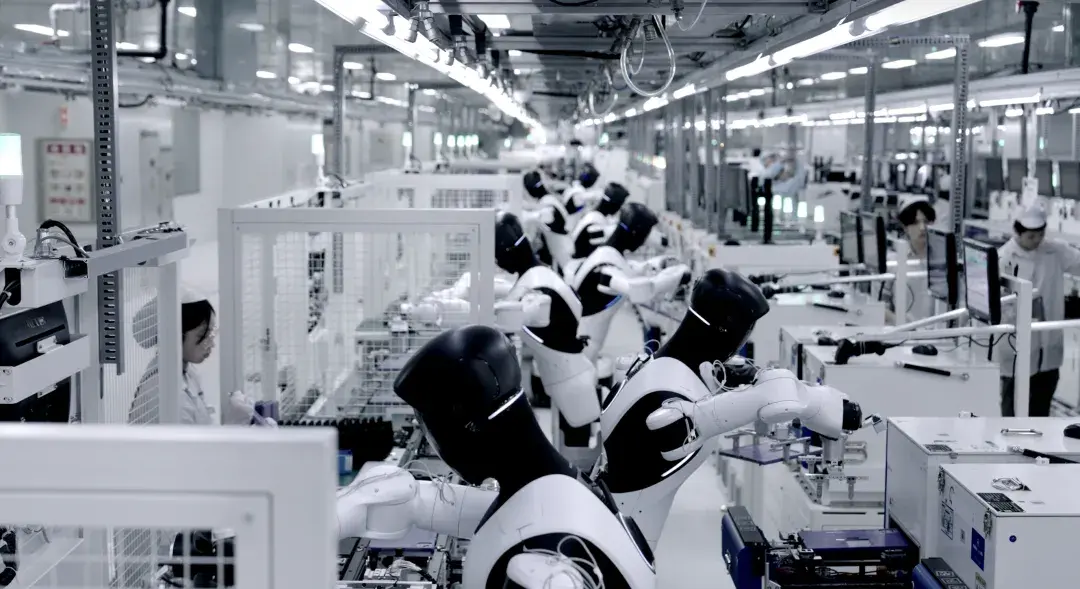
China operates over 30,000 smart factories, with about 1,200 of them considered advanced. The country holds more than 40 percent of the World Economic Forum’s Lighthouse Factory designations, which are widely regarded as the standard for leading smart manufacturing. The 15th Five-Year Plan, which began in May 2026, focuses on the use of robotics in China’s industrial system.
BYD and CATL are the world’s leading electric vehicle manufacturer and battery maker. They are heavily investing in robotic automation, which helps create a self-sustaining supply chain. Each robot installed in a factory in China collects real data that improves the AI and control systems used in future robots. More robots generate more data, leading to better robots and lower export prices. This process continues to build on itself.
The companies competing for robot contracts in Southeast Asia are influential players. Keenon Robotics has shipped over 100,000 service robots to more than 70 countries and has a 22.7 percent share of global commercial service robot shipments, according to IDC data.
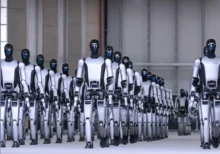
Dobot’s collaborative robots ranked first in global unit shipments in 2025. Unitree is selling its humanoid robots for $5,900 each, while Tesla’s Optimus is expected to cost $30,000. In 2025, Unitree shipped 5,500 humanoid robots, which is more than Tesla’s entire production target for the year, a target that Tesla did not meet.
In January 2026, Tesla’s CEO Elon Musk spoke at Davos about this competition. He said, “China is very strong in AI and manufacturing and will be the toughest competitor for Tesla. As far as we know, we don’t see any major competitors outside of China.”
The threat
The China+1 trend is more complex than just looking at purchase orders. Factories moved to countries such as Vietnam, Thailand, and Indonesia primarily to save on labor costs. A worker in Vietnam costs less than one in China, making the shift worthwhile. However, the cost difference is decreasing for both countries.
Vietnam’s manufacturing wages are rising as the country’s manufacturing sector grows and fewer workers are available. Meanwhile, Chinese factories are using more robots, which lowers their labor costs. A factory that uses 470 robots per 10,000 workers focuses on precision and speed rather than the number of workers. This shift makes Vietnam’s lower labor costs less appealing than those of a highly automated Chinese factory.
Digital in Asia’s analysis shows that as China’s factories become more automated and efficient, the cost advantages that attracted manufacturing to Southeast Asia may disappear. Factories that moved to Vietnam to avoid high labor costs in China might discover that the robots they bought to stay competitive are made by China, and are continually improved and priced by the same country they tried to escape.
The limitations
China exports hardware robots to factories in Southeast Asia. However, the AI that will decide which factory systems work best is mainly developed in the United States. Important models like OpenVLA, Pi0, and RDT-1B, which help robots understand their surroundings and carry out tasks, come from labs in North America.
Chinese companies quickly adopt these software technologies but do not create them. The operating system used by most industrial robots, called ROS 2, mainly relies on contributions from Western developers.
This gap is important because the future of manufacturing automation will not be about which robot arm can pick up a part the best. Instead, the focus will be on which robot can understand natural-language commands to perform tasks it has never learned before. This skill is mostly found in American technology. Whether this continues depends on fast-moving technological competition across many areas.
Right now, the hardware market is not competitive. China produces 90 percent of the world’s humanoid robots and installs 54 percent of industrial robots. By early 2026, China had localized over 75 percent of the core components needed for humanoid robots. Factories in Vietnam and Thailand that use Chinese robot arms are tying themselves to a Chinese robotics supply chain at a time when it is becoming the most efficient and cost-effective in the world.
Companies that moved factories out of China to rely less on it have created a new dependence through automation. The robots that run these factories are made in China, priced in China, serviced by Chinese suppliers, and constantly improved by the world’s largest manufacturing base. The effort to move away from China still depends on Chinese technology.