Key ideas
- •The US-Saudi nuclear deal leaves the door open for Saudi Arabia to develop domestic uranium enrichment after a two-year joint study.
- •Unlike the UAE, which accepted restrictions on enrichment and reprocessing, Saudi Arabia has kept the option of controlling its own nuclear fuel cycle.
- •Saudi Arabia's enrichment option could increase its leverage with Washington and add new pressure to the Middle East's already sensitive nuclear balance.
In late July, US Energy Secretary Chris Wright and Saudi Energy Minister Abdulaziz bin Salman signed a nuclear cooperation agreement in Washington, which the Energy Department called historic. The agreement, known as a Section 123 agreement, allows American companies to help Saudi Arabia build civilian nuclear reactors.
Westinghouse Electric Company, which makes the AP1000 reactor that Saudi Arabia wants, stands to benefit the most. While the agreement is framed diplomatically, it raises an important concern about nuclear safety. One specific part of the deal has worried nonproliferation experts, troubled Israel, and raised questions in Congress.
The agreement allows Saudi Arabia to enrich uranium on its own soil, but there are conditions. First, there will be a two-year study by the US and Saudi Arabia to see if domestic enrichment is needed and practical. If the study supports it, Saudi Arabia can build a uranium enrichment facility. If the study does not support it, Saudi Arabia will still have the right to revisit the issue later.
The 123 agreement
Under Section 123 of the US Atomic Energy Act, any country that wants to receive American nuclear technology must first negotiate an agreement with the United States. The agreement outlines how the technology can be used. The law sets minimum requirements that countries cannot use the materials for nuclear weapons, must ensure physical security, and need US consent for any major changes to nuclear materials or facilities.
In addition to these legal requirements, US administrations have added a standard known as the Gold Standard. It means that the recipient country must not enrich uranium or reprocess plutonium within its borders, even for civilian use. Enrichment creates low-enriched uranium for fuel, but the same methods can produce highly enriched uranium for weapons.
Reprocessing takes plutonium from spent fuel, which could also be used to make weapons-grade material. The Gold Standard prevents both processes. The United Arab Emirates accepted the Gold Standard when it made its own 123 agreement before building the Barakah nuclear plant with South Korean technology. The commitment binds the UAE not to develop domestic enrichment or reprocessing and has been seen as a model for responsible nuclear growth in the Middle East.
On the other hand, Saudi Arabia signed a 123 agreement that does not include the Gold Standard. While the issue of enrichment was not settled, it was postponed.
The Saudi leadership
Saudi Arabia’s leadership has made clear its nuclear ambitions in relation to Iran. In a 2018 interview, Crown Prince Mohammed bin Salman told CBS News that if Iran develops a nuclear weapon, Saudi Arabia will do the same.
In 2019, Energy Minister Abdulaziz stated that the kingdom aims to handle the entire nuclear process, from uranium production to enrichment. In January 2023, he announced plans for Saudi Arabia to use its resources to produce low-enriched uranium.
The deal signed on July 22 was negotiated with this context in mind. President Trump has reportedly agreed to terms that were looser than previous US positions to secure the agreement.
Secretary of State Marco Rubio, who was present at the ASEAN Foreign Ministers’ Meeting in Manila while the deal was signed in Washington, stated that the US would not enter into any agreements that risk nuclear proliferation.
However, the deal’s structure and that statement are hard to reconcile, especially since talks include enrichment capability pending further study.
The AP1000
The AP1000 is a large pressurised water reactor that generates about 1,100 megawatts of electricity. Saudi Arabia has said it needs 16 to 17 nuclear plants over the coming years to meet its growing electricity demand.
It would also allow the country to export more oil rather than use it for power generation. Using oil for electricity is a domestic subsidy that Saudi Arabia’s Vision 2030 plan aims to eliminate. Nuclear power can help achieve this goal.
The Trump administration announced it will provide $17.5 billion in loans to accelerate the development of 10 new Westinghouse reactors in the US. The program is already underway and will give Westinghouse the production experience needed for Saudi Arabia’s nuclear plans.
Saudi Arabia is not the only country the US is trying to have Westinghouse supply; Poland, Bulgaria, and other European nations are also in talks with Westinghouse. However, Saudi Arabia stands out as the largest potential customer.
The importance of commercial interests explains the deal’s structure. A Gold Standard agreement, which would not allow domestic enrichment, would have been a better choice for preventing the spread of nuclear weapons.
However, Saudi Arabia might not have agreed to that. The administration decided that a deal with some enrichment options was better than no deal at all and that giving Westinghouse access to Saudi Arabia’s nuclear program was worth the compromise on the Gold Standard.
The UAE logic
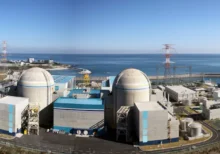
The UAE chose South Korean technology for the Barakah nuclear plant and fully accepted the Gold Standard. Barakah Unit 1 started operations in 2021, Unit 2 in 2022, Unit 3 in 2023, and Unit 4 achieved criticality in 2024.
All four Korean APR-1400 reactors are now producing electricity, even though the UAE does not have its own uranium enrichment system. Instead, the UAE imports enriched uranium fuel under long-term contracts and exports used fuel for disposal.
The UAE decided that having its own enrichment was not necessary and would create diplomatic issues. Saudi Arabia, on the other hand, reached a different conclusion, and the United States accepted that to finalise the deal.
Richard Nephew, who advised Presidents Obama and Biden on nuclear policy in the Middle East, wrote on X after the deal was announced. He warned that the US could set a dangerous precedent by excluding the International Atomic Energy Agency (IAEA) from the inspection process.
It could lead to a decline in enrichment standards. The bilateral safeguards agreement linked to the 123 agreement establishes a US-Saudi inspection system. However, details on what this covers and whether it adds to or replaces the full IAEA Additional Protocol safeguards have not been shared publicly.
Rosemary Kelanic, the Middle East director at Defense Priorities, a Washington think tank, said that if Saudi Arabia has uranium enrichment capabilities, it could use them to gain leverage to secure more concessions from the US.
It could include new security guarantees by threatening to advance its nuclear program unless the US promises increased military protection. The leverage exists regardless of whether Saudi Arabia actually builds a weapon. The ability to create one, once the enrichment infrastructure is in place, affects how the two countries negotiate, regardless of the facility’s stated purpose.
The Industrial Path
Saudi Arabia faces several challenges in developing its own uranium enrichment capability, even if a two-year study supports the idea. The United States does not export uranium enrichment centrifuges. URENCO, a European company with plants in the Netherlands, Germany, and the UK, cannot sell centrifuge technology to Saudi Arabia without full IAEA Additional Protocol safeguards.
Russia, which has the largest centrifuge enrichment capacity through Rosatom, is currently aligned with Iran and is unlikely to supply Saudi Arabia. China has a large centrifuge enrichment plant in Lanzhou but, as a member of the Nuclear Suppliers Group, cannot export enrichment technology to countries without full safeguards.
Saudi Arabia has not signed the IAEA’s Additional Protocol, which allows for broader inspections of nuclear facilities. Without this agreement, Saudi Arabia may find it hard to buy enriched uranium fuel through the Nuclear Suppliers Group, regardless of what its agreement with the United States says.
The two-year joint study on enrichment is meant to address some of these challenges but will not resolve them completely. The study’s conclusions will be negotiated and may reflect the political relationship between the two governments, rather than just technical factors like the economics of centrifuge technology versus long-term fuel supply contracts.
The future
The 123 agreement will start based on the rules of the US Atomic Energy Act. Congress will get the text of the agreement and have sixty days to block it with a joint resolution of disapproval. It requires a strong majority vote in both chambers.
If Congress does not pass such a resolution, which experts think is unlikely since Republicans control the Senate, the agreement will proceed automatically. Congressional notification will provide members and staff with details of the bilateral safeguards agreement. It includes rules on enrichment, access for the IAEA, and guidelines for the two-year study.
If built, the reactors will take decades to produce electricity. Saudi Arabia has not yet chosen a site for its first nuclear plant, finalised its regulations, or trained the workers needed for a civilian nuclear program. The agreement signed on July 22 is a legal basis for cooperation, not a building contract. It shows, for the first time, that Saudi Arabia’s path to civilian nuclear power includes American companies and, under certain conditions, the option for Saudi-controlled enrichment.