Key ideas
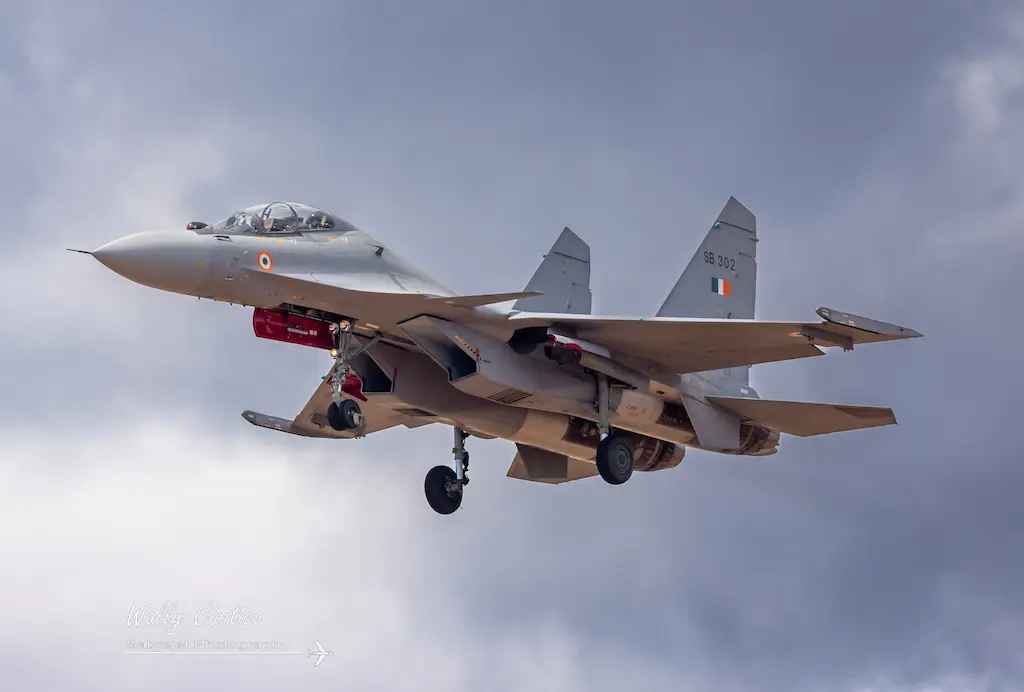
- •India is set to begin the long-delayed Super Sukhoi upgrade, starting with 84 Su-30MKIs in a programme worth an estimated ₹60,000–65,000 crore.
- •The upgrade will give India’s largest fighter fleet new capabilities, including the Virupaksha AESA radar, improved electronic warfare, indigenous avionics, Astra missiles and BrahMos-NG integration.
- •India is also reassessing the Su-57, which HAL says is now viewed as a more mature platform, potentially opening the door to a Russian fifth-generation fighter before the AMCA arrives.
India’s long-pending upgrade of its Su-30MKI fighter fleet is set to begin imminently, an official at Hindustan Aeronautics Limited told Tecrow, marking a major step forward in a programme that has been pending final government clearance since 2022.
The official, who spoke on condition of anonymity, said the Super Sukhoi modernisation programme would start very soon. The same official said India’s internal assessment of the Su-57 stealth fighter has shifted substantially, and the aircraft is now a far more mature platform than when India exited the joint development programme in 2018; a procurement decision on the Russian fifth-generation jet could follow the Su-30MKI upgrade.
DK Sunil, the Chairman and Managing Director of HAL, said in February 2026 that he expects the Cabinet Committee on Security to approve the upgrade of 84 Su-30MKI jets within two months. However, no official announcement has been made yet. But HAL’s confirmation to Tecrow shows India is working toward the requirement.
The upgrade
India has 259 Su-30MKI fighters, which make up about 60% of its frontline fighter fleet. HAL builds these planes at its Nashik facility, and they are essential to the Indian Air Force. In May 2025, during Operation Sindoor, the Su-30MKIs conducted air-to-ground strikes, launching BrahMos supersonic cruise missiles and Rampage precision weapons at targets in Pakistan.
The Super Sukhoi program aims to upgrade 4th-generation aircraft into 4.5-plus or 4.7-generation fighters, the official said. The program is estimated to cost between ₹60,000 and ₹65,000 crore, or roughly $7.5 billion, making it one of the largest defence modernisation projects in India’s aviation history.
The upgrade’s main feature is the Virupaksha AESA radar, developed by the Defence Research and Development Organisation and Bharat Electronics Limited. This radar uses advanced gallium nitride-based technology to improve upon the existing Bars radar. DRDO officials say it is a multimode system that can operate in air-to-air, air-to-ground, air-to-sea, and navigation roles. The radar was publicly shown at Aero India 2025.
Beyond the radar, the upgrade package includes enhanced electronic warfare suites, updated avionics with 78 per cent of systems produced indigenously, integration of the Astra Mk-1 beyond-visual-range missile already in IAF service, and acceleration of the longer-range Astra Mk-2. The integration plan also includes BrahMos-NG, the next-generation lighter variant of the supersonic cruise missile. In May 2026, the Defence Ministry issued a Request for Proposal to fit 258 Su-30MKI jets with modern anti-jamming multi-constellation GPS antennas as part of the broader programme.
The Phase 1 contract covers 84 aircraft. The remaining 175 jets in the fleet require upgrades on a parallel track. For those aircraft, India has been discussing a separate upgrade path with Russia, including Russia’s offer of the AL-41F1S turbofan, the same engine powering the Su-57, which delivers about 18 to 20 per cent more thrust than the current AL-31. A Russian technical team visited HAL’s Nashik factory in early 2026 as part of those discussions. The IAF has described the dual-track approach as necessary to prevent a capability gap during what is expected to be a 10 to 15-year upgrade cycle.
The Su-57 reassessment
India and Russia had jointly developed what was then called the Fifth Generation Fighter Aircraft programme for over a decade before India formally withdrew in 2018. At the time, the stated reasons were that the aircraft fell short of Indian requirements in three areas: stealth characteristics, sensor capability, and engine performance. At the time of India’s exit, the Su-57 had flown only a small number of prototypes, had not entered Russian Air Force service, and was using a first-stage interim engine, the Saturn AL-41F1, rather than the fully developed production powerplant.
The aircraft used in 2026 is very different from the one India looked at in 2018. Russia has delivered about 20 to 24 Su-57 fighter jets to its Air Force, with more on the way. This aircraft now uses the advanced Saturn Izdeliye 30 engine, which boosts its thrust and improves fuel efficiency.
The Sh121 system, which combines radar, electronic warfare, and communications, has been improved through further development. The Su-57 has been active in Ukraine, successfully launching Kh-69 cruise missiles and Kh-59MK2 standoff weapons from outside areas with strong enemy defences. This real-world usage has provided performance data that India did not have when it evaluated the program under the FGFA framework.
The HAL official told Tecrow that India’s internal assessment now views the Su-57 as a far more mature platform, and that a procurement decision is possible in the near term.
In January 2026, India’s Defence Ministry confirmed publicly that discussions with Russia on Su-57 license production had reached what it described as an advanced technical stage. No contract has been signed. A Russian technical offer would need to satisfy India’s longstanding demand for genuine technology transfer, not assembly, before it makes a formal commitment.
The requirement
India faces a fighter jet shortage, which drives its military procurement decisions. The Indian Air Force currently has about 31 combat squadrons, though it needs 42. The Rafale fleet is limited to 36 aircraft. India’s Defence Acquisition Council (DAC) has approved the purchase of 114 additional Rafale fighter jets for the Air Force, but the order will still take some time.
The Tejas MK1A is also struggling. HAL has around 30 assembled aircraft that cannot be delivered because GE Aerospace has not sent enough of the required F404 engines.
The Advanced Medium Combat Aircraft (AMCA) will not be ready to fly for at least ten years. In the meantime, the Super Sukhoi upgrade will keep India’s largest and most capable fighter jet competitive for another 15 to 20 years. If India moves forward with buying the Su-57, this fifth-generation aircraft would add to the IAF’s fleet before the AMCA is ready.