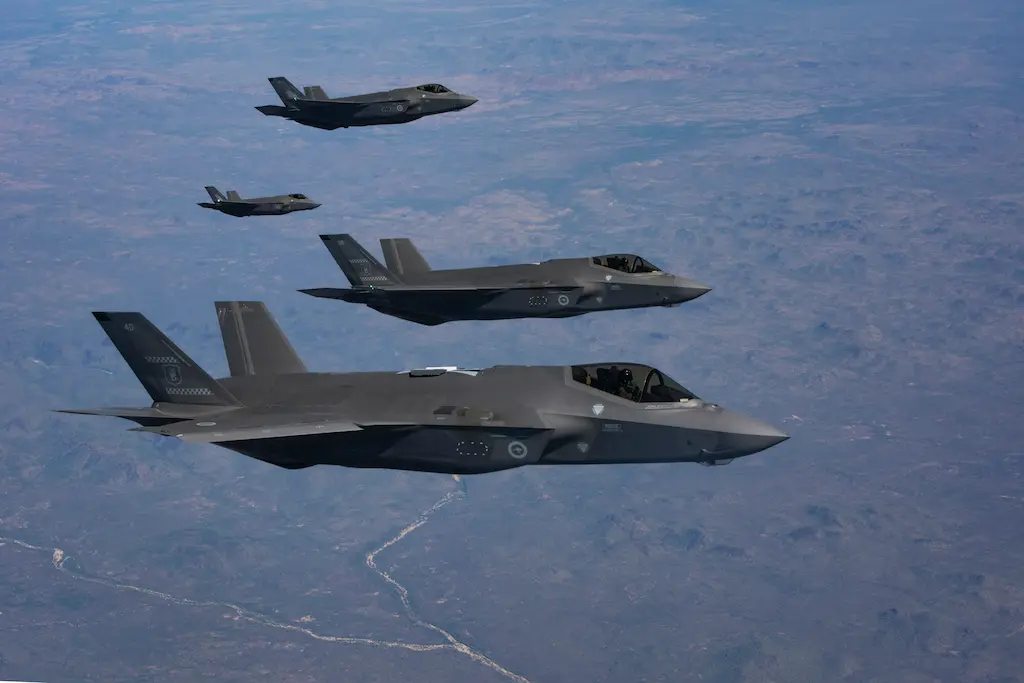
Key ideas
- •Turkey's return to the F-35 program could give its air force valuable operational experience with a mature fifth-generation fighter while KAAN is still developing.
- •Israel's concern goes beyond the F-35 itself, as Turkey could use its experience operating the aircraft to benchmark and improve its own KAAN fighter and fifth-generation capabilities.
- •If Turkey receives F-35s while continuing KAAN development, it could create a new strategic challenge for Israel and reshape the air-power balance in the Eastern Mediterranean.
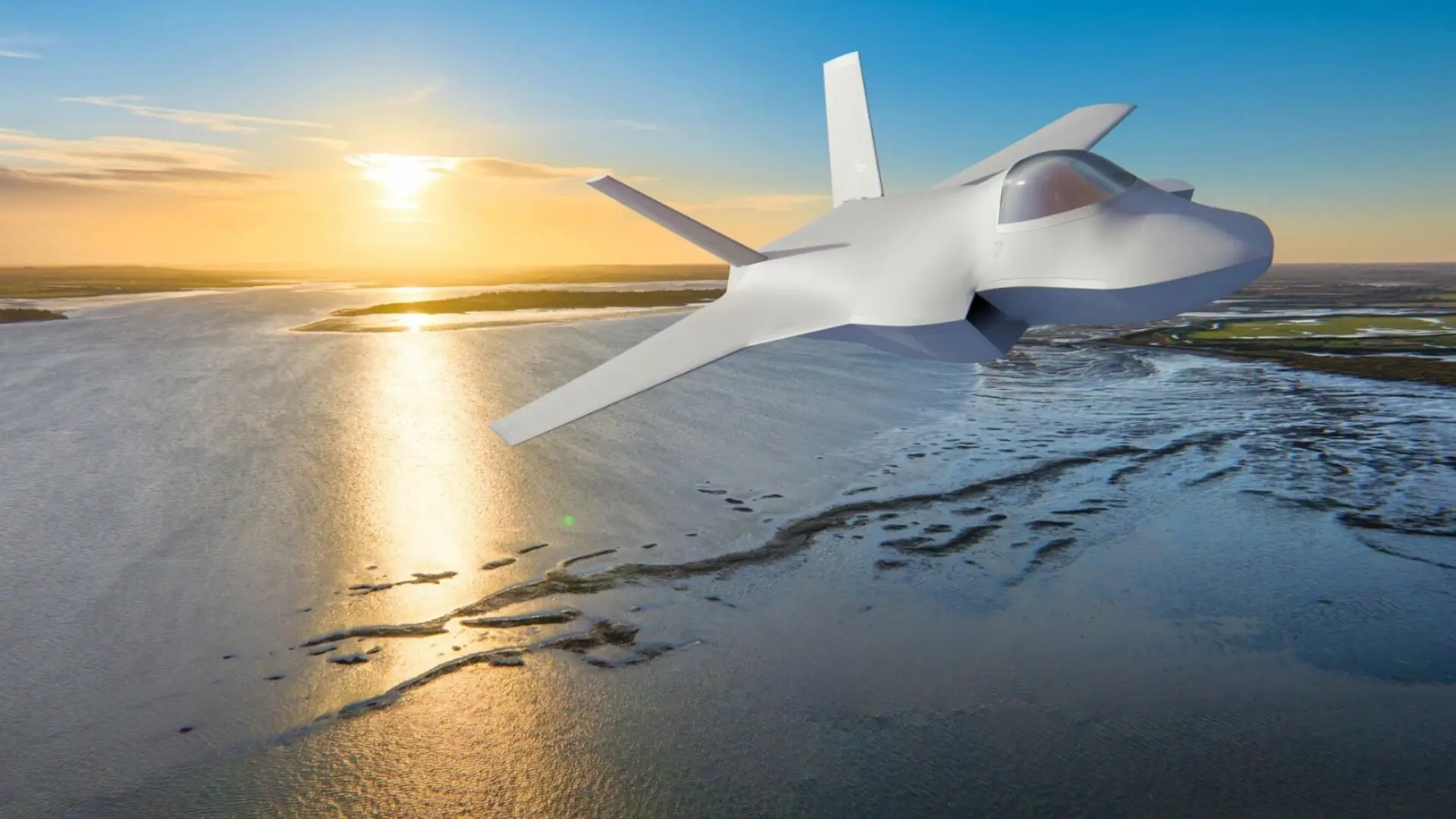
Turkey has spent the last ten years trying to develop a fighter jet it could not buy before. Now, it may get the chance to fly the aircraft that could help it catch up. Turkey’s KAAN, developed by Turkish Aerospace Industries, made its first flight in February 2024 after many years of development. This twin-engine stealth fighter includes features like internal weapons bays, an ASELSAN MURAD AESA radar, 360-degree infrared awareness, and an electro-optical targeting system.
The capabilities are similar to the F-35. However, KAAN is not the same as the F-35 in terms of performance. For Turkey, gaining access to the F-35 would mean more than just adding another fighter. It could give its air force experience with an established fifth-generation jet while the KAAN program continues to improve.
It is one reason why Israeli Prime Minister Benjamin Netanyahu opposes the possible sale so strongly. He believes that giving Turkey the F-35 would upset the balance of power in the region and weaken Israel’s military advantage. US President Donald Trump, however, has rejected these concerns, saying that the US decides which countries receive American weapons.
The gap
KAAN’s design goals allow it to be compared fairly with the F-35. The F-35 has a front radar cross-section (RCS) estimated to be between 0.001 and 0.0015 square meters. The stealthiness comes from the aircraft’s shape, exhaust design, and materials that absorb radar signals. KAAN’s early production models aim for a front RCS of about 0.01 square meters, while later models are expected to improve to around 0.003 square meters. Currently, the best KAAN design is still about twice as detectable as the F-35.
The main reason for this difference is the engine. KAAN prototypes use the General Electric F110-GE-129 engine, which is the same one used in advanced F-16s. The F110 was not made for stealth. Its exhaust nozzle lacks the serrated design that helps reduce rear-view radar and infrared visibility.
On the other hand, the F-35’s F135 engine has a stealthy nozzle designed from the start to fit the aircraft’s shape. Because of this engine, KAAN prototypes are considered 4.5-plus-generation aircraft rather than full fifth-generation, even though the rest of their design is fifth-generation.
Turkey is developing a new engine, the TEI-TF35000, through TUSAS Engine Industries. The engine aims for about 35,000 pounds of thrust, which is more than the F110’s 29,000 pounds and similar to the F-22’s Pratt & Whitney F119.
The TF35000 is expected to be ready for integration around 2032. However, serial production of KAAN with this domestic engine will take another ten years. Until then, all KAAN aircraft in service will use the F110 engine, which affects their exhaust visibility.
The six stored aircraft
Before the F-35 deal was in question, it was partly a reality. The Turkish Air Force was about to receive six F-35A aircraft between 2019 and 2020 before Turkey was officially removed from the program. These aircraft are in storage in the US. The United States did not give them to other customers waiting in line, which defence experts believe shows they expect the issue with Turkey to be resolved eventually.
The six aircraft were completed in the Block 3F configuration, which was the standard at that time. The current production version is Block 4, which includes improved radar electronic attack modes, additional weapon options such as the AIM-260 Joint Advanced Tactical Missile, improved mission data, and enhanced electronic warfare software.
Greece expects to receive Block 4 F-35s starting in 2028, while the six aircraft Turkey already has would be two software generations behind. Whether Turkey gets those six stored jets or orders new ones affects what the Turkish Air Force actually receives. The stored Block 3F aircraft can be delivered quickly but will have lower capabilities than the newer F-35s.
New Block 4 aircraft require a position in the production queue, which already serves multiple customers and has done so since 2006.
The sensor fusion
KAAN’s avionics system is built around sensor fusion, combining radar, infrared, and electronic warfare data into a single interface for the pilot, so they do not have to switch between systems. The MURAD radar and its equivalents for DAS and EOTS are designed to follow the same methods as those used by the F-35. They base their design on specifications, simulations, and information gathered by ASELSAN’s engineers from publicly available F-35 performance data.
Using the F-35 changes the way pilots operate. Turkish Air Force pilot training with the F-35’s Distributed Aperture System uses six infrared cameras that cover all around the aircraft. This lets the pilot see things below or behind the aircraft. These details come from real-life experience, not just specifications.
ASELSAN engineers creating MURAD and KAAN’s DAS can use performance data from the Turkish Air Force’s F-35 operations as a benchmark for their systems. They can directly measure how MURAD’s radar performs compared to the F-35’s AN/APG-81 radar. If KAAN’s DAS makes different design choices, they can compare the actual results to the F-35’s to see how they differ. This level of operational benchmarking is not available through other methods.
The same idea applies to KAAN’s plans for working with unmanned drones. KAAN is designed to act as a command centre for coordinating loyal wingman drones. Turkey is developing this concept alongside its broader drone capabilities, which include the Bayraktar TB2 and Akinci.
The F-35 program is also working on collaborative combat aircraft concepts through the US Air Force’s CCA program. Turkish pilots and engineers flying F-35s will be involved in both KAAN’s drone teams and the US CCA program as both develop simultaneously.
The Greek dimension
Greece will start receiving F-35 fighter jets in 2028. If Turkey gets F-35s as well, either from the six that are already stored or from new production, both NATO allies will have the same type of aircraft despite their long-standing disagreements.
The F-35 has an advantage because it can detect and engage older fighter jets without being seen. However, this advantage changes if both sides are flying F-35s. The aircraft’s stealth features, which help it evade older radar, are not as effective when both sides have similar technology. What will set the aircraft apart are the level of training, the quality of mission data, software versions, and any country-specific modifications.
Israel’s F-35I Adir has been customised with Israeli systems for electronic warfare and communication, meeting the needs of the Israeli Defence Forces. Greece’s and Turkey’s F-35s will likely have standard US configurations unless they negotiate specific changes, as Israel did with Lockheed Martin and the US government after lengthy discussions.
By the early 2030s, the Eastern Mediterranean may feature three different versions of the F-35, each with unique electronic warfare tools, software versions, and weapons. They will operate in airspace where they have previously dealt with different generations of adversaries, creating a unique situation in NATO history.
The main condition
Turkey was removed from the F-35 program for a specific technical reason that remains unresolved. The S-400’s radar, operated by Russian personnel in Turkey, could create a library of data on the F-35’s radar signature from different angles and flight profiles.
The data, sent to Russian intelligence, would provide Russia with insights into the aircraft’s stealth features that it could not obtain through its radar network. The US made this prohibition part of the 2020 National Defense Authorization Act, which requires Turkey to get rid of the S-400 and related equipment before any F-35 transfer can occur.
On July 25, the State Department told Congress that Turkey still has not met this requirement. Trump told Erdogan at the NATO summit in Ankara on July 7 that he had no concerns about the sale. The tension between these two statements is where the deal currently stands.
The specific condition is Turkey getting rid of the S-400, whether by transferring it to another country, destroying it, or storing it securely to block Russian access. It would address the intelligence collection concern. However, it does not resolve the question of what Turkey would do with a fleet of operational F-35s alongside its own fifth-generation fighter program, which aims to replicate the F-35’s key abilities.
KAAN designers created a fighter to fill the gap left by Turkey’s expulsion from the F-35 program. If Turkey rejoins the program, the situation changes. The fighter being developed to replace the F-35 would now evolve in the presence of the aircraft it was meant to replace.