Key ideas
- •Singapore has signed nuclear cooperation agreements with China, the US, France and South Korea as it builds the expertise to evaluate reactor technologies independently.
- •Small modular reactors have changed Singapore's nuclear equation, offering smaller and potentially safer options for a land-constrained city-state with rising electricity demand.
- •Singapore's eventual reactor choice could influence other Southeast Asian countries exploring nuclear power, making its planned 2027 IAEA assessment particularly important.
On August 17 in Beijing, Singapore’s Ministry of Trade and Industry (MTI) signed a nuclear cooperation agreement with China’s Atomic Energy Authority. The agreement focuses on technical and safety assessments of nuclear reactor technologies, manpower training, scientific exchange, public communication, and nuclear safety.
Before this, Singapore had already signed nuclear cooperation agreements with Battelle Memorial Institute in the US in October 2025, as well as with France and South Korea. The China agreement is Singapore’s fourth major nuclear partnership in less than a year. These three countries supply most of the world’s reactor technology to allied nations.
Singapore’s Minister for Trade and Industry explained, “There is much we can learn from partners around the world as we consider options for Singapore’s energy future. We are building those foundations, one partnership at a time.” Each agreement adds to Singapore’s growing network of nuclear partnerships.
The nuclear need
Singapore produces about 98 per cent of its electricity from natural gas, most of which is imported. The gas comes through pipelines from Malaysia and Indonesia and via LNG tankers from around the world. The Strait of Hormuz, an important route for much of Asia’s LNG, was closed to Western ships for months after the conflict in Iran began in February 2026.
It led to a spike in LNG prices and affected electricity generation costs in Singapore as the region moved towards nuclear energy. Singapore faces a structural challenge in its energy supply. It is a small city-state, just 734 square kilometres, and has the highest energy use per land area in the region.
The country cannot use large-scale hydropower because it lacks rivers, and wind energy is not a viable option due to limited wind resources. While solar energy is growing, it is limited by rooftop space and cloud cover. Meanwhile, electricity demand is increasing due to new data centres for artificial intelligence.
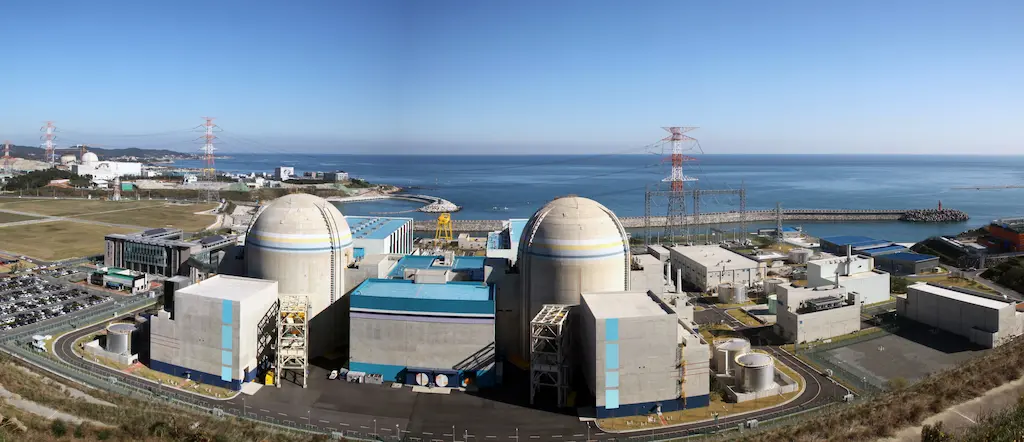
Nuclear energy is the only reliable, high-density, low-carbon option that can meet these needs. One Advanced Pressurised Water Reactor, such as those used at South Korea’s Barakah plant, can generate about 1,400 megawatts of electricity from a relatively small area.
Singapore’s total electricity generation capacity is about 14,000 megawatts. Installing two APR-1400 reactors could provide around 20 per cent of that capacity and fit within Singapore’s land constraints.
The 2012 angle
In 2012, Singapore’s government looked into the possibility of using nuclear energy. The study found that the nuclear reactor technology available at that time was not suitable for Singapore. The reactors were too large for Singapore’s electricity grid, and there were safety concerns about siting a reactor in a densely populated area.
Since then, technology has advanced due to the availability of Small Modular Reactors (SMRs). These reactors are smaller, generating between 50 and 300 megawatts of electricity. They have built-in safety features that do not require outside power to prevent accidents.
The reactor’s small size makes it a better fit for Singapore’s limited land than larger reactors. SMRs are also made in factories, which helps ensure quality, reduce costs and alleviate safety concerns in urban areas.
Since 2014, Singapore has invested in nuclear research through the Singapore Nuclear Research and Safety Initiative, which has received over $150 million in funding. The program was promoted to full institute status in July 2025, and the Energy Market Authority and the National Environment Agency have created teams focused on nuclear energy.
The foundation for a serious look into nuclear power is now in place, and the necessary technical skills are being developed. However, Singapore still needs the ability to assess different technologies from suppliers, which is the goal of the four Memoranda of Understanding (MOUs) signed over the past year.
The evaluation
MTI stated the purpose of the agreement with China. It will help Singapore build its own ability to assess nuclear energy deployment fairly and technically. The word “independent” comes from an official statement by Singapore’s ministry.
Instead of selecting a single partner, Singapore wants to work simultaneously with China, the United States, France, and South Korea, helping it build the technical skills needed to assess each partner’s proposals without relying on a single country’s expertise.
In 2027, the IAEA will conduct its Integrated Nuclear Infrastructure Review Phase 1 mission in Singapore. The review uses a structured approach to assess 19 specific areas, such as nuclear safety and emergency planning.
The INIR Phase 1 assessment is internationally recognised as a necessary step before any country can move toward the use of nuclear energy. Singapore’s four MOUs and investments are carefully planned to ensure readiness for next year’s assessment.
The technology
Singapore has a small electricity market. If it decides to use nuclear power, it won’t significantly change global nuclear orders. However, other Southeast Asian countries will closely watch Singapore’s choices in nuclear technology.
Vietnam has plans for nuclear energy and is exploring options from Russia, the US, and Japan. The Philippines has revived discussions about its Bataan Nuclear Power Plant, Indonesia aims to develop nuclear power, and Malaysia is considering it as well.
Still, these countries do not have the same level of expertise, resources, or institutional experience as Singapore does. Many of them have looked to Singapore for guidance on technology adoption.
The UAE selected South Korean technology, resulting in four operational reactors and an expanding nuclear export market. Saudi Arabia partnered with an American company under a recent agreement to pursue nuclear energy.
Singapore’s choice of technology, following its IAEA assessment and evaluation of US, French, Korean, and Chinese options, will be seen as the most thorough nuclear technology review by any Southeast Asian nation.
China’s Hualong One, known as the HPR-1000, is part of Singapore’s new partnership with CAEA. The technology has advanced designs, has passed safety reviews, and is cheaper than Western options. If it passes Singapore’s independent assessment, it will be important for other governments in the region considering nuclear energy.