Key ideas
- •The Philippines is becoming heavily dependent on Chinese solar equipment.
- •Huawei and other Chinese firms are becoming embedded in Southeast Asia’s power grids.
- •US allies are building their energy future on Chinese technology.
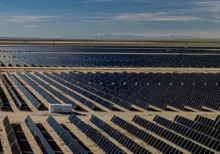
In the first four months of 2026, the Philippines imported over 4,000 megawatts of solar panels from China. During the same period, Philippine and Chinese coast guard ships engaged in ongoing confrontations at Second Thomas Shoal, where the Philippines maintains a military presence on the grounded warship BRP Sierra Madre.
The United States has stated its defence commitments to the Philippines in response to these confrontations. The Philippines is also the most active US military partner in Southeast Asia and, according to a report by energy think tank Ember, is China’s second-largest market for solar panel exports.
The solar surge
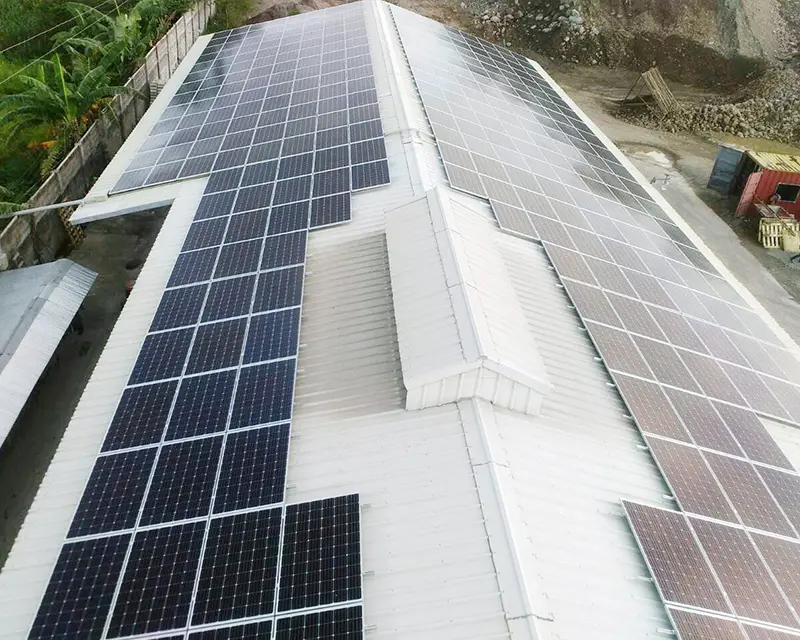
The Philippines has the highest home electricity prices in Southeast Asia. Households pay between 12 and 15 Philippine pesos per kilowatt-hour, which is about 21 to 26 US cents. Ember found that installing solar panels from China can pay off in 3.1 years for homes and 2.3 years for businesses. Chinese solar manufacturers offer 30-year performance warranties on their panels. A Filipino family that recoups its installation costs in three years will then enjoy low-cost electricity for the next 27 years.
Ember’s analysis of trade data shows that solar panel imports to the Philippines rose from $365 million in 2024 to $483 million in 2025, a 62 per cent increase in value driven by falling prices. In 2025, these imports were over five times the country’s total grid-connected solar installations.
However, most imported panels went to rooftop installations, which are not included in the official utility numbers. By April 2026, the Philippines surpassed Pakistan, Brazil, Spain, and France in receiving Chinese solar exports. Only the Netherlands received more, but it mainly acts as a re-export hub for northern Europe.
Most solar panels arriving in the Philippines come from three Chinese manufacturers. These are LONGi Green Energy Technology, JA Solar Technology, and Trina Solar, which have the world’s largest solar manufacturing capacity. Their panels are the cheapest globally because of the scale and efficiency of Chinese solar manufacturing, which has no equivalent outside China.
The inverter
Solar panels are just one part of a solar energy system. Inverters are another important component. These devices change the direct current from the panels into alternating current, which the power grid can use. Inverters matter because they require special considerations.
Huawei’s Digital Power division made about $11 billion in revenue in 2025. The company moved beyond telecommunications and ventured into solar inverters, battery storage systems, and digital energy management. Huawei and Sungrow, another major Chinese manufacturer, dominate the inverter market in Vietnam, Thailand, the Philippines, and other Southeast Asian countries.
Modern inverters connect to the internet, communicate with monitoring systems, receive remote updates, and work with grid management software to control how much power they send to the grid. In 2023, Germany’s Federal Office for Information Security warned about the cybersecurity risks of internet-connected solar inverters.
The office noted that a hacked inverter network could disrupt the power supply or destabilise the grid. The UK’s National Grid conducted a similar study. The Philippines is currently facing tensions with China over territory in the South China Sea. Despite this, the country is building its energy grid with inverters supplied by a Chinese telecommunications company. The current discussions on this topic have not addressed why these issues should be treated separately.
The defence relationship
The United States has access to nine military bases in the Philippines under the Enhanced Defense Cooperation Agreement. These bases include locations in Cagayan province in the north, which can support any situation involving Taiwan, and in Palawan province to the west, near the South China Sea.
In April 2026, American and Philippine forces held the Balikatan joint exercise, which had the largest US participation in its history. After a Chinese coast guard attack on a Philippine resupply mission to Second Thomas Shoal in early 2026, the US State Department confirmed that the mutual defence treaty applies to any attacks on Philippine armed forces, public vessels, and aircraft in the South China Sea.
The Philippines reflects a broader trend in Southeast Asia. Vietnam is growing its solar power, using most of its residential and commercial solar panels from China and inverters from Huawei.
In Thailand, over 80,000 homes use Huawei’s solar platform, according to the company. Malaysia is also expanding its renewable energy under its National Energy Transition Roadmap, relying on Chinese equipment as the main supplier. In all these cases, these countries have strong security ties with the US but are building their energy systems with Chinese products.
The energy transition in the Indo-Pacific is moving faster than shifts in security relationships. Each government is building a clean-energy future on Chinese supply chains, monitoring systems, and software. Meanwhile, they handle their military relationships, training exercises, arms purchases, and maritime disputes through a different set of ties with the US and its allies.