Key ideas
- •The March LNG shock exposed Southeast Asia's heavy dependence on Middle Eastern energy imports.
- •Indonesia, the Philippines, and Vietnam are accelerating nuclear programs as energy security overtakes cost concerns.
- •South Korea, the US, China, France, and Russia are now competing to supply the region's next generation of nuclear reactors.
For most of the past decade, Southeast Asia has refrained from using nuclear power due to policy choices. Countries seeking to build nuclear reactors faced challenges such as funding and regulatory issues, as well as public opposition, especially after the Fukushima disaster. Those that chose not to pursue nuclear power had cheap coal, easy access to LNG, and a fast-growing renewable energy sector.
However, in the first week of March 2026, Asian spot LNG prices rose 95 percent in a single month. The Strait of Hormuz had been disrupted. Ras Laffan, Qatar’s LNG terminal complex, had suspended operations after two of its 14 processing trains were damaged, removing nearly 20 percent of global LNG export capacity from the market in a matter of days.
The Philippines declared a national energy emergency and suspended trading on its wholesale electricity spot market, replacing market-based pricing with administered rates to prevent the price spike from cascading into household electricity bills and manufacturing shutdowns.
South Korea issued a crisis alert for resource security and allowed emergency releases of LNG from its strategic stockpiles. Japan also activated its reserves and began negotiating emergency shipments with suppliers in Australia, just as Cyclone Narelle disrupted Australian LNG production. In just two weeks, three decades of energy security plans were tested and found to be ineffective.
60% dependence
The International Energy Agency’s (IEA) Southeast Asia Energy Outlook 2026, published last week, provides the clearest accounting yet of the region’s exposure. Before the conflict, approximately 60 percent of Southeast Asia’s crude oil imports and one-third of its gas imports came from the Middle East.
When refinery feedstocks and indirect product trade are included, about 45 percent of the region’s oil supply comes from Middle Eastern crude. The power sectors and economies of eight countries, which together support nearly 700 million people, rely heavily on energy that passes through a single chokepoint, which a state actor has chosen to challenge.
Southeast Asia’s spending on energy imports could increase from over $80 billion in 2024 to about $245 billion by 2035 if current policies remain unchanged, according to the IEA. This estimate was made before the March price spike showed how quickly costs can rise in a crisis. The region accounts for about 9 percent of the world’s population but will contribute nearly 20 percent of the global increase in energy demand by 2035. It is growing faster than its energy security systems can handle.
Before the conflict, reliance on imported refined products and rigid refining setups were already seen as problems. The crisis highlighted this weakness as a serious strategic risk. Governments that were debating how quickly to shift to renewable energy now found themselves discussing how to survive.
The countries and the programs
The IEA report shows that countries have advanced their plans since the conflict began. Indonesia, the Philippines, and Vietnam have set official targets for developing nuclear energy. Meanwhile, Malaysia, Singapore, Thailand, and Myanmar are considering using nuclear power. Japan’s existing nuclear fleet, which has been steadily returning reactors to service following post-Fukushima shutdowns, is operating at its highest capacity in years, and the government has explicitly stated its intention to maximize nuclear output to stabilize baseload.
In March, South Korea’s president said that the conflict in Iran was a great opportunity to quickly and thoroughly switch to renewable energy. However, the South Korean government’s actual response was to increase output from its nuclear power plants rather than reduce it. The situations in different countries vary. Indonesia has the most advanced program among Southeast Asian first movers. It has a formal nuclear regulatory framework, a national nuclear energy board, and ongoing discussions with reactor suppliers from South Korea, Japan, the United States, Russia, and China.
Its geography, with 17,000 islands, many without reliable grid connectivity, creates a specific case for small modular reactors, which can be sized to island-scale demand without the transmission infrastructure a large conventional reactor requires. The government’s target is 35 gigawatts of new nuclear capacity by 2060, with the first units potentially online in the mid-2030s.
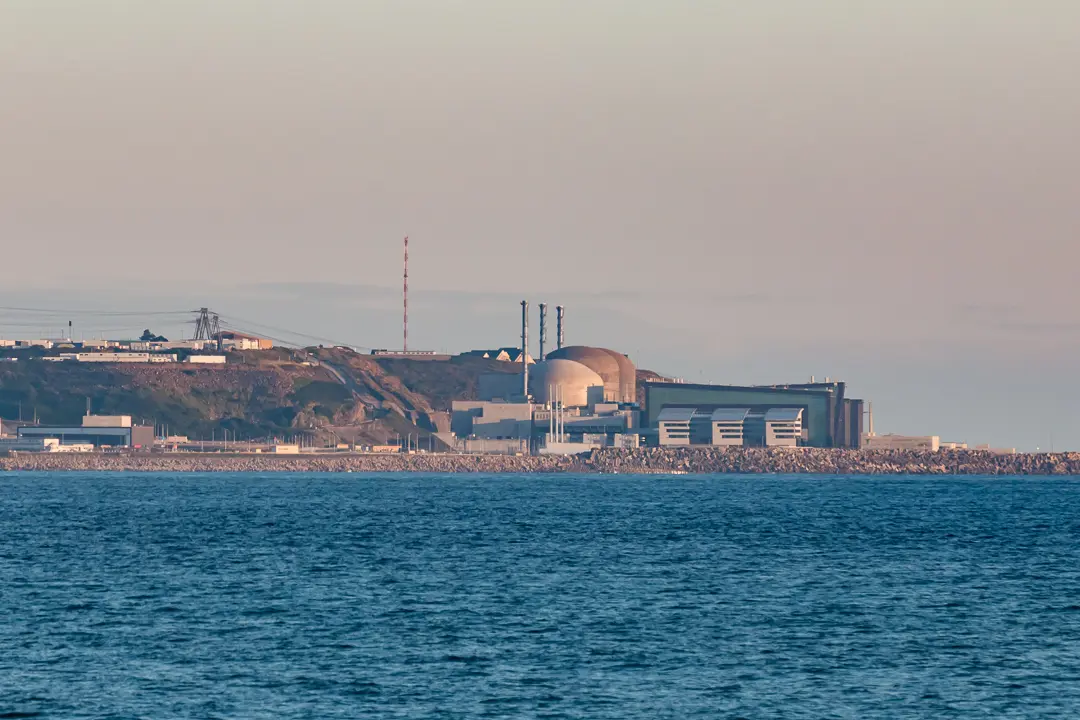
The Philippines has made quicker progress since March than any other country in the region. A national energy emergency has sped up plans for the Bataan Nuclear Power Plant. This plant was built in the 1980s but was never used because of safety concerns after Ferdinand Marcos was removed from power. The government is now reviewing whether to refurbish the plant or build a new one. It is also talking with South Korea’s KEPCO and US companies about new construction options. There is a strong need for action: the Philippines’ power sector relies heavily on imported oil, coal, and LNG, with little domestic fossil fuel.
Vietnam’s target is to build two nuclear plants by 2030 and to reach 10 gigawatts of nuclear capacity by 2050. Russia was the original proposed supplier through Rosatom before the program was suspended in 2016. The government has been assessing alternatives from South Korea, Japan, France, and the United States.
The target to have the first units ready by 2030 is likely unrealistic due to regulatory and financing delays. However, there is now clear commitment to the program, unlike before March. Malaysia and Singapore are different; both are advanced economies with strong regulatory systems, but neither has officially committed to the program.
Malaysia’s Energy Transition Roadmap includes a nuclear assessment for the 2030s. Singapore, which has no land for a conventional large reactor, has focused specifically on feasibility studies for small modular reactors (SMRs), recognizing that an SMR sited either domestically or in a neighboring country with a transmission connection is the only realistic nuclear option given its geography.
The technology competition
Several major suppliers are competing for nuclear contracts in Southeast Asia. South Korea offers its APR-1400 design, which has successfully operated plants in both South Korea and the UAE, along with a strong history of exports. The United States has a fragmented selection of reactors, including Westinghouse’s AP1000 reactors and several SMR developers, such as NuScale, Kairos, and X-energy.
France, through EDF and the EPR design, has faced significant construction cost and delay issues in Finland and the UK, but it has completed units in China. CGNPC and its Hualong One reactor represent China. Meanwhile, Russia, through Rosatom, maintains ties in several Southeast Asian countries, despite the geopolitical challenges posed by its involvement.
Choosing a nuclear reactor technology creates a long-term dependency. When a country buys Korean reactors, it also relies on Korean fuel, maintenance, training, and upgrades for forty years. The same goes for countries that purchase Chinese reactors; they also depend on China in these areas. The IEA report points out that reactor technology, fuel supply, and financing can lead to lasting dependencies.
It means countries need to choose their partners wisely. The report warns that some countries are accelerating their nuclear programs to reduce their energy dependence on the Middle East. However, they must be careful not to create a similar dependence on a reactor supplier whose geopolitical interests may not match their own.
South Korea is well-positioned in this competition because of its technology, financial strength, and fewer geopolitical issues than those of China and Russia. The Korea Export-Import Bank and Korea Trade Insurance Corporation support Korean nuclear exports. The successful completion of the Barakah plant in the UAE, the first commercial nuclear power station in the Arab world built by a Korean group, gives Seoul a strong reference project in Tecrow’s main area that European and American suppliers cannot compete with.
The ambitions
Southeast Asia’s plans for nuclear energy are outpacing the region’s industrial capabilities. The IEA report clearly points out the challenges. To succeed, countries need strong regulations, skilled workers, public trust, clear funding models, and careful partner selection. The report states that nuclear energy can be affordable only if projects stay on track and within budget. It also highlights that the region has a mixed track record of completing large infrastructure projects on time.
No country that has announced plans for nuclear targets has a strong existing nuclear industry. Indonesia, the Philippines, and Vietnam will need to build nuclear workforces, develop effective regulations, establish emergency response systems, manage waste, and establish supply chain relationships from scratch. They will have to do all this while trying to launch reactors on tight schedules. The main issue is not political will; it’s the lack of industrial capacity and the time it takes to develop it.
SMRs are often proposed as a solution to meet energy needs effectively. An SMR can produce between 50 and 300 megawatts of electricity and can be placed on a small site. It requires less cooling water than a large traditional reactor, can be manufactured in factories and shipped for final assembly, and allows for gradual deployment without a massive upfront investment. This makes them attractive for island nations and countries with spread-out populations.
Although the technology poses risks, as no SMR has operated commercially outside Russia’s floating reactor, several designs are getting closer to commercial availability. Demand from Southeast Asia may speed up this process. The crisis in the Middle East did not cause Southeast Asia’s interest in nuclear energy. This interest had been detailed in policy documents and studies for years before March 2026. The crisis changed the situation by making nuclear energy the best option when cheaper solutions failed.
It led to billions in emergency energy costs, a national emergency in the Philippines, and a realization for every Southeast Asian government that had been relying on cheap LNG as a temporary energy source for the next two decades. LNG is no longer seen as the right choice. Instead, it appears that Southeast Asia has been moving toward nuclear energy all along.