Key ideas
- •India is finally moving ahead with the Javelin after first exploring the American anti-tank missile in 2010, beginning with an emergency order for 100 missiles.
- •India could eventually require around 40,000 Javelin rounds, with Bharat Dynamics exploring local production with Lockheed Martin and Raytheon.
- •Years of delays in India's indigenous MPATGM and the Javelin's combat record in Ukraine have pushed New Delhi back toward the American system.
India has been interested in the FGM-148 Javelin anti-tank guided missile system since 2010. 16 years later, the Indian Army has now received approval to purchase 100 missiles through emergency procurement powers. India plans to acquire around 40,000 rounds over the next two decades.
On August 28, US Ambassador to India Sergio Gor announced on X that India intends to buy the battle-tested Javelin system. He mentioned the possibility of co-production and noted that relations between the two nations are at record highs. It follows a statement by US Defense Secretary Pete Hegseth at the Shangri-La Dialogue in Singapore on May 30, in which he supported the program.
The program’s current status reflects two decades of incomplete procurement. In November 2025, the US State Department approved a $45.7 million Foreign Military Sale of Javelin missiles to India. The package, worth $92.8 million, also included Excalibur precision-guided artillery munitions and covered 100 missile rounds, one fly-to-buy round, and 25 Lightweight Command Launch Units, along with trainers, simulators, spare parts, and lifecycle support.
India pursued this limited package under its Emergency Procurement mechanism, thereby bypassing the standard process for contracts below Rs 300 crore. Defence officials called this a stopgap measure while broader negotiations continued.
In February 2026, Bharat Dynamics Limited, India’s state-owned missile manufacturer, signed an agreement with the Javelin Joint Venture, owned by Lockheed Martin and Raytheon, to explore joint manufacturing of Javelin missiles in India. The agreement shows India’s desire to seek co-production rights rather than only importing the missiles, aligning with its defence indigenisation policy under Atmanirbhar Bharat.
India’s search for an anti-tank guided missile has faced years of delays across multiple programs. Initial interest in the Javelin in 2010 stalled over technology transfer issues. India then considered Israel’s Spike missile, awarding a tender in 2014, but canceled that program twice, in 2017 and again in 2024, due to vendor concerns and the progress of its own Man-Portable Anti-Tank Guided Missile developed by the Defence Research and Development Organisation (DRDO).
The DRDO’s MPATGM passed a warhead penetration test at Pokhran in August 2024 and has completed field trials. However, it has not yet entered service. The Indian Army’s need for an effective anti-tank guided missile suitable for high-altitude areas in Ladakh and the diverse terrain along the eastern border remains unfulfilled by the indigenous program.
The conflict in Ukraine influenced India’s assessment of the Javelin system. It has proven effective against Russian tanks, providing performance data that other options lack.
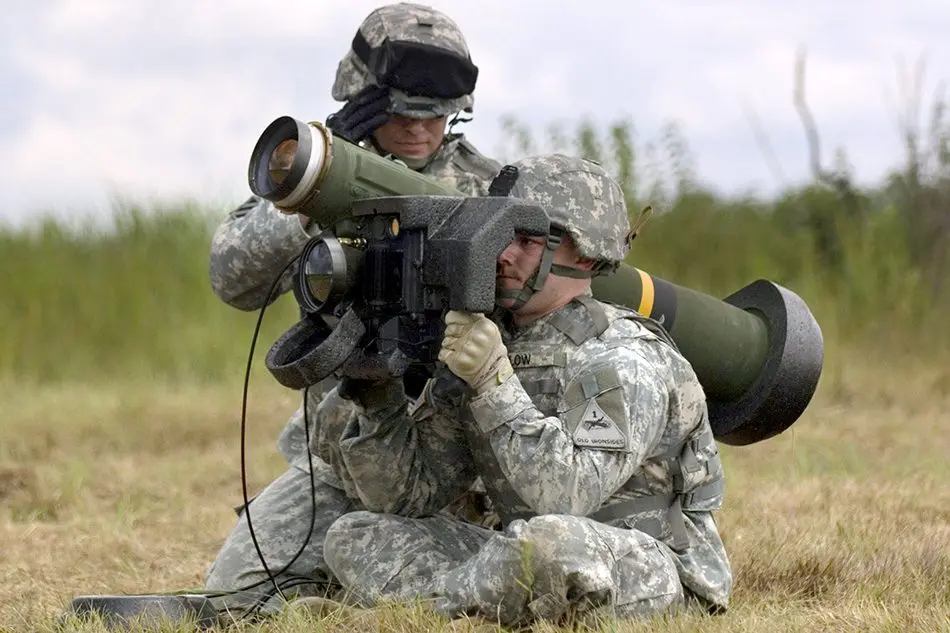
The Javelin is a third-generation, man-portable, fire-and-forget missile system developed by Raytheon and Lockheed Martin. It uses an imaging infrared seeker and can hit targets in direct-attack or top-attack modes. The top-attack feature is especially useful against modern tanks. The system has been successfully used in Ukraine, Afghanistan, and other conflicts.
Hegseth’s statement at the Shangri-La Dialogue has put the Javelin program back on track for procurement. However, whether a full-scale purchase will happen, covering thousands of systems and the co-production arrangement that BDL is negotiating, remains uncertain. The urgent order of 100 missiles addresses an immediate need, but fulfilling the Army’s requirement for approximately 40,000 rounds needs a larger program than what is currently approved.