Key ideas
- •Iran installed its heaviest-ever offshore platform using a domestically developed float-over method despite decades of sanctions and restricted access to foreign contractors.
- •The 6,200-ton Reshadat P4 platform will add 35,000 barrels of daily production while injecting 80,000 barrels of water to sustain long-term field output.
- •The project demonstrates that Iran has developed advanced offshore engineering capabilities possessed by only a small group of industrial nations.
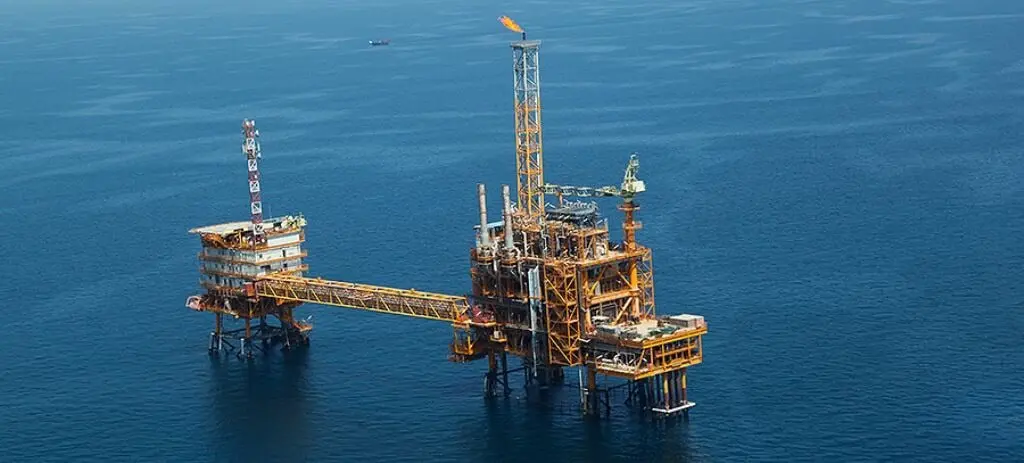
On Monday, Iranian engineers lowered a 6,200-metric-ton processing platform onto a pre-installed jacket in the Persian Gulf using one of the most technically demanding installation methods in the offshore industry. The platform, designated P4, is located at the Reshadat oil field, roughly 90 kilometers southwest of Lavan Island.
It is the heaviest offshore platform Iran has ever built and installed. According to the National Iranian Oil Company and the state news agency Shana, every stage of the project, design, engineering, fabrication, and installation, was carried out by Iranian specialists and domestic firms without any foreign assistance.
Only eight countries in the world are generally considered capable of building offshore platforms of this class entirely through domestic capacity. The list runs through the United States, Norway, the Netherlands, France, the United Kingdom, China, South Korea, and Japan, all nations with decades of investment in offshore engineering infrastructure, access to international contractors, and supply chains built during periods of open trade.
Iran has operated under comprehensive US sanctions since 2018 and under various forms of international restrictions since 1979. It is not a country anyone would have expected to join that list under those conditions. The Reshadat installation is the most concrete evidence yet.
The float-over method
Understanding how Iran installed P4 is important because it shows why the project could proceed despite sanctions and the engineering skills required. In a typical offshore platform installation, a heavy-lift crane vessel, a specialized type of ship, lifts the finished deck structure onto its jacket. These ships can lift tens of thousands of tonnes.
The largest of these vessels, like the Heerema-owned SSCV Sleipnir and SSCV Thialf, can lift more than 14,000 tonnes in a single operation and be hired at rates in the hundreds of thousands of dollars per day. They are owned and operated by Dutch, Norwegian, and American companies that are legally prohibited from doing business with Iran under existing sanctions. Conventional heavy-lift installation was not available to Iranian engineers, regardless of price.
The float-over method is a way to put a big deck on an offshore structure without using a crane boat. First, workers build the deck on land. Then, they put it on a special barge. This barge is pulled to the ocean and placed over the stands. Then, they add water to the barge so it sinks until the deck lands on the stands.
The weight of the deck is transferred from the barge to the jacket via specially designed connections that can withstand the impact of the transfer. After this, the barge is refloated and towed away. The main challenge is during the connection phase. The barge is constantly moving due to waves, currents, and wind, while the jacket remains fixed to the seabed.
The deck must make contact with all jacket legs simultaneously, transferring load in a controlled manner while the barge is subject to nonlinear hydrodynamic forces. The permitted weather window is narrow. Pre-installation hydrodynamic modeling must account for barge-jacket interactions that are complex enough to have generated extensive dedicated academic literature on their own.
Specialist components, leg mating units, deck support units, surge and sway fenders, must be designed and manufactured to precise tolerances. None of these components or the expertise to deploy them were available to Iran through international markets. The country developed them domestically.
The field and its history
The Reshadat oil field carries a history that makes Monday’s installation unusual in ways that go beyond the engineering. The field was discovered in 1965, when it was called Rostam, and brought into production in 1968 with initial development by the Iranian-Italian company IMINICO.
It sits in the Persian Gulf’s shallow carbonate geology and produces light crude oil, which is transferred via a 106-kilometer pipeline to Lavan Island for processing. The field holds approximately 4.6 billion barrels of in-situ oil reserves.
In October 1987, during the Tanker War phase of the Iran-Iraq War, US Navy warships attacked a main facility at the Reshadat oil field in a retaliatory strike called Operation Nimble Archer. This response came after the USS Samuel B. Roberts was damaged by mines. The attack set the oil platform on fire. Although the field eventually recovered, the damage and years of limited maintenance due to sanctions meant that Reshadat could not operate at its full potential.
The major redevelopment project that topped out on Monday’s installation began in 2008, when Iran’s Offshore Oil Company launched a plan to install five new platforms at the field under the Mehr-e Mandegar scheme, covering several Persian Gulf assets.
The P4 jacket, the underwater structural steel framework that Monday’s topsides rest on, was fabricated domestically and installed in 2011, when the Sadaf 3000 vessel carried out 40 days of pile-driving operations to secure it to the seabed. The topsides installation waited years longer. Sanctions limited Iran’s access to specialized equipment and materials needed to complete the processing deck, causing delays acknowledged by the Oil Ministry.
The project gained renewed momentum under the current administration with direct ministerial involvement and support from NIOC’s managing director. What the ministry chose to emphasize when the installation was announced was not the delay but what completing it demonstrated.
What the platform actually does
The Reshadat P4 processing platform is not a drilling rig. It is a production and processing facility, with surface infrastructure that separates, treats, and prepares crude oil extracted from subsea wells for export via the pipeline to Lavan. Adding this capacity to Reshadat does two things simultaneously.
The first is that the platform will increase the field’s oil production by approximately 35,000 barrels per day. At current oil prices, that increment represents significant revenue.
The second is technically more important. The platform will also enable the injection of 80,000 barrels of water per day into the reservoir. Water injection is the primary mechanism for maintaining reservoir pressure in a maturing oil field, as oil is extracted, pressure drops, and production rates decline unless fluid is injected to compensate. Without water injection at Reshadat, the field’s production trajectory would eventually decline regardless of surface infrastructure investment.
With it, the field’s existing output can be sustained at current levels while the new production increment is added. The P4 platform does not simply add capacity. It protects the existing capacity.
The capability claim
Iran’s Oil Ministry made it clear that the P4 project was carried out without foreign assistance and framed that claim as the headline alongside the installation itself. This framing reflects that the Clingendael Institute, among others, has assessed that the primary long-term threat to Iran’s oil production is not military strikes but rather the accumulated maintenance deficit, technology gap, and engineering capability shortfall resulting from decades of sanctions and limited access to international contractors and equipment.
The P4 installation is a clear response to recent events. Engineers on the project have publicly stated that they continued construction during the US-Israeli military campaign against Iran from late February to early April 2026, when energy infrastructure was targeted. They restored damaged offshore facilities to production within seven to ten days after strikes. The P4 project itself was not stopped.
It is hard to determine if the domestic-only claim is true without full independent verification. Sanctions compliance is complicated. Supply chains often involve third parties in China or elsewhere that can provide parts without the direct participation of sanctioned international companies.
What the float-over installation method itself verifies is that Iran possesses, at minimum, the engineering planning, hydrodynamic analysis, fabrication, and operational execution capability to complete a 6,200-tonne offshore deck installation without the crane vessels and international contractors that would typically handle a project of this class. That capability exists domestically in a form that functioned under conditions of active military conflict against its own energy infrastructure.
The Reshadat field’s expanded capacity is part of a broader effort to sustain oil revenues that account for roughly a quarter of Iran’s GDP. Offshore production accounts for a significant share of Iran’s total oil output, and the Persian Gulf’s carbonate reservoirs contain reserves that will require continued platform investment to develop.
P4 is not the last platform Iran intends to build. It is the largest one it has built so far, and it was completed under conditions that would have been considered prohibitive for any national oil company operating at the margins of the international system. What it suggests is that those margins are wider and more technically capable than they appeared before Monday.