Key ideas
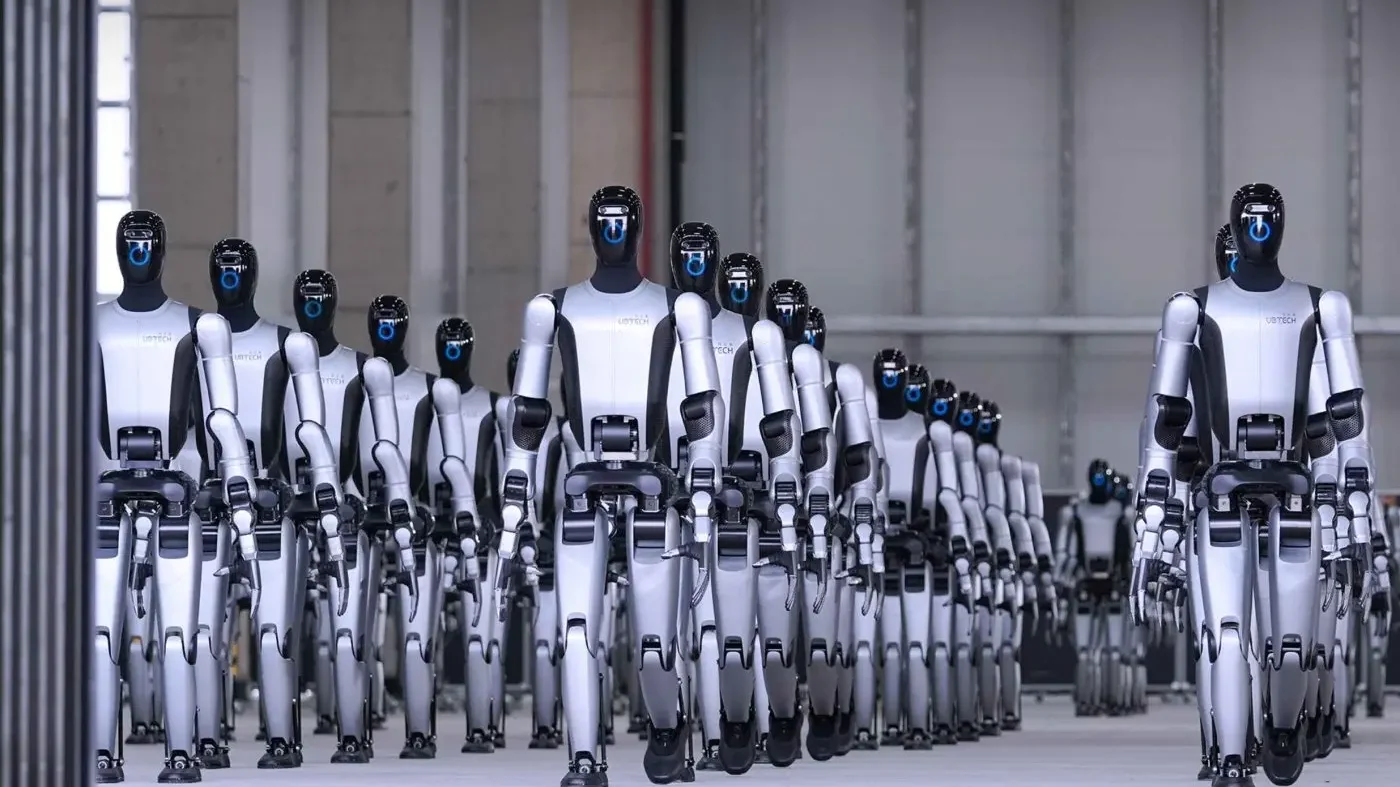
- •Japan plans to deploy 10 million AI-powered robots by 2040 to regain its robotics leadership.
- •The strategy focuses on "physical AI" that enables robots to perceive, reason, and act autonomously.
- •A shrinking workforce and rising competition from China and South Korea are driving Japan's robotics push.
In 1969, Kawasaki Heavy Industries produced Japan’s first industrial robot under a licence from Unimation, the American company that had invented the technology a decade earlier. What followed over the next four decades was one of the most successful technology transfers in manufacturing history, moving in the opposite direction from the original.
Japanese companies, Kawasaki, FANUC, Yaskawa, Nachi, Denso, Epson, progressively improved, refined, and ultimately surpassed the American technology they had licensed, building a robotics industrial base so dominant that by the mid-1990s Japan was both the largest manufacturer and the largest deployer of industrial robots on earth.
By the measure that matters most for a manufacturing economy, the density of robots in operation per ten thousand workers, Japan ranked first in the world from 1994 to 2009. However, it slipped to the fifth spot in 2024. The country that gave the world the modern industrial robot has been systematically overtaken in its own field by neighbours who learned from it, even as it continues to make the machines it now lags in deploying.
Now, South Korea sits at the top of the robot density ranking with 1,220 robots per ten thousand manufacturing workers, while Japan is at 446. China has approximately 2 million operational industrial robots, 4.5 times Japan’s installed base, and installed 295,000 new units in 2024 alone, accounting for 54 per cent of all robot installations globally that year. Japan installed 44,500.
The country that builds 38 per cent of the world’s industrial robots by value deployed fewer of them, proportionally, than the economies it supplied. Japan’s government has now formally decided to reclaim its crown.
The paradox
The specific shape of Japan’s position in the robotics industry is more complicated than the density ranking suggests, and that complexity matters for understanding why the strategy Japan just announced is structured the way it is.
Japan is simultaneously the world’s largest manufacturer of industrial robots, as FANUC, Yaskawa, Kawasaki, Nachi, and Denso together account for approximately 38 per cent of global industrial robot production. It is a country whose domestic robot deployment has been growing far more slowly than the economies it sells to.
Japanese robot manufacturers continue to produce the most precise, most reliable, and in many applications most capable industrial robots in the world. But Japan’s domestic manufacturing economy is not deploying at the pace its technological leadership would suggest.
Japan’s economy has structural features that change slowly. The country’s manufacturing is mostly made up of small and medium businesses that work in close networks. These networks, called keiretsu, connect parts makers to assembly companies through mutual business commitments to set up, reducing competition and the pressure to invest quickly.
Small manufacturers adopt automation more slowly than large ones worldwide. Japan has proportionally more of them than South Korea or Germany, and they have resisted the pace of automation that Japan’s own robot manufacturers were enabling in customers overseas.
Japan has focused for many years on creating job stability for workers, making it difficult to automate jobs on a large scale. On the other hand, Japanese companies can export robots to countries with fewer restrictions on automation, enabling those factories to automate more easily.
South Korea, with a more concentrated industrial structure dominated by the major chaebol groups, Samsung, Hyundai, LG, and SK, automated its manufacturing base at a pace that gave it the world’s highest robot density without the same degree of social friction.
China’s rise in robot deployment followed a different dynamic again. China is currently the world’s largest robotics market, accounting for 54 per cent of global deployments, and its production share is creeping closer to the top spot, with domestic manufacturers including ETSUN, Siasun, and Dobot growing their market share.
China’s robot density has grown due to its state industrial policy and strategies by domestic robot manufacturers like Dobot. In 2025, Dobot ranked first worldwide in collaborative robot shipments by offering lower prices than Japanese and European suppliers while also improving its technology.
The AI robot plan
In March 2026, Japan’s Ministry of Economy, Trade and Industry released the AI Robotics Strategy, setting a target of 30 per cent of the global AI robot market, a potential opportunity the government estimates at $133 billion by 2040.
The government is targeting 10 million AI-equipped robots deployed across 18 sectors, including restaurant, food manufacturing, and medical, by 2040, with METI formally committed up to 1 trillion yen ($6.2 billion) over five years to back Noetra, a physical AI consortium anchored by SoftBank, Sony, NEC, and Honda, with approximately 44 companies expected to participate.
The announcement is part of a broader 370 trillion yen national AI growth strategy targeting 17 priority sectors. But the robotics component deserves separate examination because what the country is building is not a robot, but the intelligence that runs inside one.
Physical AI is the term Japan’s strategy uses for what most people would call embodied AI, artificial intelligence that does not live in a data centre responding to text prompts but instead operates in and through a physical machine, perceiving its environment through cameras and sensors, deciding what to do, and then doing it with motors and actuators.
The distinction matters because the competitive dynamics of physical AI differ from those of language-model AI. Large language model performance is driven primarily by compute scale and training data volume, both of which the United States and China have invested in at levels that make it very difficult for Japan to compete directly.
Physical AI performance is driven by the quality of real-world interaction data gathered from machines operating in real environments, and Japan’s manufacturing base is positioned to generate such data in quantity that no other country can match.
The goal is a multimodal foundation model, one that can read language, images, video and sensor data together, so a robot can actually interpret a room and act in it rather than execute pre-programmed motions. Noetra and the National Institute of Advanced Industrial Science and Technology plan to release an initial version of this model in fiscal 2026, with annual improvements thereafter built on data contributed by participating manufacturers and operators.
The consortium brings together strengths from different companies. Honda has experience in humanoid and factory robots, while Sony provides imaging sensor technology. NEC contributes its expertise in industrial systems, and SoftBank supports the group through investments in AI infrastructure.
Industry Minister Ryosei Akazawa said, “This strategy sets a target of approximately 10 million robots to be deployed by 2040 and, with the addition of the restaurant, food manufacturing and medical sectors, will vigorously promote social implementation.”
The sovereign model
The most strategically significant aspect of Japan’s approach is something the deployment numbers do not capture: the decision to build a physical AI foundation model domestically rather than use American or Chinese systems.
Countries around the world are pursuing sovereign AI models for reasons that vary by context, data privacy, national security, regulatory control, and industrial competitiveness, but the convergence of those reasons on a common conclusion has become one of the defining technology policy trends of the decade.
Japan’s specific reasoning is industrial rather than purely security-oriented. A physical AI model trained on data from Japanese manufacturers operating Japanese robots in Japanese facilities produces a system optimised for the specific conditions, components, and processes of Japanese industry.
Using an American foundation model means giving American companies access to the operational data generated during training. Using a Chinese model is politically inconceivable given the current trajectory of Japan-China strategic relations. Building one domestically keeps both the model and the data it learns from within Japan’s industrial ecosystem.
NVIDIA is partnering with Japan and its industrial leaders to build the AI infrastructure powering the country’s industries through the Vera Rubin AI factory, providing the computing foundation for Japan’s FRONTia Project, with Jensen Huang describing the partnership as building “the AI infrastructure that will power the country’s industries, its economy and a new generation of innovation.”
The involvement of NVIDIA, whose AI accelerators run every major AI training operation in the world, as the compute provider. At the same time, Japan is building its own model to use American chips as infrastructure while keeping the intelligence itself domestic.
The Noetra consortium structure itself reflects a distinctly Japanese approach to industrial strategy. Rather than a single company attempting to build a foundation model in competition with OpenAI and Anthropic, the government has assembled an industry consortium of companies that collectively own the hardware the model needs to run on, such as Honda’s robots, Sony’s sensors, Kawasaki’s factory arms, NEC’s industrial computers.
It is a familiar shape for a Japanese industrial push. Rather than one company pursuing a frontier model alone, the state has assembled a consortium of firms that already build the hardware this model needs to run. The model will be trained on data these companies generate from real robot operations in real factories.
The competitive advantage Japan is betting on is not that its model will outperform ChatGPT on benchmarks. It is that its model will outperform every alternative specifically at the task of operating robots in manufacturing environments, because it will have been trained on more real-world manufacturing robot data than any competitor can access.
The race
Japan’s strategy is urgent because of its demographic crisis, which is unlike anything seen in other developed countries. The focus is not on job loss; instead, robots are part of Japan’s plan to survive.
Japan’s population is declining, and its workforce is shrinking. The sectors targeted in the 10 million robot deployment plan, such as restaurants, food manufacturing, medical care, and construction, are precisely the sectors where Japan’s demographic decline creates the most acute labour shortages.
These are not the exciting uses of AI and robots. They are the basic tasks that society needs to keep working, especially as the number of working-age people decreases. A robot that helps elderly patients in a hospital, stocks shelves in a convenience store at night, or cooks in a commercial kitchen without constant human help is not just a showpiece for Japan. It is essential support for our infrastructure.
The competitive dimension runs alongside the demographic one. South Korea announced record public-private investments worth hundreds of billions of dollars in AI data centres and chipmaking within days of Japan’s AI Robotics Strategy, specifically targeting 20 per cent of the global humanoid robot market.
The two countries are simultaneously collaborating in some supply chains and competing directly in others. The robot strategy documents from both governments in June and July 2026 make it clear that each is explicitly benchmarking against the other and against China.
China’s growth is important for understanding both strategies. The IFR estimates that China now has about 2 million industrial robots, making it the country with the most operational robots in the world. This is about 4.5 times more than Japan’s total.
Chinese manufacturers are closing the technology gap with their Japanese competitors while maintaining a significant price advantage, and the domestic Chinese market, by far the world’s largest, is increasingly captured by Chinese rather than Japanese companies.
Dobot, ETSUN, and Siasun represent a domestic Chinese robotics industry that did not exist in meaningful commercial form a decade ago and now competes for the same factory floors that FANUC and Yaskawa supplied, without serious domestic competition for 30 years.
The bet
The 10 million-robot figure and the 30 per cent market share target are easy to quote but difficult to evaluate. Japan has announced ambitious technology strategies before and not always delivered on their stated timelines; the Fifth Generation Computer project of the 1980s and several semiconductor initiatives since are the cautionary examples that Japanese officials are presumably aware of and hoping not to repeat.
The funding structure attempts to guard against the same outcome: the money is not unconditional, and the performance-linked structure gives Tokyo every reason to walk away quietly rather than prop up a stalled national project if it does not deliver.
What is credibly different about this strategy compared to previous Japanese technology initiatives is that it begins from an industrial position of genuine strength. Japan is not attempting to build a robot industry from scratch.
It is the world’s largest robot manufacturer, with decades of precision engineering knowledge, a global customer base, and companies that have been iterating on industrial robot design since the technology was invented. What it lacks is the software intelligence layer, the physical AI foundation model, that will determine which nations’ robots are preferred when price and mechanical performance are comparable.
That is a gap Japan is structurally positioned to close, given the quantity and quality of real-world operational data from its manufacturers for training. The country that ranked first in robot density for fifteen years because it automated its manufacturing base faster than anyone else then watched that advantage erode as it continued selling the tools of automation to competitors who deployed them more aggressively.
The AI Robotics Strategy is the formal acknowledgement that the next phase of the competition is not about building better robot hardware, but about building the intelligence that determines what those robots can do when they leave the factory. Japan has an unusual advantage in that race. It makes the machines; now it just needs to teach them to think.