Key ideas
- •Japan is emerging as a manufacturing hub for Western military drones, attracting companies from Europe and the United States.
- •Combat-proven drone technology from Ukraine is being transferred to Japan through new industrial and research partnerships.
- •Tokyo is pairing its world-class sensors and anti-submarine expertise with allied drone programs to strengthen Indo-Pacific defense.
Every day, the Japan Maritime Self-Defense Force sends Kawasaki P-1 aircraft over the Pacific Ocean to search for submarines. The P-1 is one of the best maritime patrol aircraft available. It is quiet, capable, made in Japan, and flown by highly trained crews. These crews often fly for hours over empty ocean, listening for submarines that may not show up. Japan uses the P-1 because it is located near one of the world’s largest and most active submarine fleets. Additionally, the sea routes around its southern islands are vital to global trade and security.
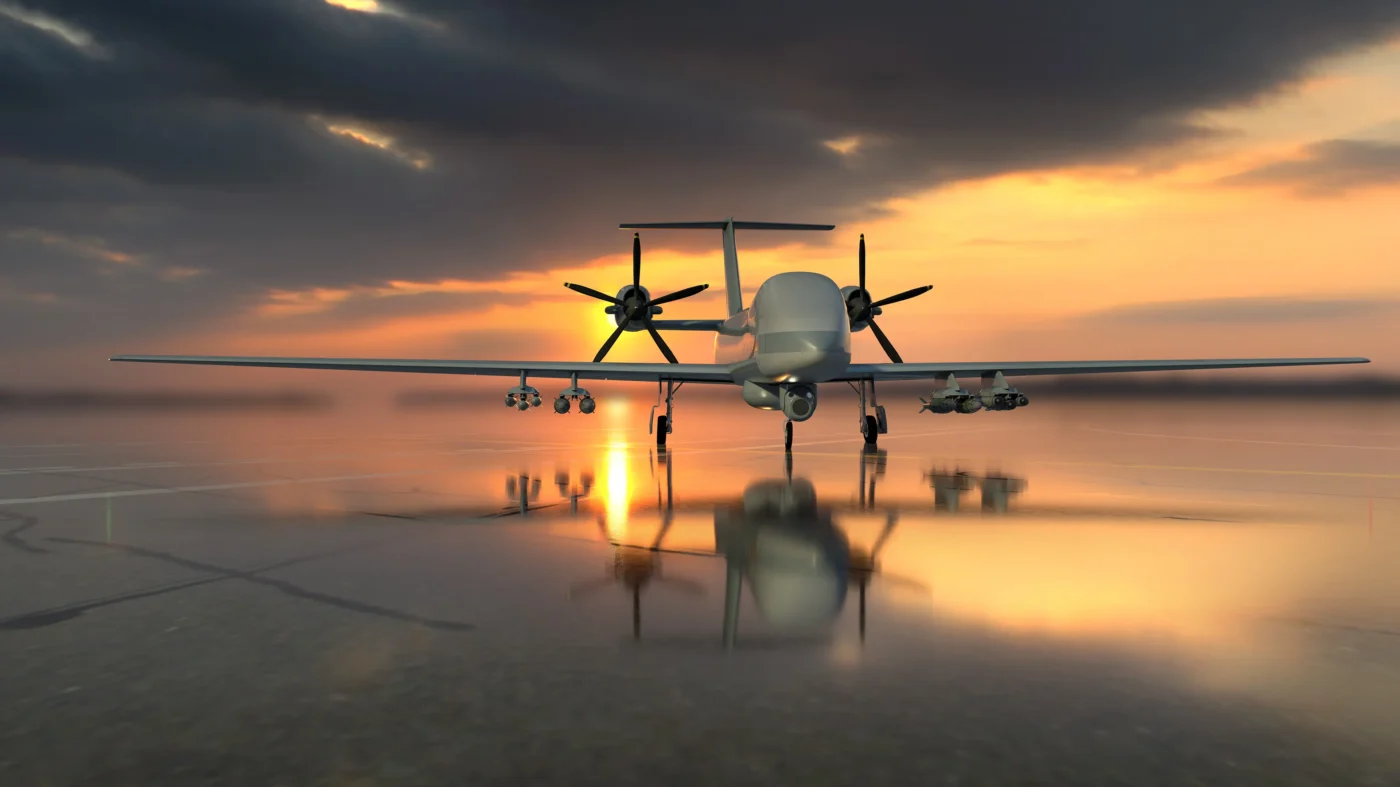
On June 26, Airbus and Kawasaki Heavy Industries agreed to collaborate on building an unmanned drone. The companies are looking into a version called Eurodrone U950 for Japan. This drone has a 26-meter wingspan, can fly for 40 hours, and can carry a 2.3-ton payload. It is equipped to drop sonobuoys to detect submarines and torpedoes to destroy them. It is important because Japan’s Coast Guard already uses the General Atomics MQ-9B SeaGuardian for maritime surveillance.
However, the Eurodrone is not competing with the SeaGuardian. Instead, it can hunt submarines on its own, without a crew, and can stay airborne longer than any crewed aircraft. It was just one deal announced over the course of one week in June. There were four others.
Five companies, six weeks, one country
Between June 23 and July 3, 2026, major changes were taking place in Japan’s defense industry. Tekever, a Portuguese drone company known for over 10,000 flight hours in Ukraine, announced it will set up its first manufacturing facility outside Europe in Japan. The company will work with Marubeni, a large trading company, as its Japanese distributor and sales agent.
Germany’s largest defense manufacturer, Rheinmetall, is also planning to create its first defense production base in Japan, building on their existing automotive operations in Odawara.
Anduril, a US defense technology company known for its autonomous systems, announced plans to buy one of Nissan’s historic manufacturing plants in Japan for defense production. They have partnered with Taiwan’s NCSIST on a cruise missile and play a key role in the US Army’s drone operations in the Philippines.
At the same time, Japan’s Terra Drone is forming a partnership with the Ukrainian company WinnyLab. Together, they aim to improve the Terra A2 interceptor drone. This drone has already been tested in Ukraine and is set to be deployed in Japan by 2027.
A new group called the Japan-Ukraine Drone Cluster is forming. This group includes Japanese manufacturers, Ukrainian defense companies, universities, and research centers. They will work together to produce drones for both military and civilian uses. The collaboration involves five companies from five countries: Portugal, Germany, the United States, Japan, and Ukraine.
The change behind
Until April 2026, Japan had strict laws about exporting weapons. These rules, in place since the 1960s, made it hard for companies to work on defense projects. Terra Drone’s CEO, Toru Tokushige, said the company had to channel its defense projects related to Ukraine through its Dutch branch. It was necessary because Japanese laws made direct collaboration on military technology difficult.
In April 2026, Japan lifted its ban for 17 approved countries. That decision had an immediate effect, and within a week, Terra Drone announced its investment in WinnyLab. Also, discussions between Tekever and Marubeni, which may have begun earlier, became public within weeks.
In April, Russia filed a formal complaint over the Terra Drone-Ukraine partnership. Japan rejected this complaint, which Moscow called a hostile act. Japan’s decision to accept this diplomatic challenge rather than slow down its partnerships shows how seriously Tokyo takes the industrial shift.
Japan’s government has committed 100 billion yen, or about $618 million, for the fiscal year 2026 to create a fleet of unmanned ocean vessels. This fleet will help protect remote islands. Additionally, in 2025, Japan approved a separate package of 128.7 billion yen to develop a coastal defense system that uses unmanned technologies along with remote capabilities.
Currently, Japan produces around 1,000 military drones each year, and the government plans to significantly increase that number. The plan is already clear, with factory announcements coming from Lisbon, Berlin, and California within the same six-week period.
What Ukraine proved and Japan wants
The companies currently building in Japan are not just any companies from the global defense industry. They are the ones whose technology has been proven effective in Ukraine.
Tekever’s AR3 drones have performed over 10,000 flight hours in Ukraine. The Ukrainian Armed Forces use these drones for gathering intelligence, surveillance, and reconnaissance. The AR3 has helped destroy about $2.5 billion worth of Russian assets, including an S-400 air defense system.
A Tekever representative recently told Tecrow that the company plans to expand in Asia, underscoring its effectiveness in combat. Japan is the second Asian country where Tekever is starting a manufacturing facility, joining Taiwan.
Terra Drone’s interceptor systems were developed and tested in Ukraine before Japanese regulatory changes allowed direct collaboration. The Terra A1 collides with incoming Shahed-type drones. The Terra A2 is a long-range fixed-wing interceptor. Both were built for and proven in the specific threat environment that Ukraine represents. They are now deploying in Japan.
Ukraine is serving as a testbed for drone technology before it enters the Japanese market. The war has shown which systems perform well in tough conditions, such as electronic warfare and bad weather, and against determined enemies.
Japan is not only buying the hardware but also learning from the combat experience gained over the years. It is happening through a formal partnership called the Japan-Ukraine Drone Cluster, which is designed to transfer this knowledge into Japanese manufacturing.
The sensor question
Every foreign company that sets up manufacturing in Japan wants to receive access to Japanese sensor technology. Tekever stated that it aims to use this technology. Airbus and Kawasaki’s agreement includes plans to combine Japanese sensors and tools into any Eurodrone version.
Kawasaki will share its long-standing knowledge in anti-submarine warfare from developing aircraft like the P-1. The precision optics, small sensors, and system integration skills from Japan are things Western drone companies cannot easily replicate or find at the same level of quality elsewhere in Asia.
It creates a unique situation in the industry. These companies are not just bringing technology to Japan to sell to local customers. They are coming to Japan to build better drones than they could make at home, using Japanese parts that are hard to find elsewhere, for a market that spans the entire Indo-Pacific.
Tekever aims to use Japan as a hub to export to Asia. Airbus mentioned that lessons learned from a Japanese version of the Eurodrone will help improve European naval versions of the aircraft. The exchange of knowledge goes both ways at once.
What Japan is actually building
Kawasaki’s role in the Eurodrone agreement shows how Japan is positioning itself. Kawasaki Heavy Industries built the P-1 aircraft and makes submarines for the Japan Maritime Self-Defense Force. The company has spent decades gaining advanced knowledge in anti-submarine warfare, more than any other company outside the United States.
Partnering with Airbus on the Eurodrone is not about Japan following a European program. Instead, Japan is using its key industrial capabilities to participate in a project already funded by four European countries. It ensures that Japanese technology, sensors, and jobs will be included in the next generation of maritime patrol drones for both Europe and the Indo-Pacific region.
Japan’s approach is to incorporate its capabilities into allied programs. It ensures that Japan maintains control and participates in manufacturing. Japan is not just buying Western drone technology; it is becoming a key manufacturing center. Through Japan, Western drone technology can gain the quality and precision needed to compete with Chinese options in Asia.
However, so far, these partnerships have not created any aircraft. Instead, during June and July 2026, Japan focused on building the framework for what it plans to produce over the next decade.