Key ideas
- •A five-month shutdown of Qatar's helium production is squeezing Samsung and SK Hynix, exposing one of AI's least understood supply chain dependencies.
- •Advanced chipmaking relies on helium for critical manufacturing steps that have no practical substitute.
- •The crisis shows how a single LNG complex in Qatar has become a hidden chokepoint for the global AI industry.
Every advanced semiconductor fabrication plant uses a special gas that no other gas can replace at scale. It does not burn or react with anything and can only be turned into a liquid at minus 269 degrees Celsius, which is just four degrees above absolute zero, the coldest temperature on Earth.
The gas conducts heat very well, so it cools the back of silicon wafers during the delicate steps of manufacturing. Without this gas, it becomes much harder to control the processes that produce the chips used in AI data centres, mobile phones, and military guidance systems.
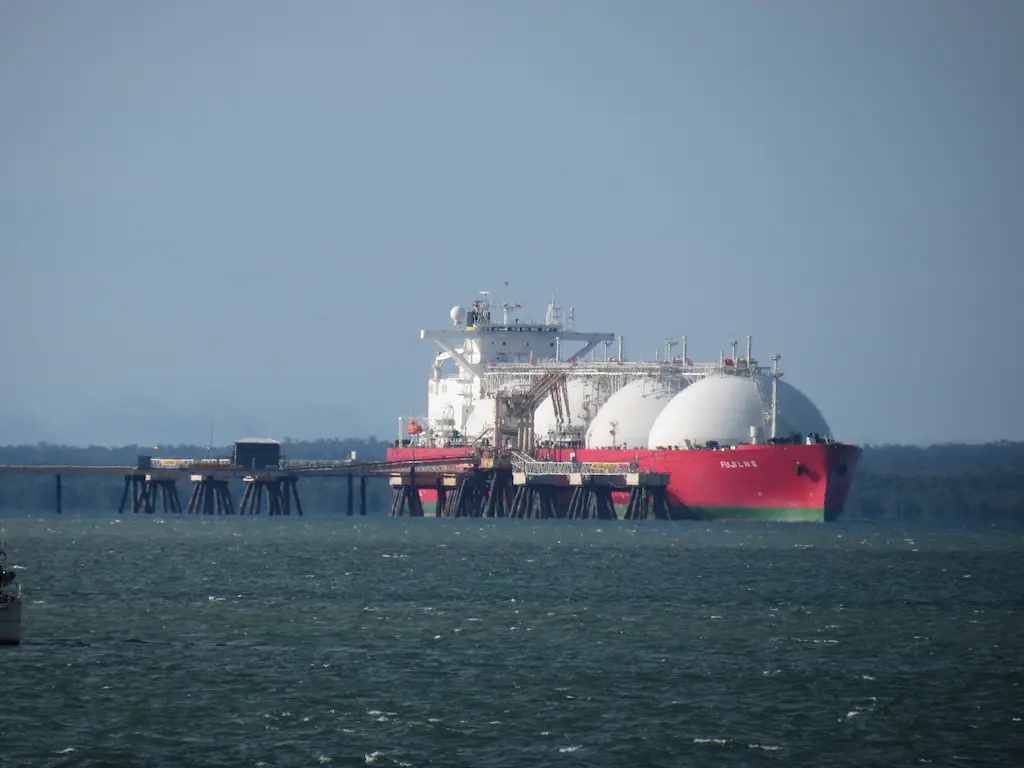
The gas is helium. And on March 2, 2026, roughly a third of the world’s supply stopped being produced. The facility that stopped producing helium is Ras Laffan Industrial City in northern Qatar. It is the world’s largest export hub for liquefied natural gas (LNG), and the shutdown of this facility caused Asian LNG spot prices to jump 95 per cent in just one month.
Helium at Ras Laffan is not produced in a separate facility; it is a byproduct of the same natural gas processing that produces LNG. When Iranian strikes forced QatarEnergy to halt LNG operations on March 2 and declare force majeure, helium production also stopped completely.
“If LNG production is shut down, there is no helium being produced,” said Anish Kapadia, founder of AKAP Energy. There were no alternative sources to tap, no inventory to draw on, and no land routes available. The Strait of Hormuz, which is the only sea route for Qatari helium, was effectively closed to Western commercial ships.
It meant that about 30 per cent of the global helium supply was suddenly taken off the market, without any warning and no timeline for when it would be back. QatarEnergy’s chief executive, Saad Al Kaabi, has said, “For production to restart, first we need hostilities to cease.”
But the fighting continues even today. It started again on July 7 with more US strikes on Iranian military targets. Kuwait closed its airspace on July 18, and the restrictions on Ras Laffan, which began in early March, are now in their fifth month, with no clear date to restart.
Helium in chip production
Helium is essential for advanced chip production. The core problem is thermal management at the nanometre scale. When a silicon wafer moves through an ion implantation chamber, one of the fundamental steps in transistor formation, it is bombarded with charged particles that generate heat in the silicon lattice.
That heat must be removed precisely and uniformly from the wafer’s surface to prevent substrate distortion. The method used in virtually every advanced fabrication plant is backside helium cooling, in which the wafer is clamped to an electrostatic chuck, and helium gas is forced between the back of the wafer and the chuck surface at controlled pressure.
Helium’s exceptional thermal conductivity, far higher than nitrogen or argon at similar pressures, allows the chuck to absorb heat from the wafer surface uniformly and rapidly. Without helium, wafer temperatures during ion implantation become harder to control, yield suffers, and the most advanced process nodes, below five nanometres, where thermal gradients affect the position of individual atoms during processing, become extremely difficult to hold in specification.
In Extreme Ultraviolet (EUV) lithography systems, which pattern the smallest features on the most advanced chips, helium is used to purge the optical path between the light source and the wafer. EUV light at 13.5 nanometres is absorbed by virtually every gas, including air, nitrogen, and argon.
Only a vacuum or a helium atmosphere maintains the integrity of the optical path over the distances involved. The world’s most advanced chips, the ones in the AI accelerators that every data centre is currently trying to procure, cannot be manufactured at their designed specifications without a continuous helium supply to the EUV systems that pattern them.
Advanced packaging processes add complexity to semiconductor manufacturing. The Taiwan Semiconductor Manufacturing Company (TSMC), the largest semiconductor manufacturer, uses a technology called Chip-on-Wafer-on-Substrate (CoWoS) to package NVIDIA’s Blackwell AI GPUs and other high-density AI accelerators.
The process requires helium to control temperature and create a vacuum. The production lines for CoWoS were already fully booked until mid-2026 before the Qatar crisis began. The rising demand for helium has put more pressure on an already busy system.
Impact on South Korea
The semiconductor crisis is affecting different regions in different ways. South Korea is facing the most severe impact among major producing countries, due to its geography and supply history.
Before March 2026, about 65 per cent of South Korea’s helium supply came from Qatar. Samsung Electronics and SK Hynix produce over 70 per cent of the world’s DRAM and most of the High Bandwidth Memory chips needed for AI GPU systems. Their supply chains were disrupted by QatarEnergy’s force majeure declaration.
After the Ras Laffan shutdown, both companies began limiting helium use at their factories. They focused on the most important steps in their processes and reduced usage elsewhere. Tom’s Hardware reported in mid-March that SK Hynix had about two weeks’ worth of inventory left to keep operations running before they would need to lower production.
High Bandwidth Memory (HBM) is the specific blockage that makes South Korea’s helium exposure a global AI infrastructure problem, not merely a South Korean manufacturing problem. HBM is the memory architecture used inside NVIDIA’s H100 and B100/B200 Blackwell AI accelerators, the chips that every major data centre is currently trying to source.
SK Hynix is the dominant HBM supplier, and Samsung is its closest competitor. Both are operating their most helium-sensitive advanced packaging and stacking processes in South Korean facilities that draw on a helium supply chain disrupted by the Qatar shutdown to an extent no domestic or alternative source could quickly compensate for.
The helium supply situation is worrying because it comes mainly from a few specific sources, much like how Qatar dominates the LNG market. The United States gets most of its helium from natural gas wells located in Wyoming, Kansas, and Texas.
Algeria’s Skikda plant supplies a large amount of helium, and Russia is also a major producer. However, the US had already locked in most of its helium contracts before the crisis. Algeria’s helium supply is also contracted and cannot be quickly redirected. Because of international sanctions, most South Korean and Taiwanese buyers cannot access Russian helium. Australia produces only small amounts of helium, while China has some helium production but keeps it for domestic use.
Bank of America analysts tracked helium spot prices surging by 40 to 100 per cent within weeks of the Ras Laffan shutdown. Seagate and Western Digital, the two largest manufacturers of helium-filled hard drives, moved quickly to pass cost increases through to customers.
Gowling WLG, the international law firm, described helium in a supply chain briefing as “a small-volume input where substitutions are limited and alternative supply is slow to secure,” a characterisation that understates the problem for the most advanced process nodes, where substitution is not a matter of being slow to secure but of not being physically available.
TSMC and the AI packaging constraint
Taiwan’s helium shortage situation is different from South Korea’s, but it’s still important. TSMC gets its helium from various sources, including the US, Algeria, and spot market supplies, as well as the Qatari supply that has been cut off. In contrast, South Korea’s memory manufacturers depend on a less diverse supply.
That diversification provides some buffer that Samsung and SK Hynix lack. But TSMC’s most helium-sensitive operations are also its most commercially critical. Industry analysts describe the CoWoS advanced packaging lines used for AI accelerators as among the most helium-sensitive processes in TSMC’s portfolio, and those lines were operating at 100 per cent utilisation with a waiting list before the crisis.
Any constraint that reduces throughput on CoWoS lines delays the delivery of AI chips that data centres contract for years in advance.
Fortune estimated in April that the hyperscalers building AI infrastructure face a $650 billion problem from the helium constraint, the combined value of AI infrastructure projects whose timelines are sensitive to chip delivery schedules that in turn depend on helium-intensive manufacturing processes.
The figure contains not just the direct manufacturing cost increase but the opportunity cost of delayed data centre buildouts, delayed AI model deployment, and delayed revenue from AI services that the infrastructure is intended to generate.
South Korean memory manufacturers face limitations that affect the production of AI accelerator chips, particularly with NVIDIA’s Blackwell GPU. It relies on the logic chip made by TSMC using advanced manufacturing technology and the HBM memory stacks produced by SK Hynix. TSMC then assembles these components using a method called CoWoS packaging.
All three elements of that supply chain, TSMC logic fabrication, SK Hynix HBM production, and TSMC CoWoS packaging, are exposed to helium constraints from the same Ras Laffan disruption through different mechanisms and with different severity.
The five-month constraint
After the shutdown in March, most of the news treated it as a crisis that would end quickly, either when the conflict ended or when Ras Laffan resumed operations. The view suggested that the disruption would be short-lived. Now, five months have passed.
QatarEnergy has declared force majeure, warning that it could last up to five years. The restart of operations at Ras Laffan depends on ending the fighting, assessing the facility’s condition, obtaining regulatory approval, and restarting the LNG processing trains that were shut down for safety reasons.
Even if the fighting stops, it will take weeks to restart the process. The helium supply chain will need additional time to fill pipelines and refill ships. The Strait of Hormuz needs to reopen to commercial shipping for exports to reach buyers in South Korea or Taiwan.
The global helium market faced challenges at the start of 2026, even before the shutdown at Ras Laffan. Qatar produces about one-third of the world’s helium from a single industrial complex that combines the largest helium purification systems with LNG processing. The situation poses a major risk because relying on a single source can lead to supply issues.
The integration of helium extraction with LNG processing in a stable, energy-rich country enabled the world’s cheapest helium production. Similar strategies helped Dubai become a leading aviation centre, and Qatar emerge as a top LNG producer. The Gulf conflict didn’t create this vulnerability; it simply highlighted a risk that has been developing for many years.
The semiconductor industry is addressing the supply shortages by taking common steps. These include rationing materials, using existing inventory, sourcing new materials, and keeping customers updated on potential delivery delays. However, it is not possible to eliminate reliance on a specific gas. The gas has special properties that no other material can match in the most important manufacturing processes, making the issue difficult to resolve quickly during a conflict.
South Korea’s chip manufacturers are still limiting production. This issue started in March and has lasted longer than expected. The conflict causing the limits has worsened. The CEO of QatarEnergy has made it clear that he will not restart production until his conditions are met.
The gas used in the world’s most advanced chip factories mostly comes from the same location in one country. In February 2026, the global energy markets realised they had relied too heavily on this single fuel source. Both of these dependencies were clear before they became a problem. However, they did not receive the attention they needed until they were put to the test.