Key ideas
- •Japan's sixth-generation fighter is designed to process up to 10,000 times more sensor data than today's combat aircraft.
- •The aircraft will act as a command node, controlling drones, weapons, and battlefield networks in real time.
- •An adaptive engine, AI-assisted systems, and advanced stealth are being built to keep the fighter operational into the 2070s.
Japan has made the most powerful aerospace decision in its postwar history. In December 2022, it decided not to build its own fighter jet, a program that had been in development for decades. Instead, Japan joined the United Kingdom and Italy to develop a sixth-generation aircraft that will shape air combat through the 2070s. On June 14, 2026, the agreements were made to expedite engineering work.
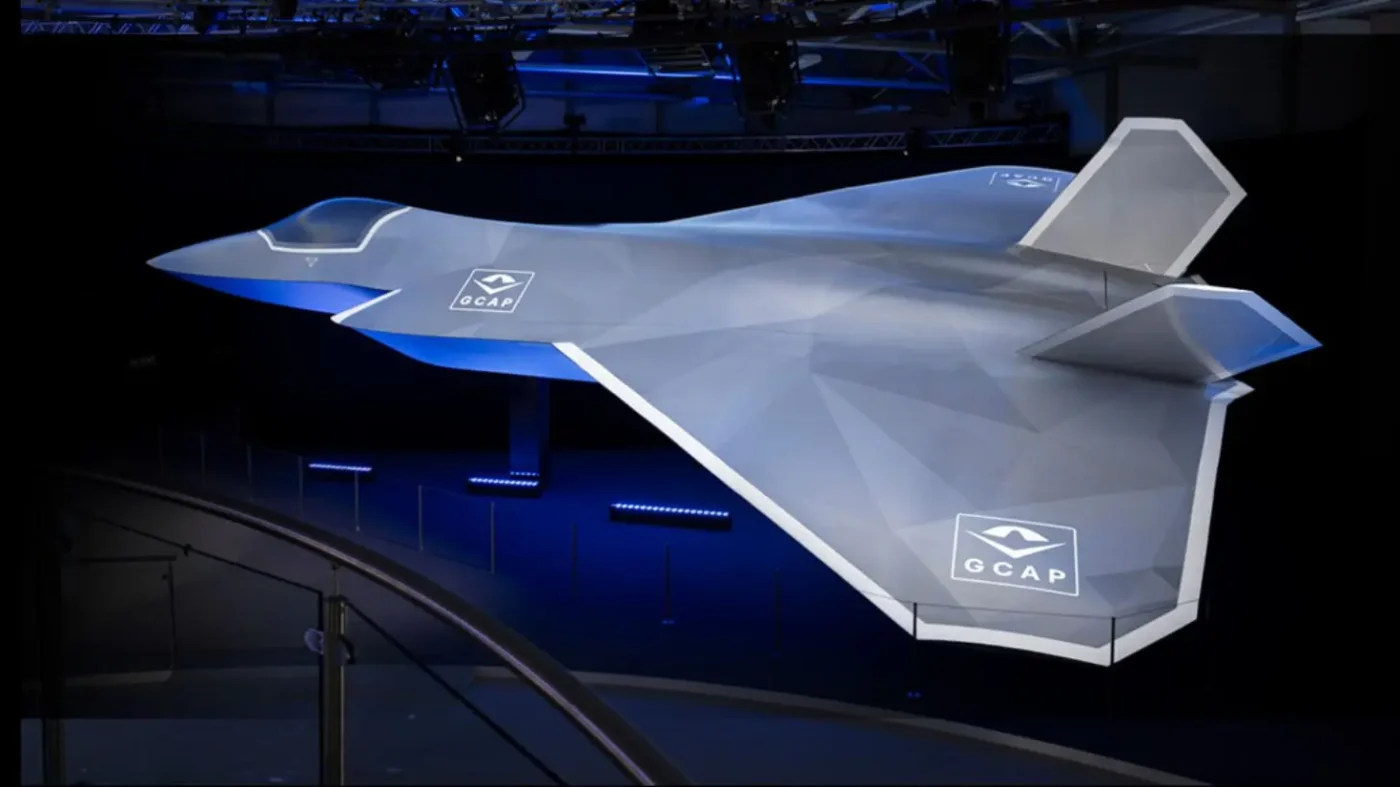
The Global Combat Air Programme, or GCAP, is not just a buying agreement. It is a commitment backed by a treaty that puts Japan’s three aerospace companies at the core of the most advanced combat aircraft program outside the United States. To understand Japan’s commitment, it’s important to know what sixth-generation means in engineering terms. The shift from fifth to sixth generation is not a small step; it involves a complete redesign.
Fifth-generation fighters, such as the F-35, F-22, and China’s J-20, are known for their stealth and their ability to integrate data from multiple sensors. They have a reduced radar signature and provide the pilot with a unified view of information. Sixth-generation fighters completely change the approach to these technologies.
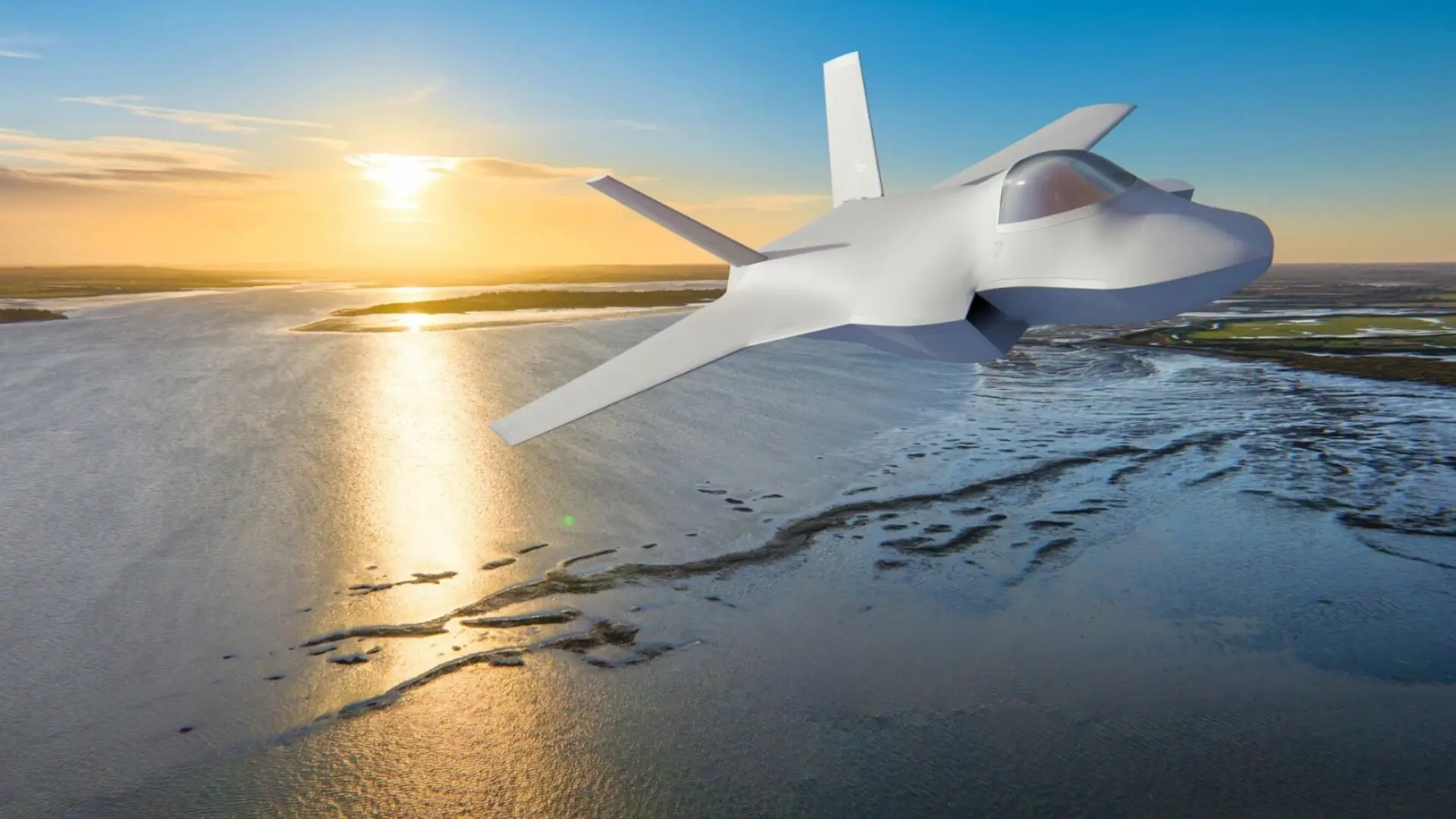
GCAP is a crewed stealth aircraft that acts as the main hub in a network of manned and unmanned platforms. It connects operations across the air, land, sea, space, and cyber domains simultaneously. Instead of just flying a better fighter, the pilot commands a distributed combat network from the cockpit.
Three technologies make this possible, and all are being developed with Japan playing an important role.
The engine that does two jobs at once
GCAP will be powered by an adaptive-cycle propulsion system delivering supercruise capability beyond Mach 2 and an operational range exceeding 1,500 kilometers.
The term “adaptive-cycle” is important. A regular jet engine trades off between fuel efficiency and thrust. It is designed for one operating condition, usually flying at subsonic speeds, and does not perform as well in other scenarios. However, an adaptive-cycle engine has a variable bypass system that allows extra airflow to be adjusted during flight. It would enable the engine to switch between efficient subsonic operation and high-thrust supersonic performance during the same mission. Currently, no fighter jet engine in production can do this.
But the GCAP engine needs to do more than just provide propulsion. Japan’s FY2026 budget focuses on innovative adaptive-cycle engines designed to generate large amounts of electrical power. This power is necessary for advanced sensors and electronic warfare systems, which are crucial to sixth-generation capabilities. The engine works as both a propulsion system and a power source for electromagnetic systems. The more power the engine generates, the better the radar, electronic warfare systems, and directed energy weapons perform.
Rolls-Royce from the UK, IHI from Japan, and Avio Aero from Italy are working together to develop the centreline GCAP engine. Their engineering teams have completed the initial design phases and begun work on the hardware. They have successfully tested a combustor using advanced 3D printing to create special cooling pathways.
IHI plays an important role as a leading manufacturer of aero engines. The company has years of experience with Japan’s F-15J and F-2 engines. Atsushi Sato, President of IHI’s Aero Engine, Space and Defense Business Area, has described the partnership as “a new era for combat air propulsion.”
The sensor that sees everything
If the engine provides the power, the Integrated Sensing and Non-Kinetic Effects System, along with the Integrated Communications System (ISANKE and ICS), enables it.
ISANKE and ICS are important to the success of the GCAP project. A major advantage of the GCAP platform compared to older combat aircraft would be its ability to use and make sense of the large amounts of information available in future operations.
The radar can provide 10,000 times more data than the sensors on today’s combat aircraft. To understand this, consider that current fighter radars generate a data stream that human pilots and current systems can handle. However, a sensor that delivers 10,000 times more data is too much for a human to process in real time. It needs onboard artificial intelligence to filter, combine, and show only the important information right when it’s needed. This is what the AI-assisted decision support system in GCAP is designed to do.
The system combines different types of information to create a clear picture of the situation. It uses active radar, electronic intelligence receivers, infrared sensors, and communication intercepts. This information is continuously updated across several platforms simultaneously. A loyal-wingman drone flying 50 kilometers ahead of the crewed aircraft sends its sensor data back to the network. This way, the pilot sees everything the wingman sees, along with what their own sensors detect.
The G2E consortium, which includes Mitsubishi Electric from Japan, Leonardo from the UK, and ELT Group from Italy, was created to develop ISANKE and ICS. The consortium will also provide support services to maintain these systems throughout the aircraft’s operational life.
Mitsubishi Electric has provided radars for Japan’s F-2 and upgraded F-15J programs and has been working on new radar technology for Japan’s defense programs for over twenty years. Its role in GCAP’s sensor design is important, as it holds one-third of the design authority, not just a subcontracted task.
The aircraft that deploys unmanned wingmen
The third architectural element of GCAP, and perhaps the most doctrinally significant, is manned-unmanned teaming built into the platform from the start.
GCAP is being designed as a system that combines different aircraft. It pairs a crewed stealth fighter with unmanned planes. These unmanned aircraft can enhance sensing capabilities, carry additional weapons, or take on risks during the early stages of a high-end conflict.
This is different from a fifth-generation fighter that can control a drone. The GCAP design includes unmanned aircraft as part of the mission, from planning through execution. The crewed aircraft manages the network. The unmanned aircraft perform tasks such as scanning the area ahead, launching weapons from a distance, and jamming signals in high-risk areas, under the direction of the central aircraft.
Program officials have designed a flexible weapons bay to avoid being limited to a single country’s weapons and to allow Japan to use compatible weapons during joint operations. It also allows countries to adjust their weapon choices over time based on cost-effectiveness.
Stealth technology is important to the aircraft’s design. It will have a smaller radar cross-section due to advanced composite materials, reduced heat signature, and internal storage of all weapons and sensors. Mitsubishi Heavy Industries adds experience from Japan’s X-2 Shinshin stealth demonstrator, which flew from 2016 to 2018. The project helped confirm Japan’s techniques for making composites and reducing signatures, which are directly used in the design of the new aircraft.
Japan’s industrial pivot
Japan’s choice to join GCAP meant giving up something important. The Mitsubishi F-X, also called the F-3, was Japan’s planned sixth-generation fighter. It was developed from the X-2 prototype and was meant to be Japan’s first stealth combat aircraft designed and built in the country.
Japan was developing the F-X as its first stealth fighter for the Japan Air Self-Defense Force. This aircraft was meant to replace the Mitsubishi F-2 by the mid-2030s. However, Japan decided to stop this development. Instead, it gained a one-third share in the design authority of a new trilateral program. Japan will also be responsible for integrating the aircraft through Mitsubishi Heavy Industries. Additionally, IHI and Mitsubishi Electric will play key roles in developing the engines and sensors. Japan will co-own the intellectual property for this aircraft, which is expected to remain in service beyond 2070.
For Japan, the GCAP is an important move. It shifts the focus from primarily working with the US on combat aviation to taking control of the design of the aircraft that will replace the Mitsubishi F-2 in the mid-2030s.
In addition, BAE Systems, Leonardo, and Japan Aircraft Industrial Enhancement Co. Ltd, have now formed a joint venture, called Edgewing, with each company owning 33.3%. On April 1, 2026, Edgewing received a new contract worth £686 million. The contract replaces three separate national contracts and establishes one international design authority for the aircraft’s entire service life.
Japanese Defense Minister Shinjiro Koizumi, after meeting Edgewing CEO Marco Zoff in May 2026, described GCAP as “an extremely important project that will determine Japan’s future air capabilities.” On June 11, Prime Minister Takaichi told UK Prime Minister Starmer that GCAP was “the cornerstone of our security cooperation” as both leaders agreed to accelerate the program.
The project’s timeline is now set, too. The ‘Excalibur’ flight-test aircraft will be ready in 2026. Next, the Tempest Combat Air Demonstrator will be ready in 2027. The first flight is planned for 2028, with the aircraft entering service in 2035.
The Chinese and Indian context
In December 2024, China conducted a test flight of its sixth-generation combat aircraft, the J-36. Although it will take years before the plane is ready for use, this flight makes China the only country in Asia with a sixth-generation aircraft in the air. The prototype of the GCAP is expected to follow in 2028.
The four-year gap is significant. However, it doesn’t show the full picture of progress. GCAP has active contracts, a working design authority, and two specialized teams focused on propulsion and sensors. It also has a treaty that ensures each partner nation receives guaranteed work and protects its intellectual property rights. Meanwhile, China’s J-36 has completed its first flight. These are different stages in the development of a program.
The possibility of GCAP in Asia is not limited only to Japan. India, which is currently developing the Advanced Medium Combat Aircraft, a fifth-generation project led by Hindustan Aeronautics Limited and the Aeronautical Development Agency, could also join the program. There has been talk of India’s potential involvement in the GCAP, but no agreements or official announcements have been made.
India faces a problem similar to what drove Japan to join GCAP: the cost of developing a sixth-generation aircraft on its own is too high for any non-superpower defense budget. The only other option is to rely on foreign aircraft. India has been trying to solve this problem for forty years. GCAP could be part of the solution. The next step is to see whether New Delhi will pursue this option and under what conditions.
However, Japan has already outlined its plans in the contracts, the engine demonstrator, the sensor group, and the recent agreement with London.