Key ideas
- •GCAP is designed for militaries with unified theatre commands, something India has yet to establish.
- •Retired military leaders warn India's command structure, not its fighter fleet, is the bigger challenge.
- •Officials say India risks buying a sixth-generation capability before building the organization needed to use it.
An official who had worked at India’s Ministry of Defense for two decades agreed to speak to Tecrow in June 2026. He requested that his name not be published because the topics he discussed are still classified. However, he was open about one important issue that has troubled him since he left.
“The question of who actually controls what [among the Indian Armed Forces] in a live crisis has not been settled in any document I have seen.”
He had seen the file move from one place to another, from the desk to the committee, then to the minister, and on to the next minister. He watched it be studied, revised, debated, and quietly set aside more times than he could count. The file contained India’s plan for Integrated Theatre Commands, which would create unified military headquarters. It means the Army, Navy, and Air Force would be under a single commander during war. The plan is now over five years old and still has not been signed.
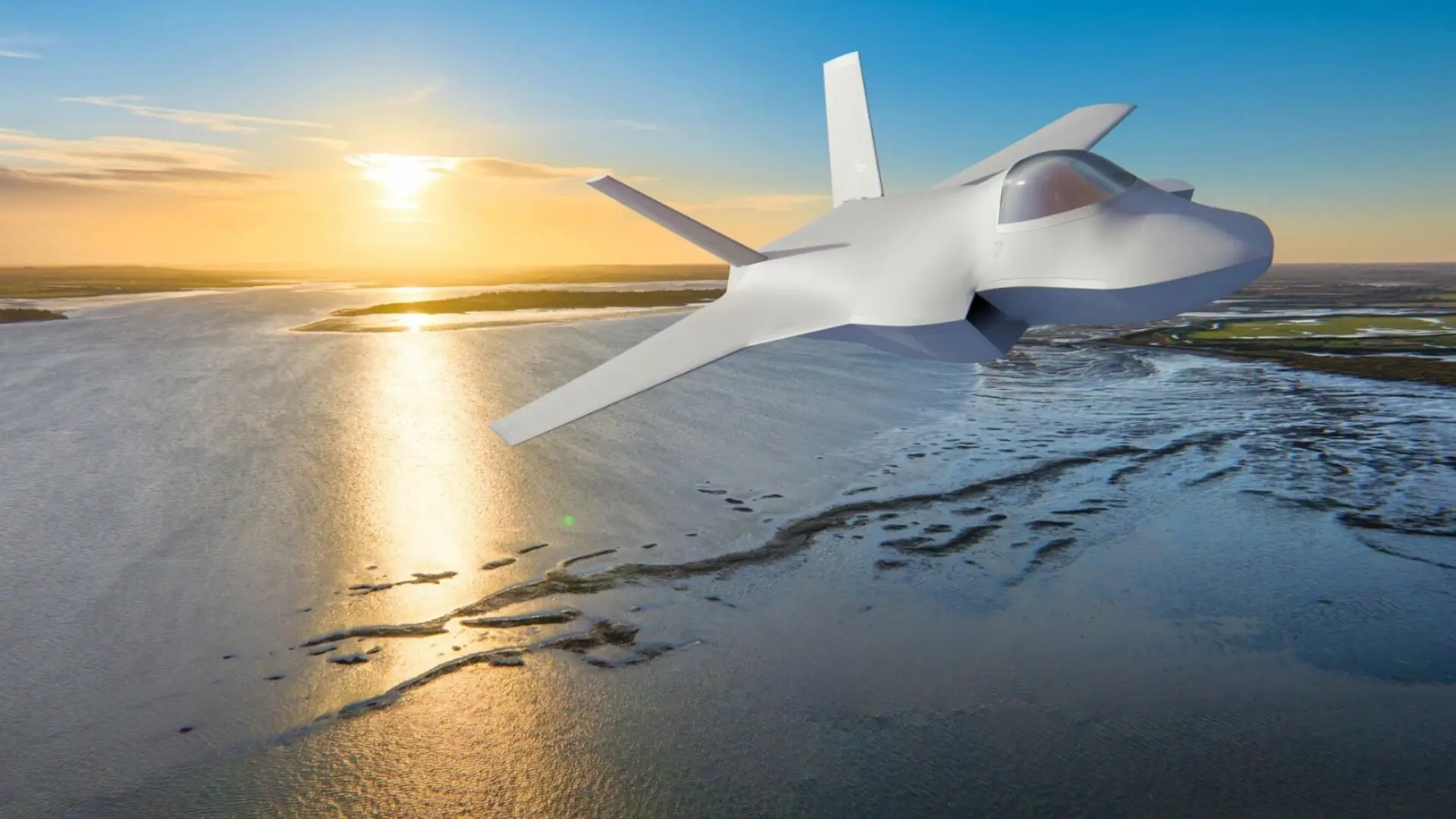
It might seem like a separate problem from whatever fighter jet India decides to buy next, but it is not. India’s interest in the Global Combat Air Programme (GCAP), the British-Italian-Japanese sixth-generation platform whose membership New Delhi signaled interest in this April, is built on the assumption that theatre commands already exist.
The fighter isn’t a fighter
The easiest way to misread GCAP is to treat it as a very advanced sixth-generation aircraft. It is not only that. The crewed jet at its center is a flying command post, including a network node that directs autonomous drone wingmen, absorbs intelligence from space-based sensors, coordinates electronic warfare across domains, and distributes targeting in real time to platforms hundreds of kilometers away.
The aircraft acts as the brain, while its network is the key point. This network needs a ground commander with the legal authority to manage all resources across the different military branches. This allows for quick decisions without needing to pass everything through separate chains of command for the Army, Navy, and Air Force.
Britain has that commander, Italy has one, and Japan built its joint command structure before it committed to GCAP. They are buying a system for an architecture they already possess. India is buying, or considering buying, a system for an architecture it is still trying to approve.
The Indian Ministry of Defence official’s main frustration was not about procedures. But “it did not define how authority would be exercised when a theatre commander’s operational demands conflicted with those of an individual service chief during active combat.” He had looked for the answer across two decades of ministry files. “That gap exists. It has not been closed.”
What Operation Sindoor revealed
In May 2026, India conducted military strikes against Pakistan under the name Operation Sindoor. Multiple retired officers told Tecrow what they saw in how it unfolded. The operation surfaced something the theatre command debate had been building toward for years. Managing a two-front pressure environment, with China applying coordinated military and diplomatic pressure as India was engaged on its western border, through separate service response chains is genuinely different from managing it through a single unified command.
“The concern in India right now,” one of the people Tecrow spoke to said, “is that the military may not have the luxury of dealing with one challenge at a time anymore.”
General N.S. Raja Subramani, India’s third Chief of Defence Staff since the post was created, assumed office on May 31, 2026, three weeks after the operation concluded. He inherited a theatre command file that his predecessor, General Anil Chauhan, who had publicly described the reform as a move from “Jointness 1.0” to “Jointness 2.0,” could not bring to the Cabinet for a signature before leaving office.
Subramani now holds the command reform problem and the GCAP evaluation problem simultaneously, and they are, whether anyone has said so explicitly or not, the same problem.
The force that cannot be divided
Air Vice Marshal Kapil Kak retired as Assistant Chief of Air Staff at Air Headquarters in New Delhi, one of the most senior operational planning positions in the Indian Air Force. He has spent the years since writing and thinking about what India’s air power doctrine actually requires. When Tecrow spoke to him, he went straight to the specific tension.
India currently operates roughly 29 fighter squadrons against an authorized strength of 42. That gap has persisted for over a decade. More critically, its inventory of the platforms that make a modern air campaign possible- airborne early warning aircraft, aerial refueling tankers, dedicated electronic warfare jets- is thin relative to what fighting on two fronts simultaneously demands.
“The Air Force is averse to the concept,” he told Tecrow, “as it fears that its air assets could be divided into penny packets between geographical theatres.”
In a conventional procurement context, this concern is serious enough. In a GCAP context, it becomes something more. The airborne early warning aircraft, tankers, and electronic warfare platforms are not support equipment for the sixth-generation fighter. They are the network the fighter operates inside.
They provide situational awareness that lets the crewed jet function as a command node rather than just a weapons-delivery platform. Divide them by theatre command and the network the jet requires, and fragment them before the mission begins. You have bought the node and destroyed the network it needs to exist.
The sequencing problem
Major General Shashi Asthana served as Director General of Infantry at Army Headquarters, the officer responsible for the combat readiness and doctrine of the largest component of India’s military. He had a clear view on what the debate is actually about.
“Theatre commands are not a magic wand,” he told Tecrow. “The culture has to change first. The doctrine has to be written. The joint training has to happen at every level. Then you build the structure on top of it.”
China understood this in 2016, and Beijing dissolved seven military region commands and replaced them with five joint theatre commands, each with defined cross-service wartime authority. It took years of institutional work to make that restructuring real. Only after it was institutionalized did China publicly flight-test sixth-generation concepts. The Chengdu J-36 was first observed in late 2024, eight years after the joint commands were established.
Lieutenant General Rakesh Sharma, who directed the Centre for Land Warfare Studies in New Delhi and has advised on theatre command design, told Tecrow he believes the strategic logic is clear. “The situation is ripe for territorial theatres based on two adversaries and one on the vast expanse of the maritime theatre.”
But ripeness of logic and readiness of institutions are different things. The question, he said, is whether the doctrinal and legal foundations can mature before India commits to a platform built on the assumption that they already exist.
A second official with direct knowledge of GCAP-related discussions inside the Ministry of Defence, told Tecrow, “The view being expressed internally is that we risk procuring for a war we are not yet organized to fight.”
The window is narrowing
There is an external pressure now that did not exist six months ago. In June 2026, France and Germany formally abandoned the New Generation Fighter, the crewed aircraft at the center of the €100 billion Future Combat Air System, after years of industrial deadlock.
In the weeks since, both Germany and Spain have begun exploring options, including joining GCAP. The program India is evaluating for membership is attracting two of Europe’s largest defense economies simultaneously.
GCAP membership involves negotiating technology transfers, workshare agreements, and integrating industries. Making the platform truly effective requires important changes that take time. Both of these processes are underway, but one is progressing faster than the other.
The anonymous official who spoke to Tecrow had spent twenty years watching a file that never became an order. He did not think the answer was simple. But he thought the question was unavoidable.
India cannot specify what a sixth-generation fighter would do for it without first specifying who would command it, on what authority, and within what institutional structure. That question is not downstream of the procurement decision. It is upstream of it. Until it is answered, India is not evaluating a weapons system. It is evaluating a capability that the organization has not yet built.