Key ideas
- •The FAA has proposed replacing its 53-year supersonic flight ban with a new noise-based standard, opening the door to faster commercial travel.
- •Modern supersonic aircraft like Boom's Overture could cut New York–Tokyo flight times from about 14 hours to roughly six hours.
- •Japan Airlines is already betting on the return of supersonic travel, with commercial operations targeted around 2030.
The last time a passenger could book a ticket on a supersonic aircraft was during George W. Bush’s first term. The iPod had just been released, and the fastest commercial jet was a white tube with a drooped nose and an afterburner. Operating this jet cost about the same per seat as a small yacht. The Concorde flew its last commercial flight on October 24, 2003. And in the next two decades, the fastest speed a civilian could legally travel in the sky was subsonic, slower than a bullet and roughly half the speed that physics allows for flight.
However, on June 30, 2026, the United States Federal Aviation Administration (FAA) announced a proposal to change the rules on commercial flight speeds. For over 50 years, flights over American land have been limited to speeds below the speed of sound. This new proposal replaces the long-standing rule, in place since 1973, with a new noise standard based on aircraft performance.
The FAA now regulates noise instead of speed. Any aircraft that keeps the sonic boom pressure on the ground at or below 0.11 pounds per square foot can fly faster than Mach 1 over the United States. The final standards are expected by mid-2027, and commercial service is planned to start by 2030.
People are focusing on how fast travel will become in the US, especially from Los Angeles to New York in just three hours, and coast-to-coast travel before breakfast. However, a more important story for the Indo-Pacific region is based on a different set of numbers.
Tokyo to New York in 6 hours
The distance from New York to Tokyo is approximately 10,880 kilometres (6,760 miles). Of that distance, more than 90 per cent is over water, including the Atlantic crossing to the North American coast, then the vast North Pacific to Japan. Boom Supersonic’s Overture aircraft, the commercial supersonic platform furthest along in development, is designed to cruise at Mach 1.7 over water.
At that speed, roughly 1,120 miles per hour (1,800 kilometres per hour) at cruise altitude, the New York-Tokyo route would approximately take six hours. In comparison, the current subsonic flights take between 13 and 14 hours depending on winds and routing.
If successful, it will bring a big technological shift in America and Asia. A meeting that now takes two lost days of travel, one day to get there and one day to recover, will become a same-day trip. An executive from Tokyo flying to New York for a board meeting will spend six hours travelling each way instead of 14.
The change will affect which meetings executives decide to attend in person, which deals are worth the trip, and how often leaders from Tokyo, Seoul, Singapore, and Sydney can meet with their counterparts in New York when the travel time across the Pacific is reduced to six hours.
And Japan Airlines (JAL) is already betting on this. It holds pre-orders for the Overture, making it one of the launch customers for Boom’s commercial supersonic programme alongside United Airlines and American Airlines.
Japan was one of the intended markets for Concorde, but the aircraft’s economics made it unprofitable outside the transatlantic route. The trans-Pacific flight route has always been an important opportunity for supersonic travel. Now, the regulations that have prevented this for 53 years are being changed by the FAA.
The FAA ban
The 1973 ban was mainly a political decision. It was put in place to address a public concern that military planes were flying at supersonic speeds over populated areas, causing disturbances. People complained that the loud sonic booms were shaking windows, cracking plaster, and terrifying residents. The sonic boom is a pressure wave generated by the aircraft, and it reaches the ground as a sharp crack or a rolling noise.
However, in 1973, there were no technologies to curb the sonic boom. But now, it could be addressed through improved aerodynamic design rather than simply limiting speed. The Mach cutoff is a phenomenon that occurs when a supersonic aircraft flies at high altitude under certain weather conditions. As the aircraft flies, it creates a shock wave. When this shock wave encounters a temperature difference between the warm air below and the cooler air above, it bends upward into the atmosphere rather than travelling downward toward the ground.
Aeroplanes can fly faster than the speed of sound, but the boom does not reach anyone on the ground. The ability to achieve this speed, known as the Mach cutoff, depends on the plane’s design, its altitude, and the air temperature that day. Today, advanced computer simulations and years of test data make it easier to design planes that can reliably reach the Mach cutoff, rather than treating it as a random event.
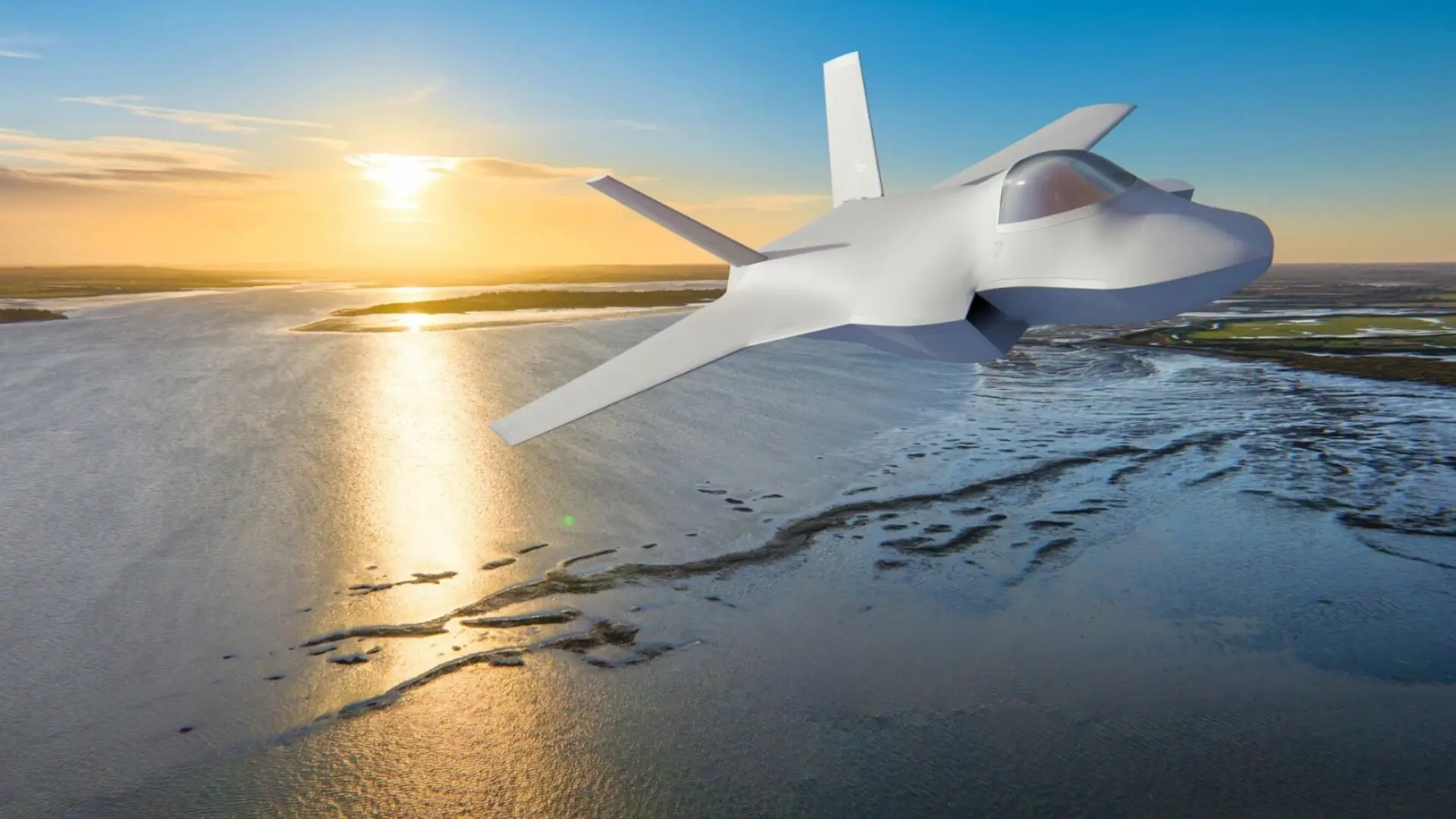
Boom Supersonic has developed a technology called Boomless Cruise. The design of the Overture’s aeroplane, including its nose shape, wing layout, and body profile, is developed to create shock waves that rise above a specific level, which helps reduce noise during regular flying.
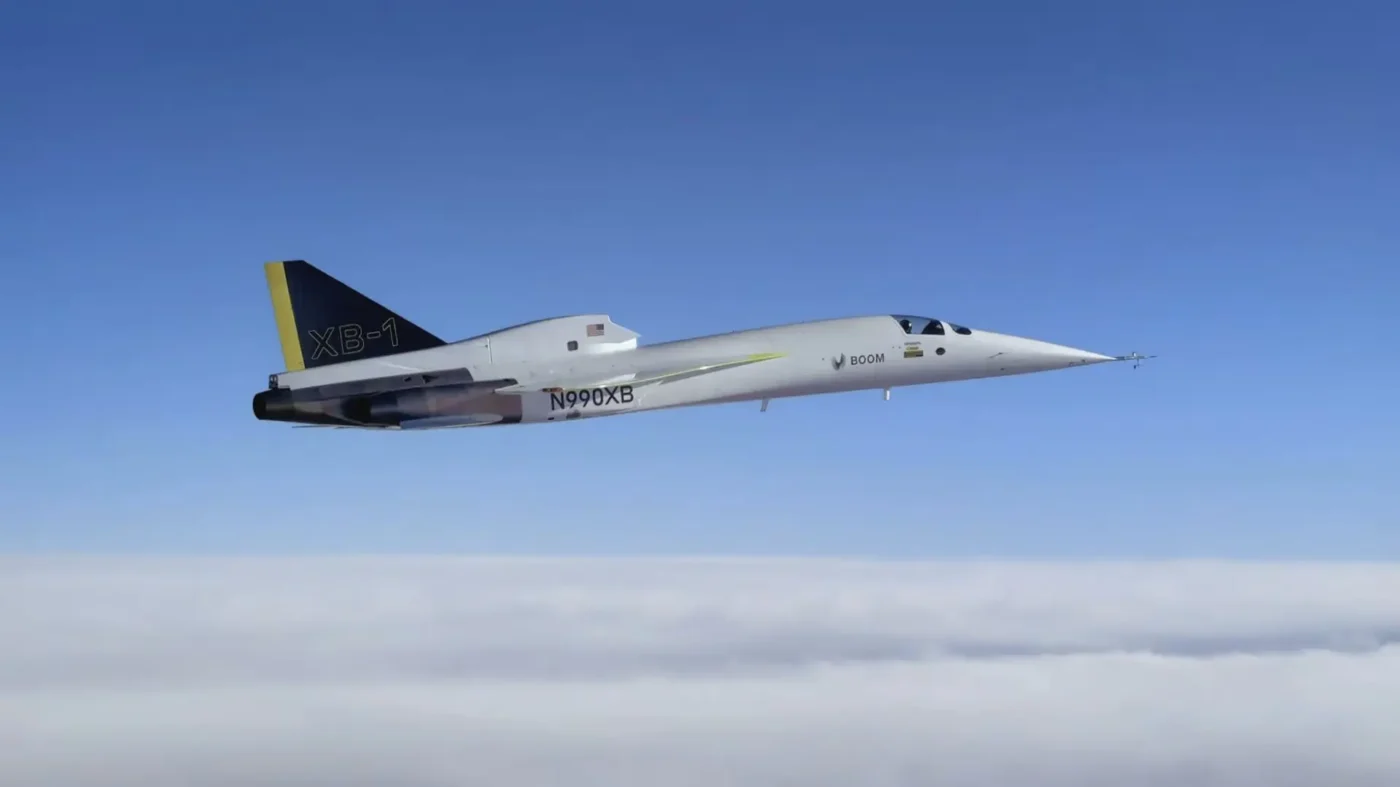
Boom’s XB-1 test aircraft demonstrated that its design works by flying at Mach 1.18 in 2025 while keeping noise levels low on the ground. NASA’s X-59 experimental plane, made for quiet supersonic flights, reached Mach 1.1 on June 5, 2026. Instead of a loud sonic boom, it made a sound similar to a car door closing, which was described as a faint thump.
The FAA allows a maximum noise level of 0.11 psf. It is about 10 times lower than the noise generated by the Concorde, which ranged from 1.0 to 2.0 psf at ground level. The Concorde could not fly supersonic over land because it was too loud.
However, modern aircraft are designed to be much quieter from the start and produce much less pressure. The change in regulations moved from banning speed to limiting noise. However, the new method allows technological progress rather than halting it when politics gets involved.
The supersonic aircraft
Boom Supersonic’s Overture is an advanced commercial supersonic aircraft currently being developed. It is designed to carry 60 to 80 passengers at speeds of Mach 1.7 over water and Mach 1.3 over land. The aircraft will be powered by four engines in a joint effort with the Japan Aerospace Exploration Agency and Aerion.
The engine design does not use afterburners, which caused high fuel consumption in the Concorde. The first full-scale test flights of the Overture are planned for 2027. The goal is to achieve type certification by 2029 and start service around 2030.
The economics differ from the Concorde in important ways for route viability. The Concorde could carry about 100 passengers, mainly the wealthiest travellers, on a route from London to New York, who paid high fares. This route was short enough that the speed made sense for certain business passengers.
In contrast, the Overture is designed for 60 to 80 passengers and targets prices similar to current long-haul business class, not private jets. If this pricing can be achieved, it could expand the potential market.
The Overture aims to be the most economical on trans-Pacific routes by saving the most time. A business class passenger on a current flight from New York to Tokyo pays for 14 hours, whether they like it or not. In contrast, an Overture passenger only pays for six hours.
The next step
The June 30 Notice of Proposed Rulemaking starts a process. It opens a public comment period during which airlines, manufacturers, community groups, and others can provide feedback on the proposed rules.
The FAA plans to finalise the overland supersonic noise rule and a related rule for takeoff and landing noise by mid-2027. Both rules must be completed before the certification process for commercial supersonic aircraft can begin in full.
The 0.11 psf limit may face some pushback. Residents living near proposed supersonic flight paths may feel that this standard does not adequately protect them. Manufacturers might argue that it is achievable and will want clear guidelines for how to measure it. The proposed rule allows operators to show they meet the standard through measurement, modelling, or other methods. However, this flexible language needs more definition before any aircraft can comply with the standard.
The FAA plans to introduce a new proposal in 2026 that will address noise during takeoff and landing. It is a different challenge from cruise noise because the Mach cutoff effect only happens at supersonic speeds, not during slower phases near airports.
In June 2025, President Donald Trump signed an executive order instructing the FAA to lift the ban on flights over land, giving the agency a clear task. The Notice of Proposed Rulemaking (NPRM) published on June 30 is the first step in carrying out that task. The timeline of 2027 for final rules and 2030 for the start of commercial service is realistic given where aircraft programs are now.
The six-hour change
The story of the Concorde is often seen as a failure. It was too expensive, too exclusive, and too loud for flights over land, and it became unprofitable after the 2000 Air France crash, leading to its early retirement. However, this view misses an important point. The Concorde showed that there was a demand for supersonic travel, even though many factors made it difficult to sustain.
It flew profitably on the London-New York route for 27 years, despite high costs that made tickets very expensive and limited to a small group of travellers. It succeeded because the time saved on a seven-hour flight across the Atlantic was enough to keep demand at a premium.
The trans-Pacific flight routes save about twice as much time as the Concorde’s transatlantic routes. The new aircraft being built for these routes aim to serve a much larger group of customers with better economics. The rule that blocked the combination of faster travel and lower costs is now officially set to be lifted.
Japan Airlines has decided to pre-order the Overture. It is a smart buying choice from an airline based in a market six hours away from New York, across the Pacific. Its customers have been stuck on 14-hour flights to make that journey for many years. Now, the long-standing ban that made those long flights necessary for 53 years is ending. Soon, travellers may only need six hours to cover that distance.