Key ideas
- •South Korea's K2 Black Panther became the first Indo-Pacific tank to receive NATO's AQAP-2110 quality certification.
- •The certification gives Hyundai Rotem direct access to NATO's joint defense procurement market without alliance membership.
- •The milestone crowns three decades of designing Korean weapons to NATO standards, positioning South Korea as a leading global defense exporter.
South Korea is not a member of NATO. It cannot vote in NATO meetings, does not have access to the collective defence guarantee under Article 5, and does not participate in decisions about who supplies the world’s largest defence procurement market. However, on Monday morning, South Korea gained access to that market through a quality assurance certificate. It took thirty years of industrial development to earn this certificate.
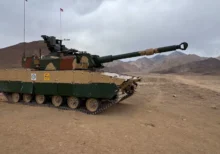
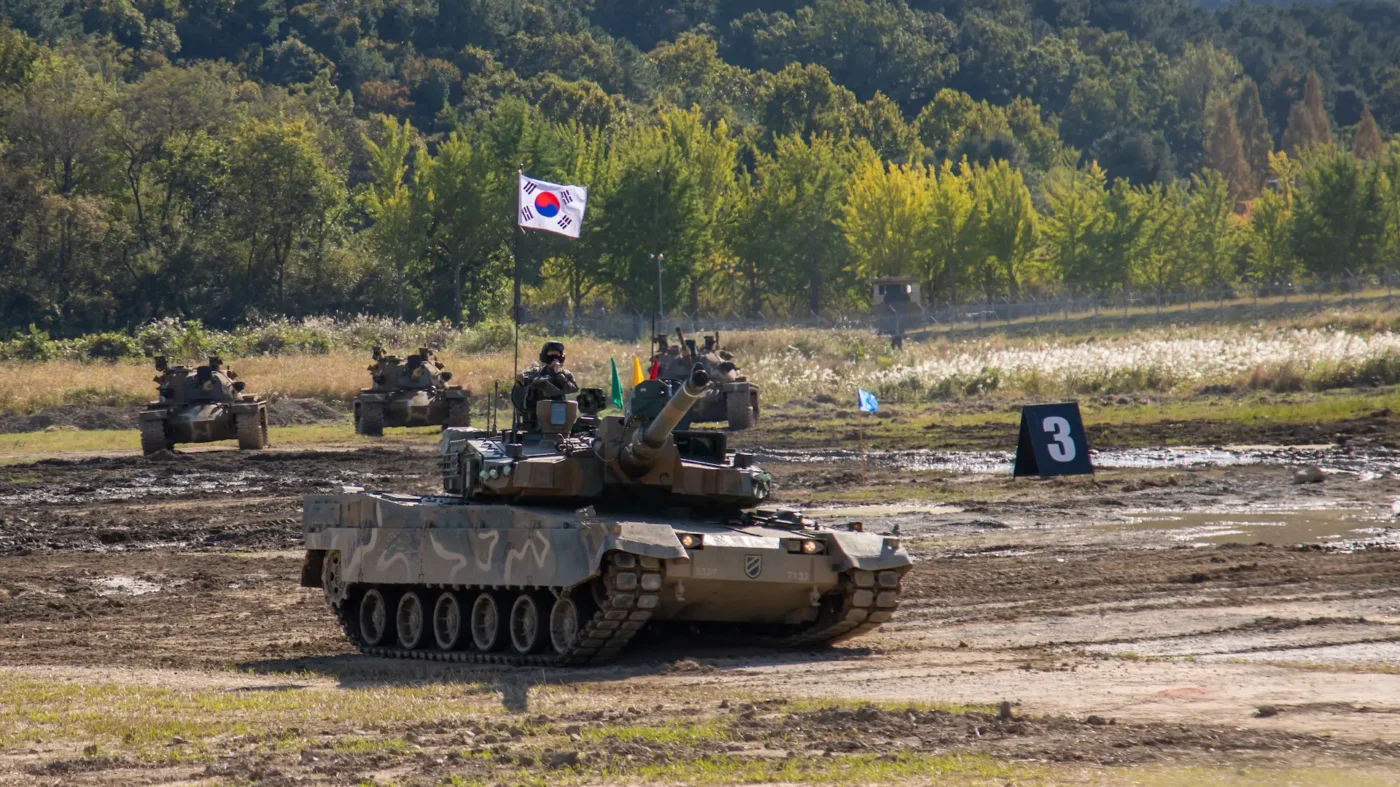
Hyundai Rotem, the developer of South Korea’s K2 Black Panther main battle tank, has received NATO’s AQAP-2110 certification. The event took place at its headquarters in Uiwang, Gyeonggi Province. With that, the K2 is the first South Korean defence product to get this certification. No other country in the Indo-Pacific region has received this certification for a fully domestically made weapons system.
While the certification does not make South Korea a NATO ally, it allows Korean defence companies to directly access NATO’s joint procurement market, which is worth about $10 billion (₩15 trillion) annually. Previously, these companies had to rely on bilateral agreements to participate.
The Korean way
The K2 tank uses a 120mm × 570mm smoothbore round for its main gun. It is the same ammunition used by Germany’s Leopard 2 and America’s M1 Abrams. During NATO exercises, a K2 crew can share ammunition with other tank crews on the field.
Another important product, the K9 Thunder self-propelled howitzer, is a key part of South Korea’s export portfolio. It fires 155mm shells that meet NATO standards and can use the US and Swedish-developed Excalibur precision-guided round. Its fire control system connects with allied battlefield management networks.
Norway, which bought the K239 Chunmoo multiple rocket launcher in January, is the first European country to do so. It can fire guided rockets that reach about 500 kilometres (310 miles) and works with NATO’s command-and-control system.
The KF-21 Boramae fighter jet has received full type certification. NATO recognises South Korea’s airworthiness certification process for this jet. This means that when a KF-21 joins a NATO air force, it is already cleared for service without needing additional certification.
South Korea created these systems to meet NATO standards even before it could buy from NATO. The AQAP-2110 certificate demonstrates that the manufacturing processes comply with the quality requirements NATO members must meet to enter into contracts. Starting Monday, the hardware won’t change. What will change is the tenders Hyundai Rotem can bid on without facing penalties.
What NATO needed
To understand why South Korea is ahead of other Indo-Pacific countries, we need to look at what NATO realised it was lacking after February 2022.
Three years of intense fighting in Ukraine have drained stockpiles for military alliances faster than Western factories can replace them. American and European defence manufacturers had adjusted their production for regular buying patterns.
The peace after the Cold War reduced their ability to ramp up production quickly. When governments issued urgent orders, delivery times increased significantly, revealing the problem to every defence ministry in Europe simultaneously.
However, South Korea did not benefit from a peace dividend because ongoing regional threats prevented it from doing so. As a result, factories worked at full capacity, prices stayed competitive, and military equipment made to NATO standards was ready for delivery faster than European suppliers could manage.
Poland took the lead by signing agreements worth about $22 billion for 180 K2 tanks, 672 K9 howitzers, and 48 FA-50 light combat aircraft. Romania followed with a $1 billion deal for K9 howitzers. Norway, Finland, and Estonia also added more K9 howitzers to their fleets.
In February, Hanwha Aerospace began construction of the Hanwha Armoured Centre of Excellence in Petrești, Romania, its first manufacturing facility in Europe. On July 8, at the NATO Defence Industry Forum in Ankara, Hanwha executives shared their plans for expanding in Europe.
The company aims to deliver equipment quickly and focus on local production, co-manufacturing, and technology sharing with European companies. The forum highlighted over $50 billion in industrial agreements. These contracts made pursuing AQAP-2110 worthwhile. South Korea has become NATO’s biggest non-member supplier of weapons. The certification confirms what the transaction record already showed.
The certification
AQAP-2110 is a quality assurance standard under STANAG 4107, which all 32 NATO members have approved. Assessors do not shoot the K2 or measure how deeply it penetrates. Instead, they check Hyundai Rotem’s factories, quality management systems, documentation, and production controls.
In addition, they review the entire manufacturing process from design to delivery to ensure it meets NATO’s standards for defence suppliers. The certification covers the K2 Black Panther, its armoured recovery vehicle variant, and its combat engineering vehicle variant. Hyundai Rotem plans to include more products in the future based on market demand.
For companies without AQAP-2110 certification, competing for NATO joint procurement contracts requires additional steps, such as bilateral agreements, certifications from individual member states, or special waivers. These added processes take more time and increase costs, which companies with the certification do not face.
With the certification, Hyundai Rotem can bid directly under the same procedures as others. It opens up a big market of about $10 billion in joint purchases each year. However, the importance of the certification goes beyond the numbers.
Hyundai Rotem said this certification will help it expand into Europe, the Middle East, and Latin America. In these regions, NATO-certified products are seen as a mark of quality, even outside of NATO’s official structure.
Three decades of strategy
South Korea’s defence exports are often seen as a quick and surprising success. However, this success was planned and intentional. The K2 tank was designed in the 1990s to fight on the Korean Peninsula’s terrain and to work well with American military equipment that South Korean forces would use.
The designers chose a 120mm smoothbore gun because it fires the same round as the M1A1 Abrams tank. They created the fire control system for easy digital integration with allied networks. From the very beginning, the tank was built for joint operations.
When demand for tanks in Europe changed, South Korea quickly provided K2 tanks to Poland. This happened just a few months after the contract was signed. South Korea’s speed outpaced European suppliers, and its prices were competitive with those of less capable options.
South Korea had already ensured its tanks were compatible with NATO standards for its own operational needs. This feature turned out to be exactly what European buyers wanted. This was no coincidence; a defence industry designed for joint operations produces systems that allied nations want to buy.
Hanwha Aerospace is applying the same approach to artillery. Korea Aerospace Industries is doing this with combat aircraft. On Monday, Hyundai Rotem received the AQAP-2110 certification. This is the first step for the Korean defence industry towards a complete package: gaining full technical access to the world’s largest procurement market through engineering, not through alliance membership.
South Korea is not a NATO member. It will neither vote in Brussels nor invoke Article 5. Instead, it has convinced an alliance that usually expects defence industrial capabilities only from its members that such capabilities can exist outside that group. The certification of the K2 tank makes this argument official.