Key ideas
- •Combat in the Gulf has turned South Korea's Cheongung-II into a sought-after missile defence system, with Saudi Arabia and the UAE seeking more interceptors.
- •LIG Defense & Aerospace is already operating near capacity, forcing it to invest billions of won in new production and testing facilities to meet rising demand.
- •The export surge creates a dilemma for Seoul: to supply Gulf customers faster while ensuring enough Cheongung-II interceptors remain available for South Korea's own defence against North Korea.
In April, officials in Riyadh contacted Hanwha Aerospace and LIG Defense and Aerospace to request faster delivery and more interceptors. Abu Dhabi made a similar request days later, wanting larger quantities. Weeks of talks with Iran had reduced the air defence stockpiles in the Gulf, and both governments wanted more of the Cheongung-II (M-SAM II) medium-range surface-to-air missile system. South Korea developed this medium-range interceptor over the last twenty years, but few people outside Seoul knew about it until March.
In that month, a Cheongung-II battery in the UAE successfully intercepted Iranian ballistic missiles during its first combat use. South Korean and Middle Eastern defence sources reported an interception rate of nearly 96 per cent. However, the exact number of missiles intercepted has not been confirmed by official sources from the UAE or South Korea. What is confirmed is that the system South Korea developed to take down North Korean missiles has successfully worked against Iranian missiles in an actual conflict.
What is Cheongung-II
LIG is a defence and aerospace company, part of LIG Nex1. Its main product is the Cheongung-II interceptor missile. The missile uses a hit-to-kill method, meaning it has no explosive warhead. Instead, it destroys targets by colliding with them directly. The same method is used in the US Patriot PAC-3 and Israel’s Arrow 3.
The Cheongung-II weighs about 400 kilograms (880 pounds) and can reach speeds close to Mach 5. It can engage ballistic threats at heights of around 20 kilometres (12 miles) and targets such as aircraft and cruise missiles at distances up to about 40 kilometres (25 miles), based on reports from Jane’s and Army Recognition.
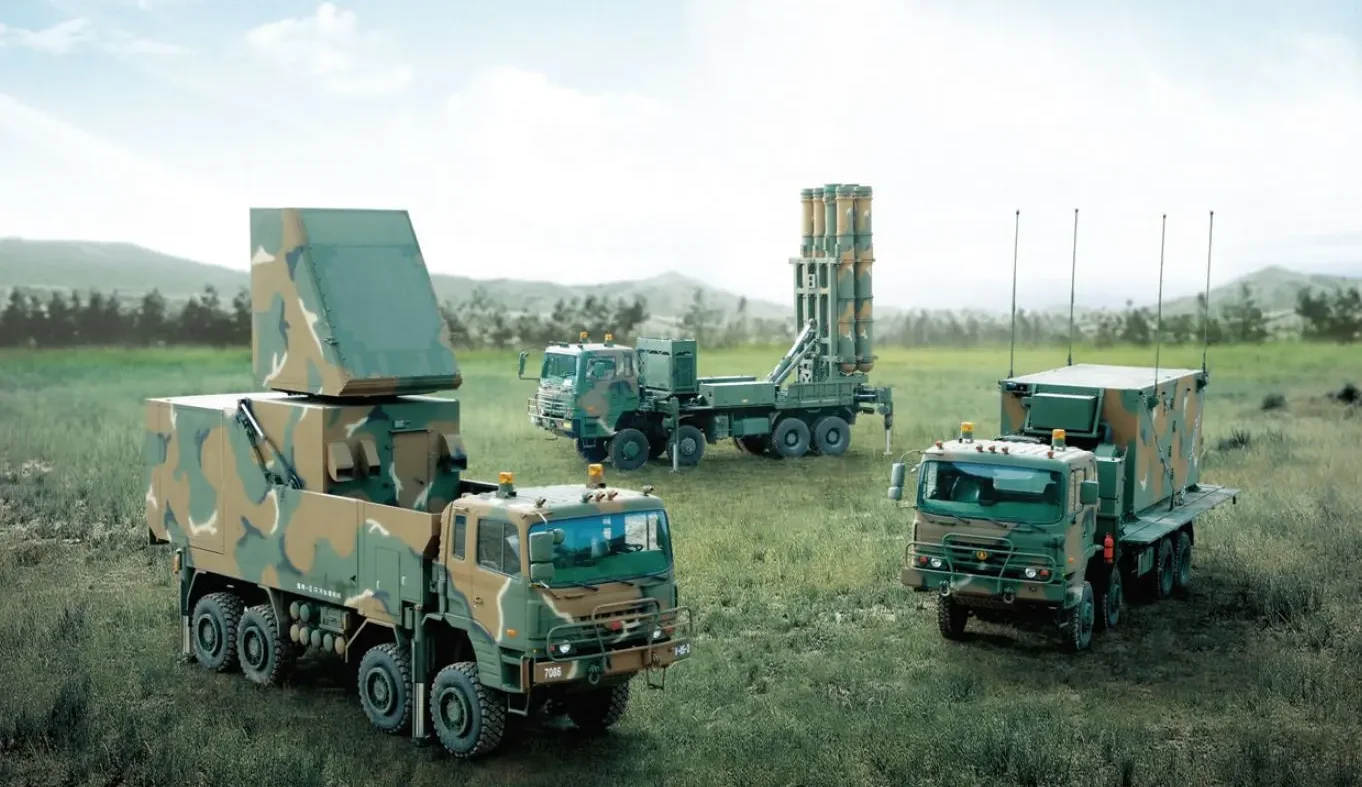
The missile guides itself using inertial navigation, receiving updates from a truck-mounted radar during its flight. In the final phase, it uses its own radar to home in on the target. A single battery setup includes one radar system, one command vehicle, and four to six launchers, each capable of holding eight missiles. It means each battery can hold between 32 and 48 interceptors.
In South Korea’s defence system, called the Korea Air and Missile Defence (KAMD), the Cheongung-II is an important part of the middle tier. It intercepts threats that get past the long-range L-SAM layer, allowing the more limited Patriot interceptors to focus on final defence. Every Cheongung-II battery sent to Riyadh or Abu Dhabi reduces the number of batteries available in this defence system. Each missile it holds is a missile not available for potential threats from North Korea.
The factory problem
Cheongung-II is produced at LIG’s Gumi House complex in North Gyeongsang province, which spans about 430,000 square metres (106 acres). The facility also makes the Hyungung infantry missile and the Bigung ship-to-ship system.
According to the company’s 2025 business report, factory utilisation across all LIG sites is currently at 78.1 per cent. In missile manufacturing, each interceptor goes through specialised parts sourcing, several integration stages, dedicated testing, and a pre-delivery inspection before it leaves the factory.
A 78.1 per cent utilisation rate means there is little room to increase production without expanding capacity. Gumi House 1 and 2 are already running at full capacity, according to the company. LIG is running two capital programs at the same time in the same industrial area to meet the demand from its current orders.
LIG Nex1 is planning two major investments in Gumi, South Korea. The first investment is 500 billion won for a new Gumi House 3. The facility will focus on systems integration and testing, along with Gimcheon House 2, which will inspect and test guided weapons and missile systems. Both facilities are expected to be completed between 2026 and 2028.
The second investment is 370 billion won for a new facility in the Gumi National Industrial Complex. This facility will handle the entire manufacturing process, from assembling core components to final inspections, and will be operational by 2029.
Park Bae-ho, a vice president at LIG Nex1, told Korean broadcaster KBS that the company is investing in Gumi to prepare for increasing exports and future developments in AI, robotics, and unmanned systems. These two expansion projects indicate that the company is responding to strong demand, not just stable demand.
None of these facilities will be finished this year. Gumi House 3 and Gimcheon House 2 will not be ready before 2028; however, the Gulf orders and the North Korean threat are piling up.
The tension
Cheongung-II is an active part of South Korea’s missile defence system. As North Korea’s weapons program grows, South Korea’s defence needs are becoming more complicated. New developments, such as hypersonic weapons and large rocket launchers that can carry nuclear weapons, mean South Korea needs more missile interceptors than it originally planned. At the same time, the demand for exports is affecting production in the other direction.
Ju Hyung Kim, president of the Security Management Institute, told Korea Pro in April that the main issue is whether speeding up exports could interfere with South Korea’s missile defence system. He added that the pressure on LIG and the Defence Acquisition Program Administration to meet the government’s goal of becoming one of the top four global arms exporters raises concerns. There is a worry that exports might be prioritised over domestic needs.
Shin Seung-ki, a research fellow at the Korea Institute for Defense Analyses, gave a more measured perspective. He stated that reallocating all interceptors meant for domestic use to buyers in the Gulf is not practical. Instead, the issue is about moving resources in the short term, not an actual shortage. The solution lies in increasing production capacity, not limiting it, he told Korea Pro.
He argued that increasing exports would strengthen South Korea’s defence industry. It would allow the country to produce more goods and meet delivery deadlines faster. While this argument seems reasonable, it depends on having new facilities ready on time and meeting quality standards, raising concerns, especially considering South Korea’s recent performance in manufacturing.
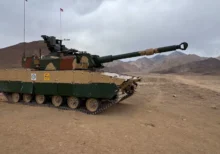
The K2 Black Panther tank program serves as an important warning. The rush to produce and deliver the K2 led to transmission problems, delaying deliveries and complicating the export deal with Poland that Seoul has worked on for years. Creating a guided missile line under political pressure carries similar risks, possibly even greater. A transmission issue can be found in a maintenance area, but a guidance or seeker problem may occur during an interception.
The export product
Cheongung-II is appealing to buyers in the Gulf because it does not have American re-export restrictions that limit US-origin systems. The feature also made it available for deployment in the UAE. South Korea’s defence exports are rising because buyers in the Middle East and other areas want systems that do not require approval from Washington. And Cheongung-II fits this need.
While this gives a commercial advantage, the production issues it faces are also significant, and these two aspects are connected. In April, calls from Riyadh and Abu Dhabi tested whether South Korea’s defence system, designed for peninsula-scale missions, can expand quickly enough to meet demand for regional air defence.
The new factories in Gumi and Gimcheon aim to address this challenge. By 2030, these facilities must prove they can deliver quality products, similar to what the K2 experience suggests. It will determine whether the Cheongung-II can become a successful export platform, as its combat debut in the UAE hinted, or if the factory will run out of space before fulfilling all orders.