Key ideas
- •The US and UAE are establishing Task Force Talon Synapse, the first bilateral military AI unit, to accelerate intelligence analysis, cyber defence, and regional threat monitoring.
- •The task force will use AI to process real-world operational data, including missile interceptions, drone activity, and maritime surveillance, instead of simulated datasets.
- •The initiative follows expanded US approval for advanced Nvidia AI chips in the UAE, providing the computing power needed for next-generation military AI systems.
Since February 2026, the Emirati military has been intercepting thousands of incoming Iranian missiles. It has carried out joint attacks on Iranian weapons sites, shared intelligence with American forces in the area, and helped keep commercial shipping moving through the Strait of Hormuz as Iranian pressure increased on that route. In response, Iran has targeted military sites and attacked important infrastructure in the UAE and US data processing facilities located in the UAE.
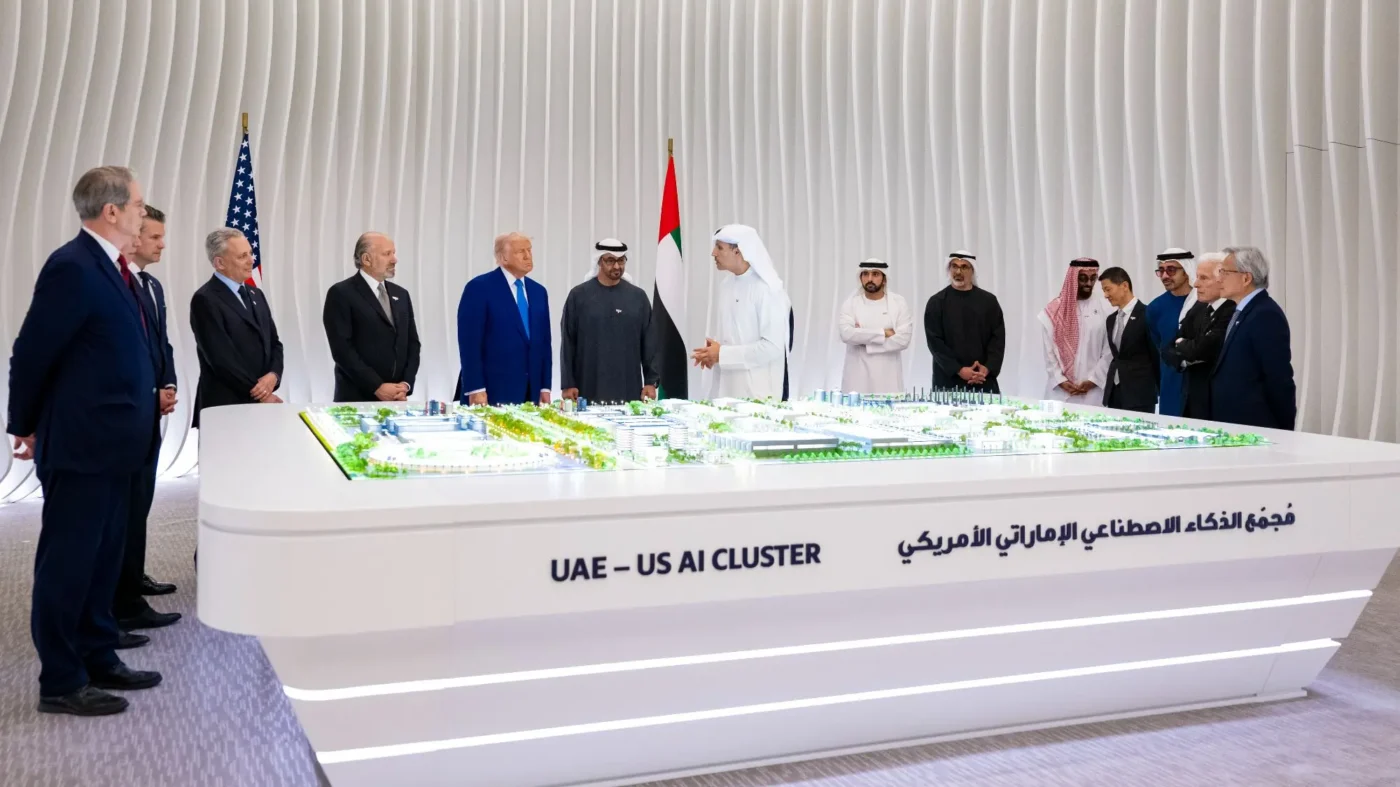
As a result, on July 28, US Central Command (CENTCOM) announced an agreement with the UAE to establish the Task Force Talon Synapse, the first bilateral military AI unit between any two countries. About 20 American and Emirati specialists in artificial intelligence, data science, and cybersecurity will work together in Abu Dhabi.
The group plans to use artificial intelligence to process intelligence faster, protecting critical infrastructure from the kinds of attacks that have already happened there, and improving how both militaries monitor a regional security environment that has been continuously active for months. The memorandum of understanding formalising the task force has not yet been signed, but CENTCOM says it will be in the coming weeks.
The focus area
CENTCOM faces a challenge in processing information fast enough for modern military operations. The amount of data from tracking thousands of Iranian missiles, monitoring drone activity from Yemen, observing maritime traffic in Hormuz, and maintaining awareness across the Gulf, Red Sea, and Arabian Sea is too much for human analysts to handle in the short time required for military decisions.
AI systems can process this data for sensor fusion, target classification, and pattern recognition. They can rapidly identify threats, find unusual patterns, and help make targeting decisions faster than any other method. Since February, the UAE and its American partners have been collecting this kind of operational data. Unlike most countries testing military AI with fake data, Task Force Talon Synapse will work with real data.
Iran has attacked US data processing facilities in the UAE. These facilities are crucial for the command and communication systems that American forces rely on in the region. To protect these facilities from cyberattacks, CENTCOM needs AI to monitor network traffic, detect unusual activity quickly, and automate responses faster than a human can analyse an alert.
CENTCOM and the Gulf
CENTCOM has experience working in the Gulf region. Task Force 59 began in September 2021 and has spent five years using AI with unmanned maritime systems. It has conducted joint exercises with Emirati forces and developed patterns for how autonomous and semi-autonomous platforms can support naval operations.
The newly proposed Task Force Talon Synapse builds on this work in a new area, such as intelligence, infrastructure, and regional monitoring. It brings together American and Emirati specialists on the same team, allowing them to collaborate instead of working separately and sharing results afterwards.
In 2023, the Biden administration denied a request from the UAE for advanced Nvidia AI chips. It was worried that the technology could end up in China through third-party channels. As a result, G42, a state-linked AI group in Abu Dhabi, ended its partnerships with Chinese technology companies and built what the US State Department described in April 2026 as a Regulated Technology Environment, a governance framework for managing sensitive technology jointly agreed with the United States.
In July 2026, the Commerce Department made it easier for Emirati organisations to access advanced AI hardware. Now, the organisations can obtain advanced computing chips without needing individual export licenses, and the announcement about the task force and the approval for chip access happened just days apart.
The UAE now has access to Nvidia’s most advanced chips, which are necessary for CENTCOM to run its intelligence and protect its infrastructure effectively. Without these chips, the required computing power was not available until this month.
The AI force
Admiral Brad Cooper, the CENTCOM Commander, called Task Force Talon Synapse a considerable achievement in military cooperation on AI. However, the more important aspect is how this will be used in real operations. The conflict in the Gulf has produced a lot of real military data, such as tracking, interception, network intrusion, and maritime surveillance data.
The data is essential for making artificial intelligence systems work well in military decision-making. Currently, this data is in Abu Dhabi, where a task force is being set up. The future of the team of 20 people in an office in Abu Dhabi depends on what happens after the paperwork is signed. It will depend on the resources that come after the announcement and whether support for military-level AI development is available in the coming months.
CENTCOM has not yet explained which systems the task force will develop, which AI models it will choose, or how it will apply these results in real operations. But such unanswered questions will decide if Task Force Talon Synapse becomes a useful tool or stays just a concept.