Key ideas
- •Asia is rapidly becoming the world's next defence manufacturing hub as countries expand military production in response to China's military buildup.
- •Japan, South Korea, Australia, India, the Philippines, and Malaysia are all reshaping their defence industries through new factories, exports, and strategic partnerships.
- •From Subic Bay to Bengaluru, a new Indo-Pacific defence industrial network is emerging to reduce reliance on traditional Western suppliers.
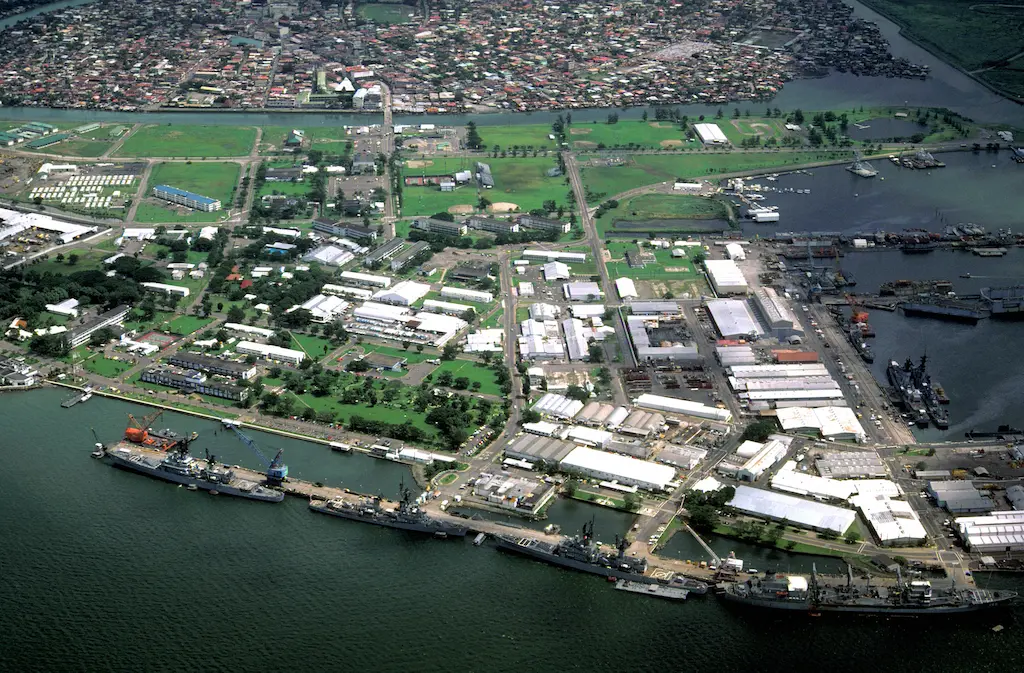
In 1992, the United States pulled its last servicemen out of Subic Bay and handed the keys to a Philippine government that had voted to end the American military presence. The base that had been the largest US naval installation outside the continental United States became a special economic zone. The dry docks that had serviced the Pacific Fleet became a container port, and the officers’ clubs became hotels.
34 years later, the US House Appropriations Committee inserted a line into the fiscal year 2026 defence budget, which said an ammunition manufacturing and storage facility at Subic Bay, described by both US and Philippine officials as what could become the world’s largest munitions plant, designed to serve as a forward production hub for allied forces in the Indo-Pacific.
In the same month, Philippine President Ferdinand Marcos Jr. inaugurated a new shipyard at the former Hanjin complex adjacent to Subic Bay, now renamed Agila Subic by American investment firm Cerberus Capital Management. The developer is HD Hyundai Heavy Industries Philippines, the same South Korean company that has already supplied the Philippine Navy with frigates and offshore patrol vessels.
South Korea’s ambassador to Manila describes the arrangement as a tripartite partnership that includes Korean technology, American financing, Philippine labour, and geography. When the facility reaches full capacity, it is expected to double the Philippines’ shipbuilding output to 2.5 million deadweight tonnes annually and employ more than 4,000 workers.
Subic Bay, which is approximately 1,100 kilometres from southern China’s coast and within range of every major flashpoint in the South China Sea, now hosts simultaneously the planned world’s largest munitions facility and a Korean-American shipyard already building naval vessels.
The bay that America abandoned is becoming a forward defence industrial base which the United States and its allies could not build thirty years ago, positioned at the region’s most contested waterway. It is a sign of a major change in where countries build their defence products since the end of the Cold War.
A new defence industry map
For most of the post-Cold War period, the defence industrial map included the United States, the United Kingdom, France, Germany, Israel, and Russia as producers of advanced weapons systems. Everyone else bought from them, and Asia’s role in that map was the largest and fastest-growing customer base for Western and Russian military hardware, absorbing fighter jets, submarines, missiles, and armoured vehicles from suppliers whose factories were in Pennsylvania, Toulouse, Stuttgart, and Tula.
The map is being redrawn, and it is happening simultaneously across countries that have not historically been grouped as defence producers, such as the Philippines, Japan, South Korea, Australia, India, and Malaysia. All are, within the same three to five-year window, either building new defence-industrial capacity, lifting regulatory barriers to defence production and export, or attracting foreign defence manufacturers to establish production on their soil.
The driver behind every one of these developments is the same. China’s military expansion, which is the most rapid peacetime buildup of a major power’s armed forces in recorded history, including an operational aircraft carrier fleet, hypersonic glide vehicles, the world’s largest navy by hull count, and a nuclear arsenal that the Pentagon projects will triple by 2035.
China has created a defence demand across Asia that no single country’s industry could supply alone. The result is a distributed yet increasingly interconnected Asian defence manufacturing base emerging faster than most analysts predicted, with implications for the global defence industrial order that extend well beyond the region.
Japan: The export ban falls
Japan’s transformation is the most structurally important because it required dismantling the self-imposed restraint any advanced industrial economy has applied to its defence sector in the post-war period.
Since the 1960s, Japan has had a strong ban on exporting weapons, which came from two main reasons. First, it was based on a specific interpretation of Article 9, which stated that Japan rejects war. Second, it showed the country’s guilt over its past militarism and shaped Japan’s identity after World War II.
The result was that Japan’s defence industrial base, which includes companies with genuine engineering capability, such as Mitsubishi Heavy Industries, Kawasaki Heavy Industries, IHI, and Fujitsu, was producing for a single domestic customer, unable to achieve the export volumes that drive cost reduction and capability iteration in defence programmes elsewhere.
In April 2026, Japan lifted the export ban for 17 approved countries. What followed within weeks illustrated how much pent-up industrial demand the prohibition had been suppressing. Tekever, the Portuguese drone manufacturer whose AR3 has logged more than 10,000 operational flight hours in Ukraine, announced it would establish its first overseas manufacturing facility in Japan with trading giant Marubeni as its Japanese partner.
Rheinmetall, Germany’s largest defence manufacturer, announced its first Japan defence production base. Anduril Industries, the US defence technology company behind the Barracuda-500 strike drone that Taiwan is deploying, announced plans to acquire one of Nissan’s historic manufacturing plants. Airbus and Kawasaki Heavy Industries signed a memorandum to develop a Japan-specific anti-submarine warfare variant of the Eurodrone jointly. Terra Drone deepened its partnership with a Ukrainian drone firm, specifically enabled by the new legal framework.
Five companies from five countries within six weeks, each citing Japan’s sensor technology, precision manufacturing, and an industrial robotics base that cannot be replicated elsewhere in the region at the same level of quality. What they were also citing was Japan’s geography.
A drone made in Japan with Japanese sensors and parts can reach its destination faster when exported to a military customer in the Philippines or Australia than a drone shipped from Europe. Lifting the export ban changed Japan’s defence industry from only serving local needs to becoming a regional hub.
South Korea: From student to supplier
South Korea’s defence story is the most complete and promising in Asia. The country started as a full importer, buying American equipment after the Korean War.
In the 1970s and 1980s, South Korea began producing its own weapons by licensing foreign designs, such as M16 rifles, F-5 fighters, and M48 tanks. The collaboration helped build the engineering skills that South Korean designers later used to create original military platforms.
The K9 Thunder self-propelled howitzer, which fires NATO-standard 155mm ammunition and has been ordered by Poland, Finland, Norway, Estonia, Australia, Egypt, and Romania, is now operated by more nations than almost any comparable system produced outside the United States.
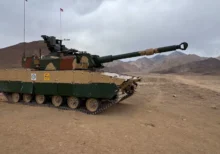
The K2 Black Panther main battle tank fires the same ammunition as the Leopard 2 from Germany and the M1 Abrams from the United States. In July 2026, it became the first Korean defence product to receive NATO’s Allied Quality Assurance Publication 2110 certification. This certification allows it to take part directly in NATO’s joint procurement market, which is worth about $10 billion each year.
The KF-21 Boramae fighter jet achieved full type certification with a specific agreement under which NATO recognises South Korea’s own airworthiness certification processes. Poland alone signed framework agreements worth approximately $22 billion covering K2 tanks, K9 howitzers, and FA-50 light combat aircraft, the largest single defence procurement commitment in NATO’s recent history.
The reason why Poland chose South Korea was because of its factories, calibrated for high tempo because the Korean War never formally ended, could deliver at a pace European suppliers could not match when Ukraine’s conflict created sudden acute demand.
At Subic Bay, the same industrial logic is visible. HD Hyundai Heavy Industries, which produced the frigates now serving in the Philippine Navy, is building the shipyard that will expand Philippine naval construction capacity.
Australia: The sovereign manufacturing
Australia’s defence-industrial shift is the most strategic in its framing, driven by a government that has concluded that relying on US resupply lines in a Pacific conflict is not a viable operational posture.
The Bushmaster protected mobility vehicle has been built in Bendigo, Victoria, since the mid-1990s. It is a strong example of how a middle power can establish credibility in defence exports. It was used in real combat, allowing its performance to demonstrate its value without the need for marketing.
Afghanistan proved the V-shaped hull against IED threats. Ukraine made it a household name when President Zelensky addressed the Australian Parliament and named it. The Bushmaster 5.6 Mulga variant. Unveiled at Eurosatory 2026 in Paris, with lessons from Ukraine incorporated into the design, it is now being positioned for global export with left-hand drive and modular systems integration for customers operating in right-hand traffic environments.
But the Bushmaster is the existing story. The 2026 Defence Industry Development Strategy and the Defence Delivery Agency, a unified acquisition organisation formed on July 1, combining guided weapons, capability acquisition, and naval shipbuilding under a single structure, are the next phase.
Australia is building its own capacity to make guided weapons, based on lessons learned during the Russia-Ukraine conflict. The conflict showed that ammunition stockpiles can run out quickly, while peacetime production rates take longer to catch up. It also highlighted that resupply routes across the Pacific Ocean can be long and are often contested.
Kongsberg Australia is making Naval Strike Missiles and Joint Strike Missiles in Australia. The goal is to start full production by 2028. Lockheed Martin Australia has been producing GMLRS rockets in Australia since 2022. Advanced Navigation received a $50 million investment to develop GPS-denied navigation technology, which can help guide missiles in electronic warfare situations.
AUKUS ties this together. The arrangement that will see nuclear-powered submarines operating from Australian facilities by the early 2030s is the most visible component of a defence industrial integration between Australia, the United Kingdom, and the United States that extends into autonomous systems, electronic warfare, quantum technology, and advanced manufacturing across all three countries’ industrial bases simultaneously.
India: The private sector opens
India’s defence industrial transformation is the most recent and the most consequential in scale, because India has the largest military in the region and had, until very recently, kept almost all of its defence production within state-owned enterprises that were structurally incapable of the iteration speed that modern warfare demands.
The most visible symbol of what is changing is BrahMos. India’s supersonic cruise missile, jointly developed with Russia and capable of striking targets at speeds exceeding Mach 2.8 at ranges up to 500 kilometres, has become the most consequential defence export in the country’s history.
After Operation Sindoor demonstrated BrahMos in live combat conditions, the first time a supersonic cruise missile of its class was used operationally in a real conflict, the export queue grew dramatically. Indonesia has formally signed, and the UAE has been offered the system for the first time. Fourteen countries are in varying stages of negotiation.
The next-generation BrahMos-NG variant, lighter and more compact than the original, is in testing. India went from a country that bought cruise missiles to a country that exports them, and the combat proof that made the difference happened over a single operation in May.
Larsen and Toubro is the largest engineering company in India and shows how the private sector is getting involved in defence manufacturing. L&T now makes artillery systems, armoured vehicles, naval vessels, and missile components at its facilities in Gujarat, Telangana, and Tamil Nadu.
Its defence revenues have grown from a marginal contributor to a substantial standalone business over the past decade, supported by successive government mandates requiring indigenisation of defence procurement.
The company’s heavy engineering division, which builds nuclear reactor components and petrochemical infrastructure, has transferred precision manufacturing disciplines directly into defence production; the same quality management systems that build a pressure vessel for a refinery build the structural components of an armoured platform.
The Zorawar light tank program aims to fill a gap in India’s military capabilities highlighted by China’s deployment of the Type-15 tank in Ladakh. This program is the most ambitious effort India has made in land system development during this decade.
Developed by DRDO’s Combat Vehicles Research and Development Establishment in partnership with L&T at a pace that surprised even optimistic observers, from prototype to trials in approximately two and a half years, Zorawar is armed with a 105mm gun, an anti-tank guided missile system, and a remote weapon station, designed specifically for high-altitude mountain warfare where India’s heavier MBTs cannot operate.
The programme has reached a point where the Army’s need for better protection is being balanced against the weight limits that affect the platform’s ability to move quickly. The debate will decide whether Zorawar becomes a truly usable system for mountain warfare or becomes a heavier option that only partially addresses the challenges it was meant to solve.
India’s private defence sector is growing due to new government programs like the Innovations for Defence Excellence initiative, the Defence Production and Export Promotion Policy, and changes to foreign investment rules. The growth has led to many companies developing new capabilities, which the public sector buying system was not set up to handle. These changes started before Operation Sindoor, but the ongoing conflict made them essential and irreversible.
Malaysia: The supplier relationships shift
Malaysia’s defence industry may be small, but it shows how countries are changing their approach to defence, even if they are not making large weapons on their own.
In July 2026, Norway revoked its approval for the sale of a naval strike missile to Malaysia. As a result, Malaysia turned to Turkey and South Korea. Western countries are choosing more carefully whom they sell weapons to and under what conditions, which is another reason for the growth of the defence industry in the Indo-Pacific region.
There is increasing demand for suppliers from the Indo-Pacific, such as South Korea and Australia, and eventually Japan. These suppliers have different political rules and different relationships with customers in Southeast Asia.
Malaysia hosts the LIMA Defence Exhibition every two years. It is one of the most effective defence trade shows in Asia. Recent LIMA editions show a shift in exhibitors. South Korean, Australian, Indian, and Turkish companies are taking up space once occupied by American and European firms. The customers at the event remain the same, but the suppliers are changing.
China: The force behind all of it
Every defence industrial development mentioned here connects China’s fast military growth as the common factor. The expansion is unusual for major powers during peacetime and has increased demand across Asia. Western defence industries, already busy due to Ukraine’s needs, cannot keep up. As a result, many countries that used to rely on foreign defence products are now producing their own.
The emergence of military readiness in the region is linked to specific threats. The Philippines is located at Subic Bay, which is 1,100 kilometres from China’s southern coast. Japan is now lifting its ban on exporting weapons and is working with American and European defence manufacturers to build capabilities that can respond to possible conflicts in Taiwan from Japanese bases.
South Korea focuses its defence production on its ongoing conflict with North Korea, shaping its manufacturing to meet these needs. Australia’s Defence Delivery Agency is also planning to ensure that its forces can operate in a Pacific conflict without relying on constant supplies from the US.
China’s growth in defence does not aim to create a competing defence industry in Asia. However, it has resulted in one because the threat it poses led to political support, investment, and urgency that had not been seen before.
Factories like those at Subic Bay, drone assembly lines in Tokyo, K2 production facilities in Uiwang, the Bushmaster workshop in Bendigo, turbojet testing facilities in Bengaluru, and guided weapons lines in Brisbane, none of these existed in their current form five years ago.
They all came about because governments, despite their different histories, capabilities, and ties with the United States, realised that the defence-industrial setup of the last 30 years is no longer suitable for the strategic situation over the next three years.
Subic Bay was America’s strongest military base in the Pacific. It was closed when the Cold War ended, and the threat lessened. Now, it is being rebuilt because the threat has returned. This time, the countries developing the area around it are not waiting for Washington to take action.