Key ideas
- •South Korea has begun work on a sixth-generation fighter, just weeks after completing development of the KF-21.
- •The proposed fighter could feature broadband stealth, supercruise, internal weapons and manned-unmanned teaming, putting it alongside emerging sixth-generation programmes in the US, China, Japan and Europe.
- •Engine technology is the biggest challenge. South Korea does not yet have an adaptive-cycle engine, a key technology for achieving the performance expected from a sixth-generation fighter.
South Korea’s Defense Acquisition Program Administration (DAPA) announced a Request for Proposal on August 21 for a 14-month study of a concept for a next-generation Korean fighter jet. Companies and research institutes can submit designs and technology plans for a possible sixth-generation combat aircraft. The budget for this study is 900 million won, which is about $650,000. However, the details in the document are more important than that amount suggests.
This study was published 23 days after DAPA completed development of the KF-21 Boramae, which has completed over 1,600 flight tests. The first KF-21 Block I production aircraft, with tail number 26-001, rolled out from KAI’s facility in Sacheon in March 2026. The Republic of Korea Air Force will receive deliveries in the second half of this year. South Korea is continuing to work on its current fighter jets while also planning for the next generation.
The study
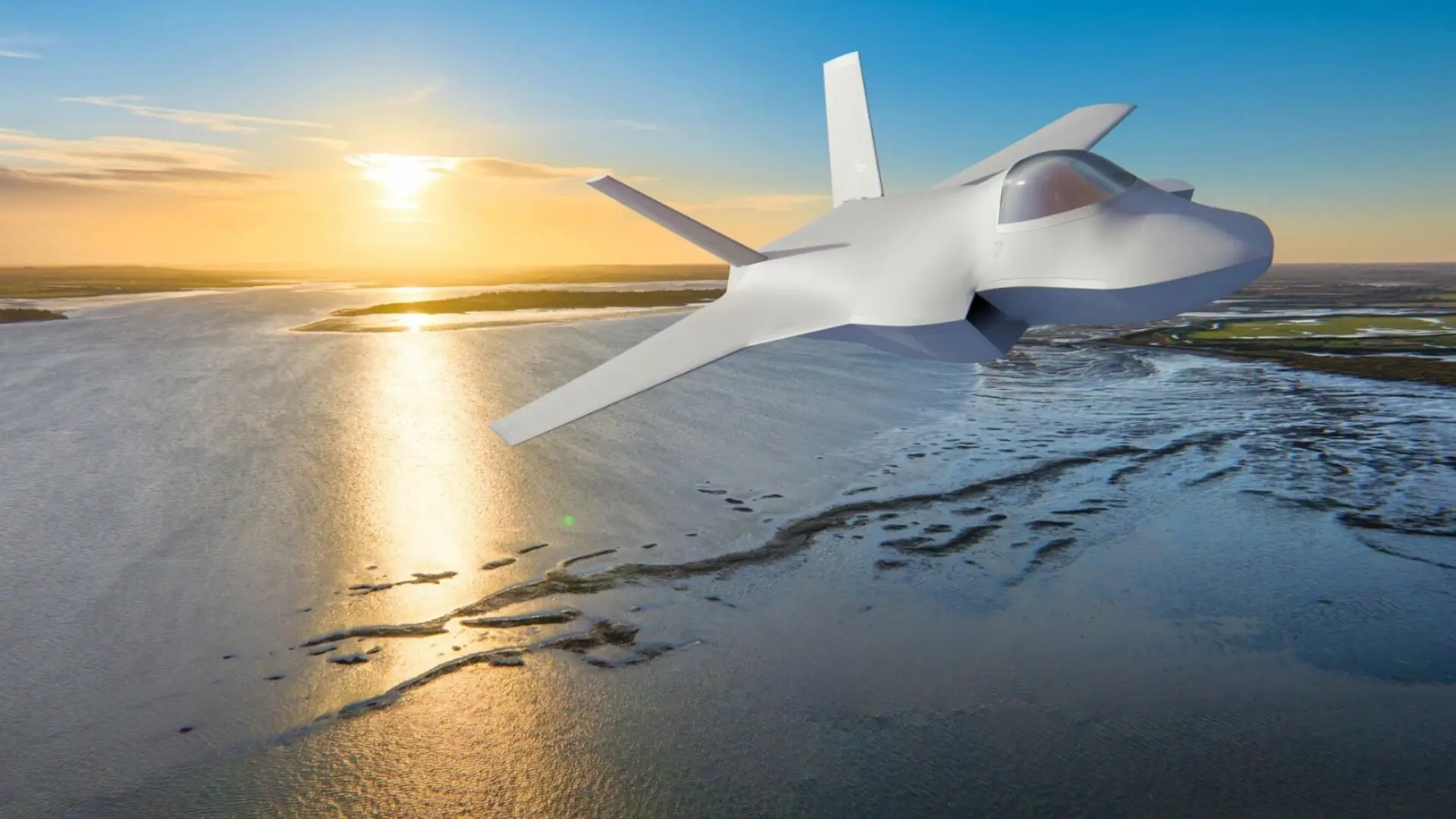
The study seeks designs for a single-seat aircraft approximately 16 meters long. The aircraft can be a tailless design, meaning it has no traditional tail surfaces, or a design with unique control surfaces. Both types need to perform well in stealth operations across the L-, S-, and X-band radar frequency bands. The aircraft must carry weapons internally, fly at supersonic speeds without afterburners, and operate with unmanned aircraft for tasks such as reconnaissance, electronic warfare, deception, and attacks.
Achieving broadband stealth, effective across L, S, and X bands, is the most challenging aspect. Current stealth fighters like the F-22, F-35, and China’s J-20 are mainly designed for X-band frequencies, which are used by many radar systems.
In response, the countries are developing low-frequency radar systems that can target L and S bands, where current stealth methods are less effective. For example, Russia’s Nebo-M radar is designed to detect stealth aircraft at L-band frequencies. China’s military is building radar networks that cover multiple frequency bands. South Korea’s intention to address all three bands at once suggests it is planning for future threats rather than current ones.
A conventional tail reflects radar signals, but removing it means the aircraft must ensure stability and control through other methods, such as special shapes and thrust vectoring. The B-2 Spirit bomber is a tailless flying wing for this reason. Making a fighter agile without a tail is a much harder challenge than doing so for a slower bomber.
The Agency for Defense Development introduced its own concept for a sixth-generation aircraft at an Air Force conference in Daejeon on July 7. The design effort is carried out independently but runs in parallel with the DAPA concept study. Both projects aim for similar specifications.
The engine gap
The need for two adaptive-cycle engines capable of supersonic flight highlights a gap between South Korea’s aircraft plans and its current manufacturing capabilities.
An adaptive-cycle engine can adjust its design during flight. It can switch from a fuel-efficient cruising mode to a powerful combat mode. The design allows a single engine to provide both the fuel savings of a turbofan and the strong thrust of a turbojet without requiring two different engines.
Currently, only General Electric’s XA100 and Pratt and Whitney’s XA101 engines are nearing flight tests under the US Air Force’s program to re-engine the F-35. No other country has flown an adaptive-cycle engine yet.
South Korea is developing the KTF-16000 engine for a future version of the KF-21 fighter jet. The engine is designed to produce 16,000 pounds of thrust without an afterburner and 24,000 pounds with an afterburner. The first flight trials are expected to start in 2041, which is 15 years away, while the concept study for the new fighter is still in its early stages.
The KTF-16000 may have difficulty achieving supercruise, the ability to fly at supersonic speeds without afterburners. The Defense Acquisition Program Administration wants this feature for a 16-meter tailless stealth aircraft. To achieve supercruise, the aircraft must balance engine thrust, airframe drag, and weight.
For example, the F-22 uses two F119 engines, each producing around 35,000 pounds of thrust with afterburner. Two KTF-16000 engines with afterburners produce a total of 48,000 pounds of thrust, which is comparable to the F-22. However, the KTF-16000 is not an adaptive-cycle engine, and there are no flight test results to confirm its performance.
The need for an adaptive-cycle engine makes the gap even larger. South Korea has not yet started developing this technology. The current concept study will produce a specification, not an actual engine. The KTF-16000, which is South Korea’s most advanced engine project, will not be ready for testing until 2041. The fighter jets that will use these engines are planned for the 2040s. The timeline is already challenging, especially with the added complexity of developing adaptive-cycle technology.
The industrial foundation
The concept study aims to build on what South Korea has already achieved. On July 29, DAPA officially completed the KF-21 system development after over 1,600 flight tests. This work helped gather important industrial knowledge for the sixth-generation program.
Korea developed an advanced radar system, the IRST-1, specifically for the KF-21 and successfully tested it. It also developed components such as composite airframe structures, flight control systems, avionics integration, and processes for integrating weapons, which enabled the clearance of various air-to-air and air-to-ground munitions for use.
The accumulated expertise will support the sixth-generation concept study. DAPA’s budget documents state that the program will use the experience and technology gained during the KF-21 development. Global Defense Corp described this next-generation effort as an extension of the industrial growth sparked by the KF-21, rather than a direct replacement.
LIG Defense and Aerospace, which is operating at 78.1% capacity due to Gulf export demand for the Cheongung-II missile, has begun building internal weapons bays for the sixth-generation aircraft. The manufacturing base for stealth airframe production is also developing alongside this concept study.
The recent announcement from Korea highlights a similar trend to Japan’s. Japan is working on the Global Combat Air Program (GCAP) with the UK and Italy, and a £4.6 billion development contract was awarded to the Edgeworth-Bickett joint venture in July 2026. They plan to deploy this new fighter around 2035.